

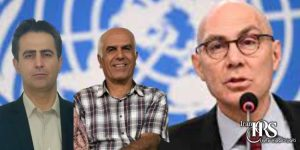
Volker Türk, UN High Commissioner, condemns Iran’s surge in executions, urging a moratorium on the death penalty amid human rights violations.
Iran Human Rights Society, Friday, August 29, 2025 – Iran’s escalating use of the death penalty has alarmed Volker Türk, UN High Commissioner for Human Rights. He views Iran’s executions as a political instrument to suppress opponents, not a tool of justice. On August 29, 2025, the UN reported a shocking surge in executions, highlighting severe human rights violations. This article examines Türk’s concerns, the violations tied to Iran’s execution practices, and the global call to halt this crisis.
Sharp Rise in Iran Executions
On August 29, 2025, the UN Human Rights Office reported 841 executions in Iran since January 2025. Ravina Shamdasani, Türk’s spokesperson, noted that limited information access makes these figures partial but accurate. In July 2025 alone, authorities executed 110 people, over double the number from July 2024. This surge signals a troubling trend of using executions to intimidate and suppress society.

Ethnic minorities, particularly Kurds, Baluchis, and Afghan migrants, face disproportionate executions. This practice contradicts international law’s principles of equality and judicial fairness. Türk’s office warns that Iran’s execution spike creates an atmosphere of fear, targeting dissent rather than upholding justice.
Volker Türk’s Urgent Warning
Volker Türk issued a stark warning about Iran’s executions. He stated, “The relentless executions in Iran have reached a deeply disturbing level.” In 2024, Iran executed 901 people, up from 853 in 2023. December 2024 saw 40 executions in one week, underscoring the alarming speed of Iran’s execution machinery.
Türk highlighted cases like Mehdi Hassani and Behrouz Ehsani, executed in Qezel Hesar Prison after unfair trials. He called these “extrajudicial killings,” emphasizing the lack of fair trial standards. Türk urged Iran to halt this wave of executions immediately to align with human rights obligations.
Death Penalty as a Political Tool
Türk’s office asserts that Iran uses the death penalty to suppress opponents and instill public fear, not for criminal justice. Many executed individuals face arbitrary detention, torture, and forced confessions. Trials often last mere minutes, violating the right to life and Iran’s obligations under the International Covenant on Civil and Political Rights.
The regime’s tactics target dissent, particularly amid ongoing protests. By intensifying executions, authorities aim to crush social uprisings. Türk warns that this instrumental use of the death penalty threatens social stability and human security in Iran.
Violations of Fair Trial Standards
Türk stressed that Iran’s political executions lack judicial legitimacy. He noted, “When a trial lasts only a few minutes, the accused is denied a lawyer, and confessions are coerced, the death sentence becomes an extrajudicial execution.” Such practices violate fundamental human rights, including access to fair trials.
Prison conditions worsen these abuses. Reports detail mistreatment, denial of medical care, physical and psychological torture, and threats against prisoners’ families. These conditions breach international standards and fuel public unrest, as protests continue across Iran.
Human Rights Violations in Executions
The UN report lists several human rights violations in Iran’s execution practices:
- Right to Life: Article 3 of the Universal Declaration of Human Rights ensures the right to life. Widespread executions violate this principle.
- Prohibition of Torture: Article 5 bans torture, yet many prisoners face abuse to extract confessions.
- Fair Trial Rights: Article 10 guarantees fair trials. Iran’s brief trials and lack of legal representation defy this standard.
- Inhuman Treatment: Article 7 of the International Covenant on Civil and Political Rights prohibits cruel treatment. Torture and coerced confessions violate this obligation.
- Judicial Standards: Article 14 mandates fair trials. Iran’s use of forced confessions and lack of judicial independence breaches this standard.
These violations highlight Iran’s disregard for international human rights law, with executions often based on vague or politically motivated charges.
Global Concern Over Iran Executions
Türk’s statements have sparked global alarm. Governments, civil society, and human rights groups demand urgent action to pressure Iran to stop executions. Activists note that the execution surge coincides with ongoing protests, suggesting the regime uses death sentences to suppress dissent.
Urgent Call for a Moratorium
Türk’s office urges Iran to impose an immediate moratorium on executions. He argues that halting the death penalty is essential to uphold human rights. The UN report underscores Iran’s position as a leading executor, with 841 executions in 2025 alone. This figure reflects a systematic abuse of power, targeting vulnerable groups and political opponents.
Global pressure is critical to push for reforms. Türk calls for fair trials, an end to torture, and protection for ethnic minorities. Without international action, Iran’s cycle of executions will continue, undermining human security.
Iran’s rising executions demand immediate global response. Volker Türk’s warnings expose the regime’s use of the death penalty to silence dissent and create fear. With 841 executions in 2025, Iran violates the right to life, fair trials, and protections against torture.
See also the below articles:
- Hamzeh Darvish: Exposing Suicide Encouragement and Torture in Lakan Prison, Rasht
- Vakilabad Prison, a Prison in the Shadows: A Dark Portrait of a Human Hell – Video 1
Follow Iran Human Rights Society on social networks:
Telegram /Twitter /Instagram / YouTube / Facebook
Join Iran Human Rights Society on Twitter




Discussion about this post