
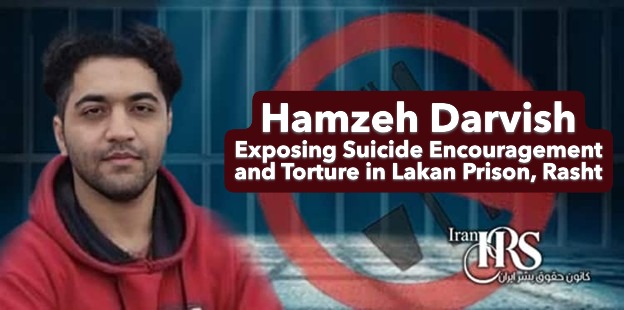
Hamzeh Darvish exposes suicide encouragement and torture in Lakan Prison, Rasht. His hunger strike demands justice and an end to human rights violations.
Iran Human Rights Society, Tuesday, August 26, 2025 – Hamzeh Darvish, a Sunni prisoner in Lakan Prison, Rasht, bravely exposes suicide encouragement and systemic torture through a hunger strike that began on August 2, 2025. His protest highlights grave human rights violations, including psychological and physical abuse orchestrated by prison authorities. Darvish’s third letter to the UN Special Rapporteur on Human Rights details the dire conditions and deliberate pressures pushing prisoners toward death.
Darvish’s Hunger Strike: A Cry Against Injustice
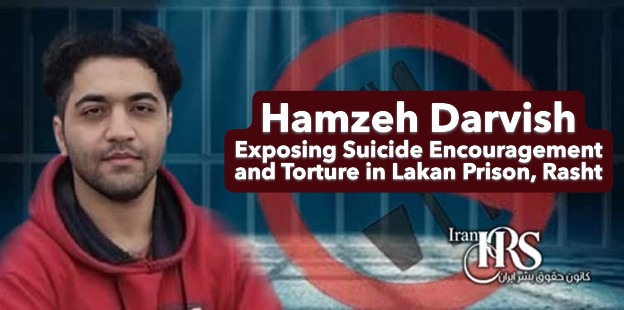
On August 2, 2025, Hamzeh Darvish began a hunger strike to protest his unjust imprisonment, prolonged torture, and the violation of crime separation principles. He briefly paused the strike after promises from prison officials, but their failure to act forced him to resume. His actions demand urgent attention to the inhumane treatment in Lakan Prison. Darvish seeks a transfer to Evin or Ghezel Hesar Prison for safety, spotlighting the systemic issues plaguing Iran’s prison system.
Shocking Claims of Suicide Encouragement
Darvish’s letter reveals a chilling tactic: prison authorities allegedly encourage suicide among inmates. He claims officials promote the use of lethal drugs like propranolol. Darvish reports that over nine prisoners in Ward 8 have died after consuming this drug, with authorities instigating these deaths to avoid accountability. This practice underscores a sinister method to silence prisoners without formal executions.
Torture and Solitary Confinement in Lakan Prison
For over five years, Darvish has endured severe physical and psychological torture, including solitary confinement for periods exceeding three months. Authorities falsely accused him of inciting a major prison riot, adding to his suffering. These coordinated efforts aim to break his spirit. Darvish names key figures orchestrating this abuse, signaling an organized policy of oppression within the prison.
Systemic Human Rights Violations
Darvish’s case exposes clear violations of fundamental rights. He faces torture and inhumane treatment, violating the prohibition against such acts. His life and personal security are at risk due to direct threats and suicide encouragement. Unjust accusations deny him a fair trial. Furthermore, authorities disregard the principle of separating prisoners by crime type, placing Darvish among dangerous criminals.
Gross Human Rights Violations
Hamzeh Darvish’s situation is a clear example of systematic human rights violations in Iran:
- Article 5 of the Universal Declaration of Human Rights: Prohibition of torture and inhumane treatment. Darvish has repeatedly reported physical and psychological torture and prolonged solitary confinement.
- Article 3: Right to life, liberty, and personal security. Directly threatening and encouraging a prisoner to commit suicide is a blatant violation of this article.
- Article 10: Right to a fair trial. Baseless accusations, such as attributing the prison riot to him, clearly violate this right.
- Principle of Separation of Crimes: Iran’s prison regulations are entirely disregarded, as Darvish is held alongside dangerous criminals.
A Call for Urgent Action

In his letter, Darvish warns that his life remains in danger. Without swift intervention, he risks becoming another victim of Lakan Prison’s alleged “suicides.” His hunger strike amplifies a desperate plea for justice, urging the UN and global community to address the systematic torture and violation of crime separation principles. His voice represents countless others silenced in Iran’s prisons.
A Broader Fight for Justice
Darvish’s struggle reflects a wider issue affecting numerous prisoners in Iran. Suspicious deaths labeled as “suicides” have sparked outrage among families and activists, yet the pattern persists. His hunger strike serves as a critical warning to the international community. Ignoring his plea could lead to another tragic loss. Darvish’s protest is not just a personal stand but a call to expose and end the pervasive human rights abuses in Iran’s prison system.
Why Darvish’s Voice Matters
Hamzeh Darvish’s courage in exposing suicide encouragement and torture demands global attention. His hunger strike, resumed after broken promises, underscores the urgency of addressing these violations. The international community must act swiftly to protect Darvish and others from further harm. His fight highlights the need for accountability and reform in Iran’s prisons, where systemic abuse thrives unchecked.
Moving Forward: A Global Responsibility
The world cannot ignore Darvish’s warnings. His detailed accounts of torture, suicide encouragement, and rights violations paint a grim picture of Lakan Prison. By amplifying his voice, we can pressure authorities to end these practices. The UN and human rights organizations must investigate and hold those responsible accountable. Darvish’s life—and the lives of countless others—depends on collective action to ensure justice prevails.
See also the below articles:
- Vakilabad Prison, a Prison in the Shadows: A Dark Portrait of a Human Hell – Video 1
- Mokhtar Alboshokeh Political Prisoner’s Background and Imprisonment
Follow Iran Human Rights Society on social networks:
Telegram /Twitter /Instagram / YouTube / Facebook
Join Iran Human Rights Society on Twitter






Discussion about this post