
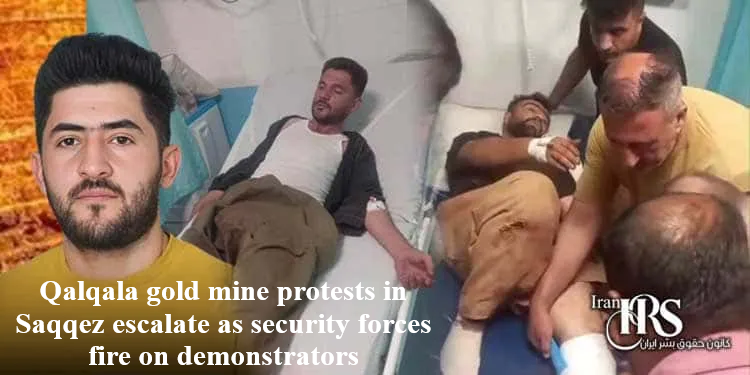
Security forces fired on protesters at Qalqala gold mine in Saqqez, killing Mohammad Amin Rashidi and injuring three.
Iran Human Rights Society, Monday, September 15, 2025 – Qalqala gold mine protests in Saqqez escalate as security forces fire on demonstrators. This violent clash highlights deep environmental and political tensions in Iran’s Kurdish regions. On September 15, 2025, protesters gathered near Pir Omran village to oppose the mine’s operations. However, armed guards opened fire directly. As a result, 22-year-old Mohammad Amin Rashidi died from his wounds. Furthermore, three relatives—Ramyar, Mohammad, and Heyman Rashidi—suffered severe injuries. Local reports confirm a heavy security lockdown in the area. Therefore, these events underscore ongoing human rights abuses amid resource exploitation.
Violent Clash at Qalqala Gold Mine: Casualties and Hospital Siege

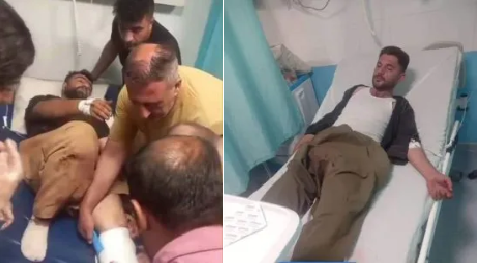
Security forces targeted protesters at the Qalqala gold mine site. Mohammad Amin Rashidi’s body arrived at Baneh Hospital, but authorities withheld it from his family. The injured relatives remain in intensive care there. Their conditions stay critical, sources say. Meanwhile, Salahuddin Ayoubi Hospital in Baneh faces full security control. Restricted access prevents family visits and media coverage. Additionally, telephone lines in nearby Saqqez villages cut off completely. This disruption aims to block information flow and curb protest spread. Observers note that such tactics isolate communities effectively.
Arrests Following Qalqala Gold Mine Demonstrations
After the shooting, security forces detained at least four protesters. They transported the individuals to an unknown location. Authorities identified them as Jowamir son of Latif, Latif son of Haj Seddiq, Fateh son of Mohammad, and Maliheh daughter of Haj Rameh. No official entity claimed responsibility yet. Families report no updates on their status. Furthermore, these arbitrary arrests fuel public outrage. Protesters demand immediate release and accountability. However, silence from officials persists, heightening tensions.
Background on Saqqez Gold Mine Protests and Environmental Damage
The Qalqala gold mine project sparks major conflicts in Saqqez County. Local farmers and villagers protest its continuation for years. The mine destroys agricultural lands extensively. It also pollutes water resources severely. Residents sign petitions and hold rallies repeatedly. Yet, authorities ignore these calls entirely. Environmental experts warn about risks from excessive extraction. Soil and groundwater contamination threaten thousands of rural families. They rely on farming for livelihoods. Despite alerts, operations proceed unchecked. Therefore, violent responses to demonstrations become routine. This pattern erodes trust between locals and government.
Political Dimensions of Saqqez Mine Protests
Analysts view Saqqez events as more than environmental disputes. They reflect profound divides in Kurdish areas between people and authorities. Security forces deploy communication blackouts and hospital sieges often. These measures aim to contain protest growth. Many observers argue that securitizing civil actions fails to solve problems. Instead, it deepens distrust among citizens. Protests could expand to other Kurdistan cities soon. Furthermore, repression tactics may backfire long-term. Locals show strong attachment to their land’s fate. Silencing voices through force often leads to broader unrest.
Human Rights Violations in Qalqala Gold Mine Shooting
The shooting at Qalqala gold mine breaches key international standards. It violates Article 3 of the Universal Declaration of Human Rights. This article protects life, liberty, and personal security. Mohammad Amin Rashidi’s death exemplifies the breach. Article 19 ensures freedom of expression and information access.
Article 20 safeguards peaceful assembly. Suppressing mine protests clearly ignores it. Article 9 prohibits arbitrary detention. Taking protesters to unknown sites demonstrates this violation. Recent Saqqez incidents prove that violent replies worsen crises. Demonstrators seek to halt environmental harm and safeguard resources. Yet, authorities respond with bullets, arrests, and restrictions. Continuing this path endangers regional stability.
People in Saqqez repeatedly voice concerns over their land. Repressive efforts to mute them will likely yield counterproductive results in the future.
See also the below articles:
- Execution of 12 Prisoners in Jiroft, Zahedan, Sabzevar, Khorramabad, Shiraz, Hamedan, and Gorgan Prisons
- Guardian Report on the Trial of Parviz Sabeti, SAVAK Torturer
Follow Iran Human Rights Society on social networks:
Telegram /Twitter /Instagram / YouTube / Facebook
Join Iran Human Rights Society on Twitter




Discussion about this post