
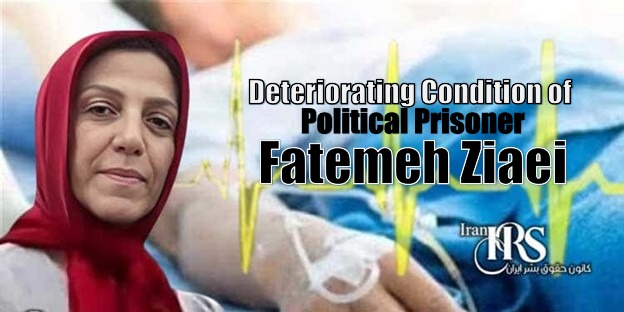
Fatemeh Ziaei, 68-year-old Iranian political prisoner with MS, faces critical health crisis in Qarchak Prison. Agents rearrested her despite warnings.
Iran Human Rights Society, Saturday, September 20, 2025 – Fatemeh Ziaei battles a critical health crisis as a political prisoner in Iran. She suffers from multiple sclerosis and other severe illnesses. Authorities rearrested her on August 7, 2025. They ignored doctors’ warnings. Now, she endures neglect in Qarchak Prison. This case spotlights Iran’s brutal treatment of sick detainees. Ziaei spent 13 years behind bars already. Her seventh arrest shocks the world. Family members raise alarms. Human rights groups demand action. Without intervention, her life hangs in the balance. Therefore, global pressure must mount immediately.
Deteriorating Health of Political Prisoner Fatemeh Ziaei

Fatemeh Ziaei Azad, known as Houri, faces dire straits. Reliable reports describe her condition as critical. She endured over 40 days in Nopo detention center. Guards denied her any medical attention there. Now, officials transferred her to Qarchak Prison in Varamin. Yet, she still receives zero care. Her illnesses include multiple sclerosis, advanced lung infection like tuberculosis, chronic bladder disease, and liver issues. Informed sources warn that more neglect could kill her soon. Doctors previously cautioned against imprisonment. However, agents rearrested her anyway. This move heightens fears at home and abroad. It questions Iran’s policies on ill prisoners. Ziaei’s story exposes systemic cruelty. Therefore, activists call for her immediate release.
Nighttime Rearrest Without Judicial Warrant
Agents from Iran’s Ministry of Intelligence struck at midnight. They raided Ziaei’s Tehran home on Thursday, August 7, 2025. No judicial warrant appeared. They arrested her abruptly. Family members stress that agents offered no reasons. They seized her personal items too. A close source notes the illegality. “This nighttime arrest without a judicial warrant once again shows that the government ignores its own laws,” the source says. Ziaei underwent treatment for chronic illnesses at the time. Agents dragged her away mid-recovery. Furthermore, this marks her seventh arrest over decades. Such tactics intimidate dissenters. Therefore, human rights watchdogs condemn the violation.
Profile of Political Prisoner Fatemeh Ziaei
Fatemeh Ziaei Azad, born in 1957, holds a political science degree. She resides in Tehran. As a mother of two and a wife, she lived under arrest shadows for years. Political and civil activities led to multiple imprisonments. She supported the People’s Mojahedin Organization of Iran during the 1980s. That era brought her initial detention from June 20, 1981, to July 1986. Later arrests followed: February 2009 to February 2011, one-and-a-half years in 2013-2014, eight months in 2015, and one year in 2018. In September 2022, health woes prompted temporary medical furlough. She left Evin Prison on January 20, 2025. Yet, less than seven months later, rearrest struck. Her daughters belong to the opposition group. This family tie fuels regime targeting. However, Ziaei persists in her activism.
Chronic Illnesses Threaten Fatemeh Ziaei’s Life
Ziaei’s health forms the case’s core horror. Multiple sclerosis ravages her body. An advanced lung infection mimics tuberculosis. Chronic bladder disease plagues her daily. Liver problems add to the burden. Doctors warn repeatedly. Continued imprisonment risks irreversible damage. Medical sources highlight the lung threat. Without hospital care, her life teeters on the edge. MS has stolen her mobility. She cannot walk unaided now. Simple tasks overwhelm her. Experts stress treatment interruptions. Advanced MS stages lead to permanent disability. Therefore, her rearrest halts vital care. Family witnesses her decline. This deliberate denial endangers her survival. Furthermore, it exemplifies “white torture” tactics.
Transfer to Qarchak Prison Amid Medical Neglect
After 40 days in Nopo, authorities moved Ziaei to Qarchak Prison. Human rights activists blast this facility often. Poor sanitation reigns supreme. Overcrowding chokes the space. Family sources confirm the grim reality. Ziaei lacks her medications there. Guards withhold her glasses too. Even basic clothing stays denied. A relative voices outrage. “A prisoner with so many illnesses needs specialized care,” the relative explains. “But in Qarchak, no medical facilities exist. Regular meds remain inaccessible. This treatment equals gradual death.” Therefore, her transfer worsens everything. Conditions accelerate her deterioration. However, calls for better treatment grow louder.
40 Days of Absolute Neglect in Nopo Detention
Ziaei’s ordeal began harshly. After arrest, she spent 40 days in Nopo police detention center. Serious illnesses screamed for help. Yet, no doctor visited. Medications vanished entirely. Informed sources label it deliberate. This neglect serves as white torture. It crushes psychologically too. Guards used her pain as leverage. Therefore, her health plunged deeper. Family fought for access. But barriers blocked them. Such isolation breaks spirits. Furthermore, it violates basic prisoner rights. Activists decry the inhumanity. Ziaei emerged weaker. Her transfer to Qarchak continued the nightmare.
Human Rights Violations in Fatemeh Ziaei’s Rearrest
Ziaei’s plight screams international breaches. Iran flouts key covenants. Article 6 of the International Covenant on Civil and Political Rights protects life. Denying vital treatment endangers hers directly. Article 7 bans torture and inhuman acts. Unsanitary holds without meds count as torture. Article 10 demands humane prisoner treatment. Qarchak’s conditions shatter this. The Nelson Mandela Rules require outside-level medical access. Ziaei gets none. Therefore, her case symbolizes regime tactics. It deploys “silent death” against foes. Holding her risks fatality anytime. However, global voices amplify her fight. Release her now.
See also the below articles:
- Somayeh Rashidi: Critical Condition of a Political Prisoner in Qarchak Prison, Varamin
- Vakilabad Prison Quarantine Ward: A Symbol of Repression and Oblivion
Follow Iran Human Rights Society on social networks:
Telegram /Twitter /Instagram / YouTube / Facebook
Join Iran Human Rights Society on Twitter






Discussion about this post