
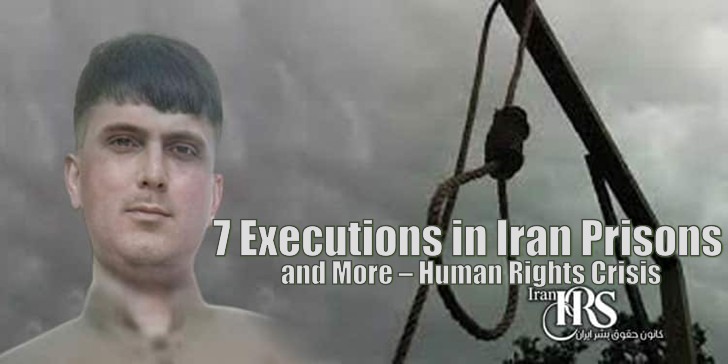
Seven prisoners executed in Iran prisons amid protests. Human rights violations clash with global standards.
Iran Human Rights Society, Friday, October 31, 2025– Recent Iran executions signal the regime’s deep fear. Widespread hangings highlight a desperate grip on power. A society pushes for change. Protests demand freedom, and the regime strikes back hard. On October 31, 2025, Iran Human Rights reported seven deaths. These occurred from October 27 to 30, 2025. Prisons in Kermanshah, Gonbad-e Kavus, Zanjan, Bojnord, Semnan, Nahavand, and Qazvin carried them out. Such acts clash with human rights norms. Furthermore, they fuel calls for reform. This article details each case. It also explores legal conflicts.
Executions Signal Regime Panic Over Protests

The regime fears successive protest movements. Society marches toward change. It refuses to back down from freedom demands. Therefore, executions spike. These seven cases prove that point. They happened swiftly across Iran. Officials aim to silence dissent. However, this only strengthens resolve. Activists note a pattern. Hangings follow unrest waves. In short, fear drives these brutal responses.
Details of Saeed Piri’s Execution in Kermanshah
Saeed Piri met his end on Friday morning, October 30, 2025. Guards hanged him in Dizel Abad Prison, Kermanshah. Authorities charged him with murder. He faced the noose without public notice. Families often learn too late. This secrecy breeds outrage. Moreover, it erodes trust in justice systems.
Milad Kobesh Hanged in Gonbad-e Kavus Prison
Dawn broke on Wednesday, October 28, 2025. Milad Kobesh died by hanging in Gonbad-e Kavus Prison. Police arrested him earlier for murder. Judges sentenced him to death. His co-defendant, Mohammad Toghdiri, faced the same fate before. The Center for Human Rights in Iran broke that news first. Such linked cases raise fairness questions. Therefore, international watchdogs demand probes.
Majid Shah-Pasandi’s Death in Zanjan Facility
Majid Shah-Pasandi, aged 35, lost his life at dawn on October 28, 2025. Zanjan Prison claimed him. He hailed from Zanjan. Before arrest, he worked in a local factory. Drug-related charges sealed his doom. Workers like him often fall into harsh cycles. Furthermore, poverty fuels these traps. His story underscores systemic failures.
Ali Safari Executed in Bojnord on Tuesday
Ali Safari faced execution on Tuesday morning, October 27, 2025. Bojnord Prison enforced the sentence. Murder charges justified it, per officials. He entered the facility years ago. Now, his absence leaves a void. Families grieve in silence. However, whispers of injustice spread.
Habib Khani’s Tragic End in Qazvin Prison
Dawn on October 27, 2025, brought horror for Habib Khani. Qazvin Prison hanged the deaf man from Karaj. Drug charges doomed him. His disability complicated fair trials. Communication barriers persisted. Therefore, advocates cry foul. This case exposes vulnerabilities in Iran’s system.
Hosseinaliasl Montazeri Hanged in Semnan
Hosseinaliasl Montazeri died at dawn, October 27, 2025. Semnan Prison carried out the act. He came from Pakdasht. Drug offenses led to his sentence. Quick rulings often bypass appeals. Moreover, evidence gaps linger. Such haste violates due process.
Malek-Ali Amini’s Execution in Nahavand
Malek Ali Amini perished on Tuesday morning, October 27, 2025. Nahavand Prison executed him for murder. Arrest followed a violent incident. Judges imposed death swiftly. His family sought mercy in vain. These stories connect. They reveal a pattern of rushed justice.
Death Penalty Clashes with Universal Human Rights
The Universal Declaration of Human Rights stands firm. Article 3 guarantees life, liberty, and security. Yet, Iran executions shred this right. First, they strip the fundamental right to life. No one can reclaim it. Second, errors prove fatal. Courts err, but hangings erase fixes. Third, methods inflict torture. Hanging causes agony. Therefore, these acts defy global norms. Activists urge abolition.
Iran Breaches ICCPR on Executions
Iran signed the International Covenant on Civil and Political Rights. Article 6 limits death penalties strictly. It demands fair trials for grave crimes only. However, many Iran executions falter. Trials lack transparency. Accused face legal shackles. Courts bow to regime pressure. Independence vanishes. Thus, these hangings mock commitments. The world watches. Pressure mounts for change.
See also the below articles:
- Marzieh Farsi: Worsening Cancer and Heart Disease from Evin Prison Neglect
- Continued Detention and Health Crisis of Mohammad Ali Akbari Monfared
Follow Iran Human Rights Society on social networks:
Telegram /Twitter /Instagram / YouTube / Facebook
Join Iran Human Rights Society on Twitter






Discussion about this post