
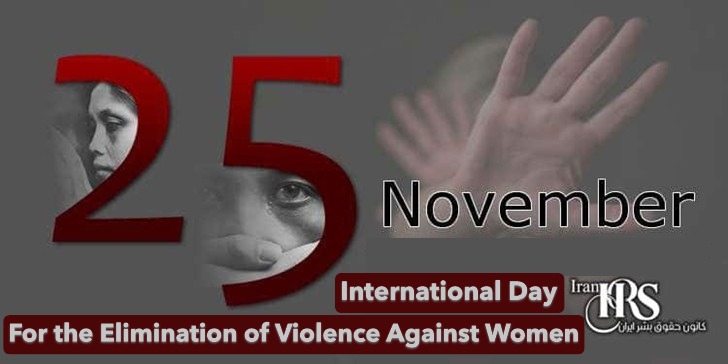
November 25 marks the International Day for the Elimination of Violence Against Women. In Iran, state terror, prison torture, forced veiling, and executions target women daily. Only their fight for total freedom and equality can end this nightmare.
Iran Human Rights Society, Tuesday, November 25, 2025 – Violence against women in Iran is not random. The regime designs it, enforces it, and celebrates it. On November 25, 2025, the world observes the International Day for the Elimination of Violence Against Women. Yet inside Iran, security forces beat women for a loose scarf, courts sentence them to lashes, prisons starve and infect them, and gallows take their lives.
At least 44 women have been hanged since March 21, 2025. Thousands more rot in hellish cells. Only the unbreakable struggle of Iranian women for freedom and equality can destroy this machine of terror.
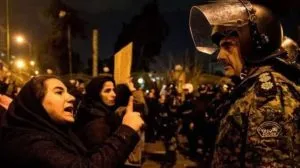
The Mirabal Sisters and Why November 25 Matters
Three Dominican sisters — Patria, Minerva, and María Teresa Mirabal — challenged dictator Rafael Trujillo. They organized, spoke truth, and paid with their lives. On November 25, 1960, Trujillo’s agents beat them to death and staged a car accident. Their murder woke the world. In 1999, the United Nations chose this date to fight violence against women everywhere. Today, Iranian women carry the same fire. They face a regime just as ruthless, and they refuse to kneel.
Global Statistics: A War Against Half of Humanity
In Europe, 43% of women have been victims of violence, and in Afghanistan, 90% of women have been assaulted at least once.
In 2023, the highest number of femicides occurred in Africa (21,700 cases), followed by Asia (18,500), the Americas (8,300), Europe (2,300), and Oceania (300).
Three Main Forms of Violence Against Women
1. State Violence -This type of violence occurs when laws and official institutions restrict, suppress, or humiliate women. Religious and moral justifications are often used as cover for political goals and social control.
2. Domestic Violence – Domestic violence is the most common form of violence against women and is usually perpetrated by family members. Its severity depends on supportive laws and women’s access to legal and social resources.
3. Street Violence – Street violence includes various forms of harassment in public spaces and stems from patriarchal culture and the lack of effective oversight and laws.
Women’s Prisons in Iran: Designed to Break Body and Soul
Iran’s women’s wards are torture centers wearing the mask of prisons.
Overcrowding and Filth
Cells built for 20 hold 50 or more. Women sleep on bare floors in rows, heads touching feet. Damp walls breed mold. Poor ventilation spreads tuberculosis and skin diseases. Lice and scabies epidemics rage for months.
Starvation and Poisoned Food
Meals consist of rotten rice, watery soup, and bread full of stones. Many prisoners lose 20–30 kg in the first year. Malnutrition weakens immune systems.
Medical Neglect as Slow Murder
Guards delay hospital transfers for weeks or months. Cancer, heart disease, and infections kill because medicine never arrives. Somayeh Rashidi begged for help in Qurczak Varamin Prison. She screamed from abdominal pain. Guards laughed. No doctor came. She died in agony. Her story repeats daily.
Psychological Torture
- Yard time (30 minutes) gets canceled without reason.
- Books are banned or heavily censored.
- Phone calls to children last 2–3 minutes and are monitored.
- Solitary confinement cells — called “white torture” — drive women to madness.
Sexual Violence and Humiliation
Female guards and interrogators sexually harass, strip-search repeatedly, and threaten rape. Male guards watch through peepholes. Many political prisoners report rape during the 1980s and again after 2022 protests.
At Least 44 Women Hanged Since March 2025
Since the Iranian year 1404 began on March 21, 2025, the regime has executed at least 44 women. Many were poor, survivors of domestic violence, or child brides sold into marriage. Drug charges or “murder” (often self-defense against abusive husbands) send them to the crane. Execution of women has become routine political terror.
Situation of Female Political Prisoners in Iran
Female political prisoners in Iran are held in conditions far removed from human and legal standards and are often subjected to psychological pressure and security threats. These prisoners live in overcrowded wards lacking basic facilities, without separation from non-political prisoners, and are exposed to ongoing violence and neglect.
Overcrowding in prisons forces many prisoners to sleep on the floor and face shortages of beds, breathing space, and adequate hygiene. Damp environments, poor ventilation, and lack of cleaning supplies lead to outbreaks of skin and infectious diseases and increased risk of respiratory illnesses. These conditions cause physical weakness and reduced ability to cope with stress.
Access to cultural and educational resources is limited, and communication with family and the outside world is strictly controlled and used as a tool of psychological pressure and restriction of independent thought. Deprivation of education and cultural activities leads to feelings of isolation and reduced personal motivation.
Medical Neglect as Slow Murder
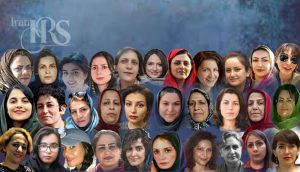
The death of Somayeh Rashidi in Qarachak Varamin Prison is a painful example of the consequences of medical deprivation; she repeatedly complained of severe pain, but no specialist examination was conducted, and she was not transferred to a hospital. This alarming incident shows that illness in prison is a constant, serious, and potentially fatal threat and requires urgent fundamental reforms.
The Path Forward for Iranian Women to Achieve Equality and Eliminate Violence
Over the past forty years, Iranian women have consistently resisted discrimination and restrictions. They have shown determination and strength in striving for freedom and equality. Since the establishment of the Islamic Republic, women have been actively present in social, political, and economic life and have demonstrated that they can build a just and violence-free society.
Iranian women have the right to be equal with men in all aspects of life, including education, work, and social decision-making. No law should confine them to weak or humiliating positions. When women can freely participate in politics and the economy, the country can move toward a more just and freer future.
Iranian Women’s Long March for Freedom
The history of Iranian women’s struggles from the Qajar era to today shows that they have never stopped fighting for their rights. Now, as the country faces political and social challenges, women’s presence on the front lines of protests and social movements is more important than ever. Women’s voices must be heard, because only through unity and collective struggle can there be hope for ending oppression and tyranny.
A future in which women stand alongside men in decision-making and power is possible only through their continued active struggle. Eliminating violence against women in Iran depends on their efforts for freedom and equality, as this is the only path toward a healthy, free, and just society for all people of Iran.
See also the below articles:
- 96th Week of “Tuesdays No to Execution” Campaign Unites 55 Iranian Prisons
- 4 Months of Silence on Yalda Emamdost’s Fate: Fears Mount for Iranian Endurance Champion
Follow Iran Human Rights Society on social networks:
Telegram /Twitter /Instagram / YouTube / Facebook
Join Iran Human Rights Society on Twitter






Discussion about this post