
Eyewitness Account of the Massacre and Arrests in Malard; Direct Violence by Repressive Forces in the Nationwide Protests of 2026
Iran Human Rights Society, Friday, January 30, 2026 – This report is an eyewitness narrative from someone who personally witnessed the violent scenes during the nationwide protests of 2026 in the Ahri water supply area and Malard Road. He describes what he experienced firsthand as a shocking image of security forces directly shooting at defenseless people, arrests, and attempts to eliminate protesters.
This eyewitness writes that the images of the scenes still haunt his mind, and every time he thinks about that day, his heart tightens.
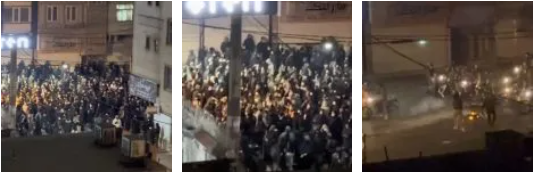
Direct Violence by Repressive Forces in the Streets
According to this eyewitness, on January 8, 2026 (18 Dey), Basij and IRGC forces heavily deployed and blocked the streets. They fired from rooftops and various points toward the people. The shootings were not scattered but deliberately targeted protesters’ heads and hearts, as if the goal was to kill, not merely disperse the crowd.
The atmosphere was comparable to a battlefield:
On one side: defenseless people, mostly unarmed, resisting only with chants or stones.
On the other: fully equipped armed forces with machine guns and military weapons.
Eyewitness Testimony on Arrests and Security Forces’ Conduct
The eyewitness says that during those same days of the nationwide protests, plainclothes and security agents would suddenly enter crowds without warning and arrest individuals. Sometimes arrests happened right next to protest gatherings; other times, forces quietly approached a few young people with military vehicles, grabbed them, and took them away. He says: “We wanted to help, but the streets were full of agents, and we could do nothing.”
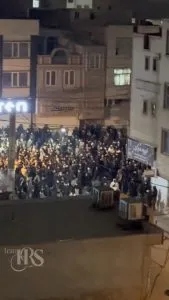
This pattern of arrests was not limited to Malard but repeated in other cities. Many detainees had no chance to defend themselves, and some have disappeared since their arrest.
The Wounded, the Dead, and Harrowing Street Scenes
According to the witness, the number of wounded was extremely high. The severity of injuries made it seem like people were caught in a real war. He says: “We tried to pull the wounded back and take them to the Ahri 24-hour clinic or Pars clinic on Malard Road. But we had to hide many of the wounded because we feared the Guards would finish them off with headshots.”
In the very street he witnessed, about 30 people from the public were killed. He says the real number of dead and wounded is far higher than can be precisely stated, as many families, due to threats and fear of further harm, have not announced their loved ones’ names.
He specifically mentions the killing of one protester named Nasser Nasiri, saying: “One of the martyrs had registration number 12,500; his name was Nasser Nasiri. The list of martyrs is gradually becoming clear, one by one.”
Direct Shooting and Use of Brutal Tactics
The eyewitness emphasizes that special unit forces had vehicles equipped with machine guns and fired directly at people while moving. He also describes a heartbreaking scene where a Basij member threw a hand grenade from a rooftop into the crowd—an action with no connection to controlling peaceful protests, but solely aimed at massacre.
Threats, Identification, and Targeted Arrests
The eyewitness says security forces used shop cameras to identify protesters and then went after them at night around midnight, taking them away. Many protesters are now on the run because their lives are in danger. He says: “They have identified some, and at night, around midnight, they go after them and take them.”
He adds that he recognized some plainclothes agents and was certain that some were regime-affiliated forces disguised in civilian clothes to actively beat people.
Treatment of Defenseless Youth and the Role of Children in Suppression
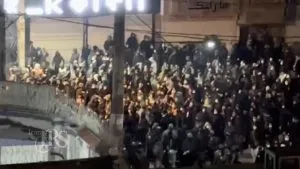
The eyewitness points to Basij forces in various uniforms and says they even brought 13-year-old children in Basij uniforms to inflate the number of repressive forces. This tactic, beyond showing the depth of the crisis, has made the environment even more unsafe and terrifying for youth and families.
Experience in Fardis, Karaj; Continued Suppression in Other Cities
He says that later in Fardis, Karaj, he witnessed another scene: forces approached a few young people who were neither chanting nor doing anything and arrested them. This shows that arrests were not limited to protest sites but were carried out deliberately in other cities as well.
Message to the World and Request to Share the Account
The eyewitness concludes his account by writing: “Write to enlighten global public opinion so they know that the youth of this land stood bravely and resisted empty-handed for their homeland, but Basij, IRGC, and plainclothes forces mercilessly killed the people.”
He stresses that this account is only a part of what happened and that the true depth of the tragedy cannot be properly depicted.
Call to Society and Request for Information
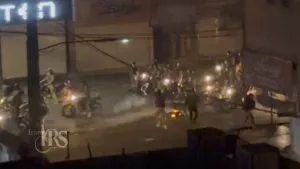
At the end of the account, the eyewitness asks people and informants to amplify the voice of the Iranian people to the world and publish any further information about the killed, the arrested, informants, or forces involved in suppressing the nationwide protests. He says many families, due to threats and fear, have not announced their loved ones’ names, but publishing this information can help reveal the truth.
Impact on Families and Society
According to the witness, in many cases, bodies are not returned to families, and authorities even demand money from families for each bullet. The repressive forces then claim “terrorists” are responsible for these deaths, while all witnesses know the protesting people were victims of direct and ruthless shooting.
He firmly states: “Our enemy is right here—in this country, these very forces, and these very arrests and massacres they carry out.”
Empty Hands for Freedom and Justice
This account is only one facet of the dark and bloody events of the nationwide protests of 2026; the story of young people who stood empty-handed for freedom and justice but became victims of direct shooting by repressive forces. Sharing these accounts can be a fundamental step toward global awareness and support for the people’s rights.
See also the below articles:
- Arrested Individuals in the Nationwide Protests of 2026, List of Names of 200 People + Photos
- Execution of Hamidreza Sabet Esmaeilpour After Closed and Rushed Trial
Follow Iran Human Rights Society on social networks:
Telegram /Twitter /Instagram / YouTube / Facebook
Join Iran Human Rights Society on Twitter


Discussion about this post