
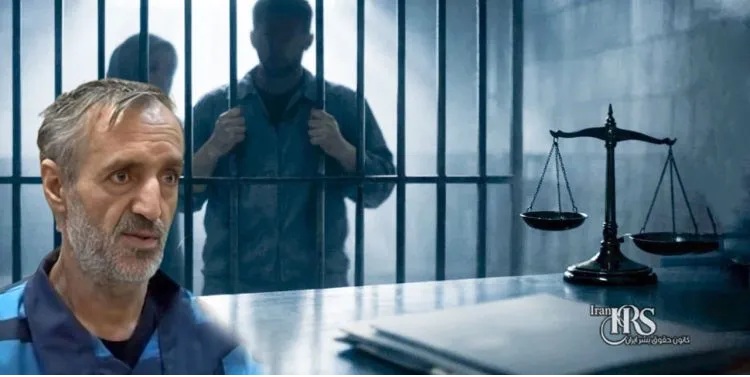
Branch 15 of the Tehran Revolutionary Court sentenced Mohammad Abbasi to death and his daughter Fatemeh Abbasi to 25 years in prison; the family says confessions were obtained under torture and the chosen lawyer was removed from the case
Iran Human Rights Society, Monday, February 23, 2026 – Mohammad Abbasi, 55 years old, following the holding of a rushed trial in Branch 15 of the Tehran Revolutionary Court presided over by Abolghasem Salavati, was sentenced to death on the charge of participation in the murder of a law enforcement officer during the nationwide protests of December 2025 in Malard. His daughter, Fatemeh Abbasi, was also sentenced to 25 years in prison on the charge of complicity; a verdict issued in the shadow of deprivation of chosen counsel and claims of forced confessions.
Issuance of Death Sentence for Mohammad Abbasi and 25 Years Imprisonment for His Daughter
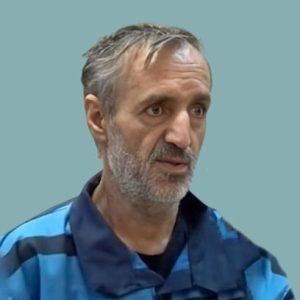
According to the issued verdict, Mohammad Abbasi has been sentenced to death on the charge of “direct perpetration and collaboration with Israel, America, and the murder of a law enforcement officer” during the nationwide protests of December 2025 in Malard.
Fatemeh Abbasi, 34 years old and mother of a 13-year-old daughter, has also been sentenced to 25 years imprisonment on the charge of complicity in this case. These sentences were issued under conditions where, according to informed sources, the trial process faced serious flaws.
The family of these two individuals has emphasized that the case was built on scenario-writing and fabrication by the prosecution, and there is no evidence whatsoever of their presence at the scene of the incident.
Claim of Forced Confessions Under Torture
An informed source has stated that Mohammad Abbasi was subjected to severe pressure to obtain a confession. According to this report, agents, by means of sexual threats against his daughter and physical torture, forced him to make a forced confession.
This source also stated that in the video released in court, no trace of the presence of Mohammad Abbasi and his daughter at the scene of the incident can be seen. Nevertheless, the court relied on those same confessions.
Raising such claims about torture and obtaining forced confessions raises serious questions about the credibility of the evidence relied upon in this case.
Deprivation of Chosen Counsel and Trial Without Due Process
Findings show that Mohammad Abbasi and Fatemeh Abbasi were deprived of access to chosen counsel both during the preliminary investigation stage and during the trial proceedings.
Branch 15 of the Tehran Revolutionary Court did not allow the entry of the family’s chosen lawyer into the case. It has also been said that the appointed court-appointed lawyer acted under the direction of the judge and did not have the necessary independence to effectively defend the accused.
According to an informed source, even after the issuance of the verdict, the court prevented the case file from being provided to the chosen lawyer for preparing an appeal request. This situation has limited the possibility of effective defense and legal follow-up.
Rushed Trial in a Security Atmosphere
Legal opinions indicate that the adjudication of this case took place in a security-laden and pressurized atmosphere. The rapid holding of court sessions, without providing sufficient opportunity to examine evidence and present a defense, increases the likelihood of judicial error.
In cases involving heavy charges and the death penalty, strict observance of the principles of fair trial is of double importance. However, in this case, no sign of independent and precise examination of the presented evidence has been observed.
The judge of the court announced at the end of the first hearing session that the time of the next session would be announced subsequently, but did not specify what opportunities for effective defense would be provided to the accused.
Violation of Fundamental Principles of Fair Trial in the Case of Mohammad Abbasi
The trial process in the case of Mohammad Abbasi faces serious flaws from a human rights perspective.
- Violation of the Presumption of Innocence – Article 11 of the Universal Declaration of Human Rights: Every person is presumed innocent until proven guilty in a competent court. Reliance on alleged confessions obtained under pressure undermines this principle.
- Violation of the Prohibition of Torture – Article 5 of the Universal Declaration of Human Rights and Article 7 of the International Covenant on Civil and Political Rights: Any torture or inhuman treatment for obtaining confessions is prohibited.
- Violation of the Right to Counsel – Article 14 of the International Covenant on Civil and Political Rights: Every accused person has the right to benefit from the assistance of counsel of their own choosing. Preventing the entry of chosen counsel violates this right.
The case of Mohammad Abbasi and his daughter Fatemeh Abbasi, in the context of the nationwide protests of December 2025, is an example of judicial proceedings that have been accompanied by haste, heavy charges, and severe punishments. In such circumstances, the main question regarding the credibility of the evidence, the manner of obtaining confessions, and the observance of the defensive rights of the accused remains unanswered.
Deprivation of Chosen Counsel and Trial Without Due Process
Findings show that Mohammad Abbasi and Fatemeh Abbasi were deprived of access to chosen counsel both during the preliminary investigation stage and during the trial proceedings.
Branch 15 of the Tehran Revolutionary Court did not allow the entry of the family’s chosen lawyer into the case. It has also been said that the appointed court-appointed lawyer acted under the direction of the judge and did not have the necessary independence to effectively defend the accused.
According to an informed source, even after the issuance of the verdict, the court prevented the case file from being provided to the chosen lawyer for preparing an appeal request. This situation has limited the possibility of effective defense and legal follow-up.
Rushed Trial in a Security Atmosphere
Legal opinions indicate that the adjudication of this case took place in a security-laden and pressurized atmosphere. The rapid holding of court sessions, without providing sufficient opportunity to examine evidence and present a defense, increases the likelihood of judicial error.
In cases involving heavy charges and the death penalty, strict observance of the principles of fair trial is of double importance. However, in this case, no sign of independent and precise examination of the presented evidence has been observed.
The judge of the court announced at the end of the first hearing session that the time of the next session would be announced subsequently, but did not specify what opportunities for effective defense would be provided to the accused.
Violation of Fundamental Principles of Fair Trial in the Case of Mohammad Abbasi
The trial process in the case of Mohammad Abbasi faces serious flaws from a human rights perspective.
- Violation of the Presumption of Innocence – Article 11 of the Universal Declaration of Human Rights: Every person is presumed innocent until proven guilty in a competent court. Reliance on alleged confessions obtained under pressure undermines this principle.
- Violation of the Prohibition of Torture – Article 5 of the Universal Declaration of Human Rights and Article 7 of the International Covenant on Civil and Political Rights: Any torture or inhuman treatment for obtaining confessions is prohibited.
- Violation of the Right to Counsel – Article 14 of the International Covenant on Civil and Political Rights: Every accused person has the right to benefit from the assistance of counsel of their own choosing. Preventing the entry of chosen counsel violates this right.
The case of Mohammad Abbasi and his daughter Fatemeh Abbasi, in the context of the nationwide protests of December 2025, is an example of judicial proceedings that have been accompanied by haste, heavy charges, and severe punishments. In such circumstances, the main question regarding the credibility of the evidence, the manner of obtaining confessions, and the observance of the defensive rights of the accused remains unanswered.
See also the below articles:
- Execution of 12 Prisoners in Various Prisons
- Danger of Execution for Danial Niazi, Protester of the Nationwide Protests; 38 Days of Detention and Deprivation of Lawyer
Follow Iran Human Rights Society on social networks:
Telegram /Twitter /Instagram / YouTube / Facebook
Join Iran Human Rights Society on Twitter







Discussion about this post