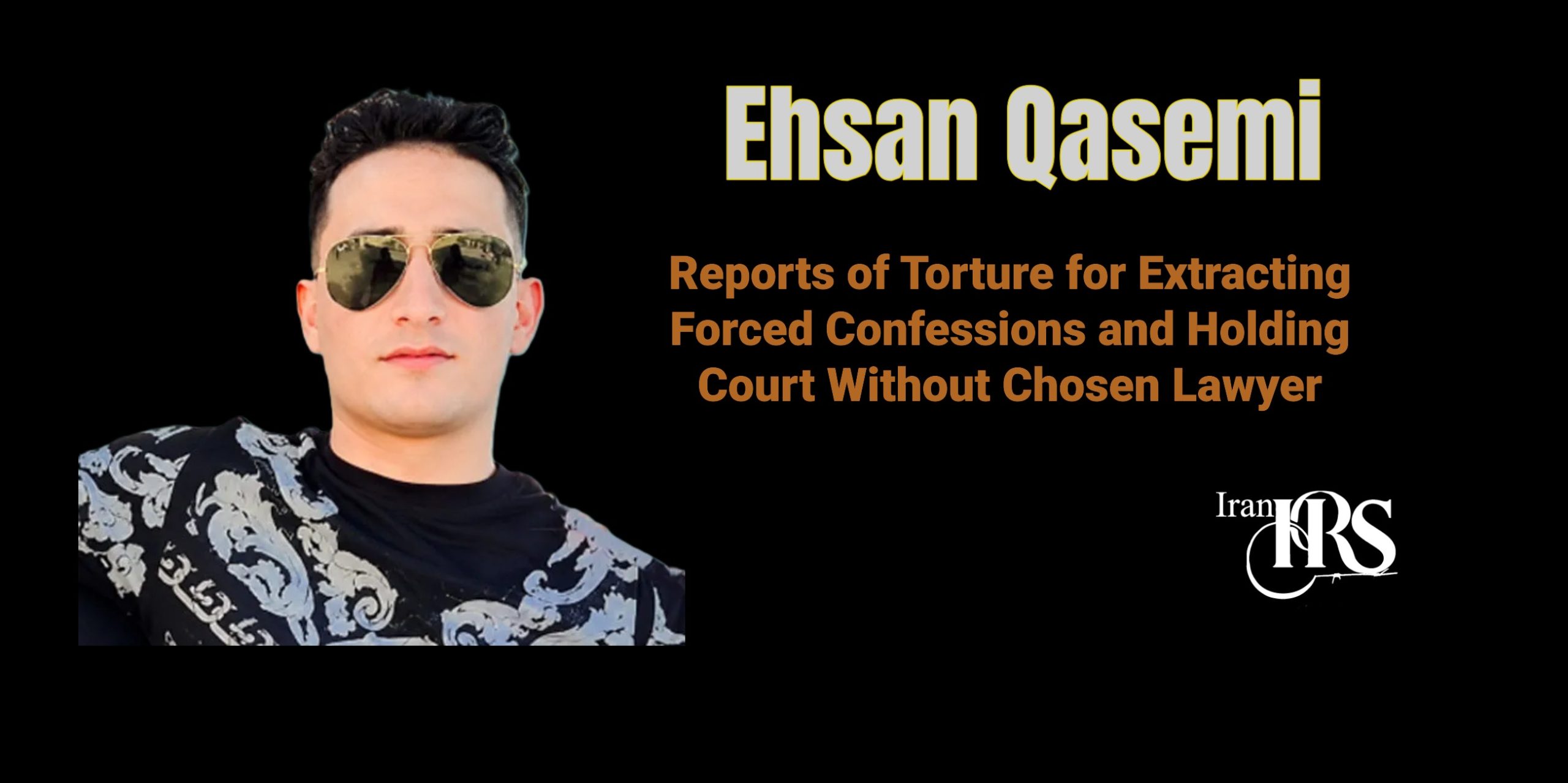
Ehsan Qasemi Kourkour, a citizen from Izeh residing in Ahvaz, after arrest by the IRGC Intelligence has faced security charges; reports indicate torture, forced confessions and deprivation of chosen lawyer
Iran Human Rights Society, Thursday, June 4, 2026 – Ehsan Qasemi Kourkour, a citizen from Izeh and resident of Ahvaz, was arrested about two days before April 2026 by IRGC Intelligence forces. According to published reports, he has been subjected to severe physical and psychological torture after arrest in order to confess to the charges raised against him. This political prisoner is currently being held in Ward 3 of the political section of Sheiban Prison in Ahvaz and it is said that his court will be held next month without the presence of a chosen lawyer; an issue that has increased serious concerns about observance of principles of fair trial.
How was Ehsan Qasemi arrested?
Based on published information, Ehsan Qasemi Kourkour, who is from Izeh and resides in Ahvaz, was arrested two days before the start of the new year by IRGC Intelligence agents.
Detailed information about the manner of arrest and its initial reasons has not been published, but sources close to the family say that after arrest he was transferred to one of the security centers and from the first days has been subjected to intensive interrogations.

Currently he is being held in Ward 3 of the political section of Sheiban Prison in Ahvaz and is still facing security charges.
What charges have been raised against Ehsan Qasemi?
Based on existing reports, security institutions have raised charges including “propaganda against the regime” and “membership in opposition groups” against Ehsan Qasemi.
However, so far no clear explanation about the documentation of these charges has been published and it is not clear on what basis these charges have been attributed to him. Human rights activists believe that in many similar cases, general and vague security charges are raised without providing sufficient documentation and this very issue prepares the ground for issuing heavy sentences.
What do reports say about torture and forced confessions?
Informed sources have announced that Ehsan Qasemi after arrest has been subjected to severe physical and mental torture in order to extract forced confessions.
Based on these reports, the purpose of these pressures and interrogations has been to force him to accept the charges that security institutions have raised. The use of confessions obtained under pressure and torture in past years has been criticized many times by human rights institutions and is considered one of the most important concerns in security cases.
It has also been reported that IRGC Intelligence agents have visited his family and claimed that Ehsan Qasemi has confessed to keeping Starlink satellite internet equipment. His family considers these claims as part of the process of pressure and case-building against him.
Why is the trial process of Ehsan Qasemi’s case concerning?
One of the most important concerns raised about this case is the manner of holding the court.
Based on published information, Ehsan Qasemi’s court is scheduled to be held next month, but it is said that he will be deprived of the right to have a chosen lawyer. This issue is raised while in many security cases, defendants are only allowed to use lawyers approved by judicial and security institutions.
Human rights activists believe that depriving the defendant of his chosen lawyer eliminates the possibility of effective defense and puts the trial process facing serious ambiguities.
What is the role of security institutions in the case?
According to human rights activists, Ehsan Qasemi’s case is an example of cases in which the role of security institutions is prominent from the arrest stage to the trial process.
Critics say that in many political and security cases, arrest, interrogation, setting charges and even the path of judicial proceedings are influenced by reports and demands of institutions such as IRGC Intelligence and the Ministry of Intelligence. In their belief, this very issue questions the independence of the judiciary and reduces the possibility of impartial proceedings.
Human rights violation; torture, forced confession and deprivation of lawyer
Ehsan Qasemi’s case is accompanied by a set of serious human rights concerns. Reports related to torture for extracting forced confessions, ambiguity in the proceedings, deprivation of chosen lawyer and the prominent role of security institutions in the case, are among the items that can violate the fundamental principles of fair trial. Human rights institutions have repeatedly emphasized that confessions obtained under pressure and torture lack legal validity and cannot be the basis for issuing a verdict.
Violated articles:
- Article 5 of the Universal Declaration of Human Rights (Prohibition of Torture): Applying physical and psychological pressure to obtain confession is considered an example of torture and inhuman treatment.
- Article 9 of the Universal Declaration of Human Rights (Prohibition of Arbitrary Arrest): Arrest accompanied by ambiguity in the documentation of the charge creates concerns about the arbitrary nature of the process.
- Article 10 of the Universal Declaration of Human Rights (Right to Fair Trial): Holding court without access to a chosen lawyer limits the defendant’s right to effective defense.
- Article 11 of the Universal Declaration of Human Rights (Presumption of Innocence): Using forced confessions violates the principle of innocence until the crime is proven.
- United Nations Principles on the Role of Lawyers: Every defendant must freely and without interference from security institutions choose his trusted lawyer.
- Convention against Torture and Principles of Fair Trial: Confessions obtained under pressure and torture should not be the basis for issuing any judicial decision at any stage.
See also the below articles:
- Leila and Maryam Afarin Face Restrictions in Evin Prison
- Javad Alikordi Faces Ongoing Uncertainty in Prison
Follow Iran Human Rights Society on social networks:
Telegram /Twitter /Instagram / YouTube / Facebook
Join Iran Human Rights Society on Twitter