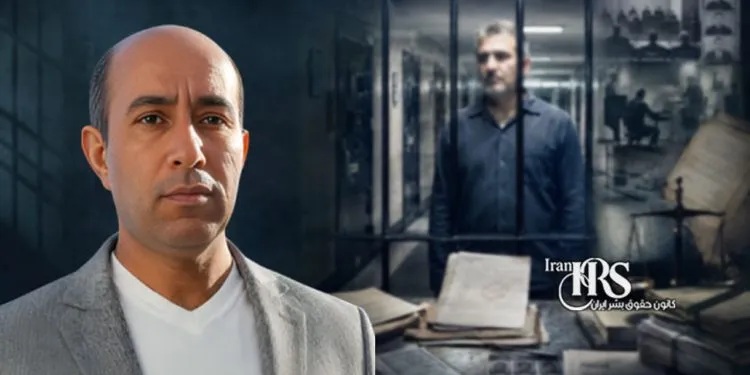
Yaqub Derakhshan, a political prisoner held in Lakan Prison in Rasht, after the overturning of his death sentence in the Supreme Court of the country was sentenced to death again; a case that is accompanied by reports of torture, forced confessions, in absentia court and ambiguity in the proceedings process
Iran Human Rights Society, Thursday, June 4, 2026 – Yaqub Derakhshan, a 50-year-old political prisoner from Bandar Anzali and held in Lakan Prison in Rasht, after his death sentence was overturned in the Supreme Court of the country, has once again been sentenced to death in Branch 2 of the Revolutionary Court of Rasht presided over by Mohammad Ali Darvish Goftar. This verdict which was issued on the charge of “Baghy”, has been notified to him in conditions where human rights institutions and sources close to his family have expressed concern regarding the proceedings process, the use of forced confessions, holding the court in absentia and the lack of transparency in the case.
Why was Yaqub Derakhshan sentenced to death again?

Based on published information, Branch 2 of the Revolutionary Court of Rasht after re-examining the case of Yaqub Derakhshan, has once again sentenced him to death. This verdict was issued last week and has recently been notified to him in Lakan Prison in Rasht.
This is while his previous death sentence had earlier been overturned in the Supreme Court of the country. It was expected that the overturning of the verdict in the Supreme Court would lead to a more precise examination of the case and resolving the existing ambiguities, but the parallel court has once again considered the same heavy punishment for this political prisoner.
Critics say that the re-issuance of the death sentence after the overturning of the verdict in the Supreme Court has created serious questions about the independence of the proceedings process and the degree of attention of the court to the objections raised in the cassation stage.
What ambiguities does the proceedings process of Yaqub Derakhshan’s case have?
The case of Yaqub Derakhshan has been accompanied by numerous ambiguities from the time of arrest. He was first arrested in July 2024 on the charge of “propaganda against the regime” and after some time was released on bail.
But in the second arrest, he faced a much heavier charge, namely “Baghy”; a charge that ultimately prepared the ground for issuing a death sentence.
At the same time, the judiciary has so far not provided a clear explanation about the instances of the charge, the documentation of the case and the reasons for the sudden change of the charge title from “propaganda against the regime” to “Baghy”. This very issue has caused a significant part of the case to remain in a halo of ambiguity.
How was the in absentia court held?
Based on reports from sources close to the family, the proceedings process of Yaqub Derakhshan’s case was held in absentia and through video conference.
Reports indicate that the court session was held in a short period of time and without providing sufficient opportunity for defense. Human rights activists believe that examining a case whose punishment is death requires the highest level of legal guarantees, full presence of the defendant, free access to a lawyer and the possibility of effective defense.
However, informed sources say that the proceedings process of Yaqub Derakhshan’s case has had a considerable distance from the standards of fair trial.
What is the role of the Darvish Goftar family in the case process?
One of the controversial points of this case is the issue of its examination in various branches where the name of the Darvish Goftar family has been mentioned in them.
Based on published information, the first death sentence of Yaqub Derakhshan in August 2025 was issued by the branch of the Revolutionary Court of Rasht presided over by Judge Ahmad Darvish Goftar. After that, the Supreme Court of the country overturned this verdict and referred the case for re-examination to the parallel branch.
However, reports indicate that the case was subsequently referred to a branch whose presidency was held by another member of the Darvish Goftar family named Mohammad Ali Darvish Goftar (son of Ahmad Darvish Goftar). This issue has created questions among human rights activists and judicial observers about the principle of impartiality and independence of the examination.
Critics say that when a case faces the punishment of death, the smallest suspicion about the independence of the judges and the proceedings process must be answered transparently.
What do reports say about torture and forced confessions?
Sources close to Yaqub Derakhshan’s family have announced that he has been subjected to severe physical and psychological pressures during the interrogation period.
Based on these reports, the confessions that were later used as one of the main documentations of the case have been obtained in conditions where this political prisoner was under severe pressure.
Human rights institutions have repeatedly emphasized that confessions obtained under torture or pressure lack legal validity and should not be the basis for issuing heavy verdicts, especially a death sentence.
However, reports show that these confessions have played an important role in the proceedings process of Yaqub Derakhshan’s case.
Why has this case created widespread human rights concerns?
The combination of several factors including ambiguity in the documentation of the case, issuance of a death sentence, holding the court in absentia, use of forced confessions and lack of transparency about the proceedings process has caused Yaqub Derakhshan’s case to turn into one of the concerning cases in the field of human rights.
Human rights activists believe that in such cases, especially when the death penalty is at issue, precise observance of the principles of fair trial and guaranteeing the rights of the defendant is an undeniable necessity.
Human rights violation; death sentence based on forced confessions and an ambiguous process
Yaqub Derakhshan’s case is accompanied by a set of serious human rights concerns. Reports related to torture for extracting forced confessions, holding the court in absentia, lack of transparency about the documentation of the case and the re-issuance of the death sentence after the overturning of the verdict in the Supreme Court, all have created serious questions about the observance of the principles of fair trial. Human rights institutions emphasize that in cases leading to the death penalty, any violation of the defendant’s rights can have irreparable consequences.
Violated articles:
- Article 5 of the Universal Declaration of Human Rights (Prohibition of Torture): Applying physical and psychological pressure to obtain confession is considered an example of torture and inhuman treatment.
- Article 10 of the Universal Declaration of Human Rights (Right to Fair Trial): Holding the court in absentia and limiting the possibility of defense puts fair trial in doubt.
- Article 11 of the Universal Declaration of Human Rights (Presumption of Innocence): Using forced confessions violates the principle of innocence until the crime is proven.
- Article 14 of the International Covenant on Civil and Political Rights: The defendant must have sufficient opportunity for defense, access to a lawyer and effective presence in the court.
- Article 6 of the International Covenant on Civil and Political Rights (Right to Life): Issuing a death sentence in a process accompanied by serious judicial ambiguities threatens the fundamental right to life.
- United Nations Principles of Fair Trial: Independence of the court, impartiality of judges and transparency of proceedings are among the basic requirements of a fair trial.
See also the below articles:
- Ehsan Qasemi Faces Torture and Unfair Trial in Iran
- Leila and Maryam Afarin Face Restrictions in Evin Prison
Follow Iran Human Rights Society on social networks:
Telegram /Twitter /Instagram / YouTube / Facebook
Join Iran Human Rights Society on Twitter