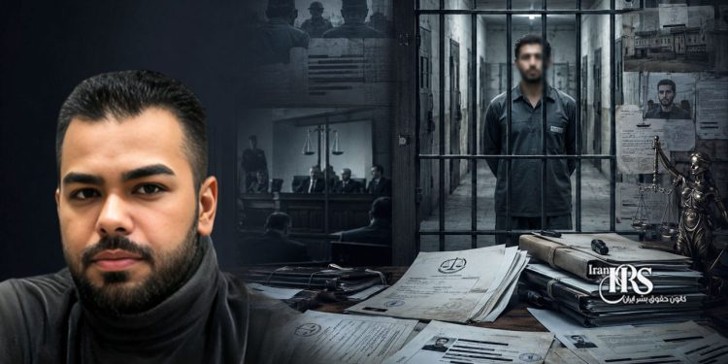
Hassan Moslavi’s Execution Sentence, After Confirmation in the Supreme Court, Was Notified to Him in Sheiban Prison of Ahvaz; A Case Accompanied by Serious Ambiguities in the Trial Process and Human Rights Concerns
Iran Human Rights Society, Wednesday, June 3, 2026 – Hassan Moslavi (Tarafi), Arab political and cultural activist and prisoner held in Sheiban Prison of Ahvaz, after the confirmation of the execution sentence in the Supreme Court, was officially informed of the implementation of this sentence.
This prisoner, who has been in detention since 2022, has been sentenced to execution on charges of “enmity against God” and
“membership in opposition organizations.” Human rights activists, pointing to the existing ambiguities in the trial process, the prominent role of security institutions in the case, and the lack of proportionality between the raised charges and the issued punishment, have warned about the implementation of this sentence.
What Charges Has Hassan Moslavi Been Convicted Of?

According to published reports, Hassan Moslavi was arrested by security forces in 2022. After months of detention, Branch One of the Mahshahr Revolutionary Court, presided over by Judge Mehran Mehmannavaz, in July/August 2023 convicted him on charges of “enmity against God” and “membership in opposition organizations” to execution.
This sentence was confirmed by Branch 39 of the Supreme Court in February/March 2025, but its official notification took until June 2026. Now, with the official notification of the ruling, concerns about the danger of implementing the execution sentence have increased.
Human rights activists emphasize that the details of the documents provided to prove these charges have never been transparently published, and the public is not aware of the legal bases for issuing such a heavy sentence.
Why Is the Trial Process of Hassan Moslavi’s Case Ambiguous?
One of the most important concerns in Hassan Moslavi’s case is the ambiguity in the judicial proceedings and the lack of transparency about the case documents.
According to published information, the execution sentence against him was issued in absentia. Also, the details related to the evidence of the charges, the manner of proceedings, the defendant’s effective access to defense facilities, and the process of reviewing the case at various judicial stages have not been publicly published.
Legal experts believe that in cases where the final punishment is deprivation of life, full observance of the principles of fair trial, transparency of the proceedings, and the possibility of effective defense by the defendant have special importance. However, in Hassan Moslavi’s case, numerous questions about how these stages were passed remain unanswered.
Is There Proportionality Between the Raised Charges and the Execution Sentence?
One of the main axes of criticism by human rights activists is the lack of proportionality of the raised charges with the punishment of execution.
In Hassan Moslavi’s previous cases, charges such as “propaganda against the regime,” “insulting the leader of the Islamic Republic,” “membership in an illegal group,” and “participation in riots” had been raised; charges that in many legal systems of the world fall into the category of political or ideological crimes and the death penalty is not considered for them.
Human rights activists believe that issuing an execution sentence in such cases is not compatible with the principle of proportionality of crime and punishment and can indicate the use of the death penalty as a tool to suppress opponents and political activists.
What Has Been the Role of Security Institutions in Hassan Moslavi’s Case?
Reviewing the history of Hassan Moslavi’s arrests shows that security institutions have had a prominent role in dealing with him.
In the 2019 case, the court had issued a bail order for his temporary release, but according to reports, security institutions prevented his release and this prisoner remained in limbo for more than 10 months.
Human rights activists consider this issue a sign of the influence and impact of security institutions on the process of political cases. In their opinion, in many similar cases, the path of investigations, interrogations, and even judicial decisions is influenced by the reports and demands of security agencies.
This very issue has caused Hassan Moslavi’s case to also face serious questions from the perspective of judicial independence and impartiality of the proceedings.
What Is the History of Hassan Moslavi’s Arrests and Activities?
Hassan Moslavi, 38 years old and from the village of Moslaviyeh in Khorramshahr, is considered one of the political and cultural activists of the region.
Before the 2022 arrest, he had also been arrested in 2019 along with a number of other cultural activists of Khuzestan province. In that case as well, numerous security charges were raised against him and he was held in limbo for months.
Human rights institutions believe that security confrontations with cultural and political activists have increased in recent years and many of these cases have been accompanied by heavy security charges.
Why Has Hassan Moslavi’s Case Created Human Rights Concerns?
Issuing an execution sentence against a political and cultural activist, especially in circumstances where the details of the proceedings and the case documents have not been transparently published, has caused concern for human rights institutions.
These institutions warn that the implementation of such sentences can lead to the intensification of the atmosphere of suppression and further restriction of political and cultural activities in Arab-inhabited regions.
Also, human rights activists have demanded the halt of the implementation of the sentence, an independent review of the case, and ensuring the right to a fair trial for Hassan Moslavi.
Violation of Human Rights; Execution in the Shadow of Ambiguity and Intervention of Security Institutions
Hassan Moslavi’s case is accompanied by a set of serious human rights concerns. Ambiguity in the trial process, issuing an execution sentence for political and security charges, lack of transparency about the case documents, and reports related to the influence of security institutions in the proceedings are among the issues that have drawn the attention of human rights institutions to this case. Human rights experts emphasize that the death penalty in cases accompanied by such ambiguities can lead to irreparable violation of the right to life.
Violated Articles:
- Article 3 of the Universal Declaration of Human Rights (Right to Life): Issuing and implementing an execution sentence in an ambiguous case threatens the most fundamental human right, namely the right to life.
- Article 10 of the Universal Declaration of Human Rights (Right to Fair Trial): Lack of transparency about the trial process and case documents weakens the right to a fair trial.
- Article 11 of the Universal Declaration of Human Rights (Principle of Presumption of Innocence): Every accused must be convicted based on clear evidence and the possibility of full defense.
- Article 19 of the Universal Declaration of Human Rights (Freedom of Expression and Belief): Security confrontation with political and cultural activities can limit freedom of expression and belief.
- Principles of Judicial Independence of the United Nations: Intervention or influence of security institutions in the proceedings questions the independence of the judiciary.
- Principle of Proportionality of Crime and Punishment: Issuing an execution sentence for disputed political and security charges creates concerns about the proportionality of the punishment.
See also the below articles:
- Yaqub Derakhshan Sentenced to Death Again Amid Judicial Concerns
- Ehsan Qasemi Faces Torture and Unfair Trial in Iran
Follow Iran Human Rights Society on social networks:
Telegram /Twitter /Instagram / YouTube / Facebook
Join Iran Human Rights Society on Twitter