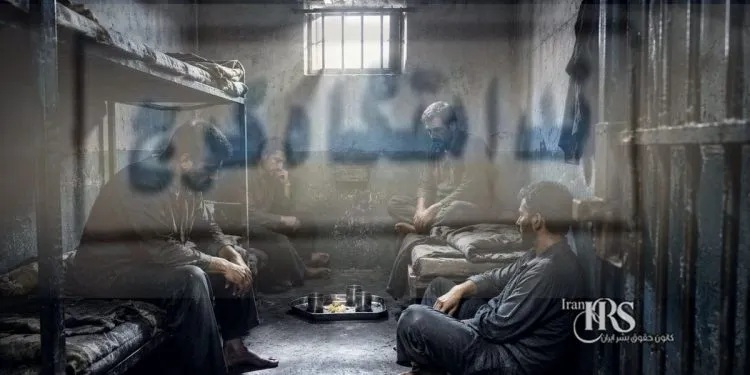
Reports received from Karaj Central Prison indicate the intensification of restrictions, reduction of welfare and medical services, sharp decline in food quality and suppression of prisoners’ protests. At the same time, hundreds of detainees from the nationwide protests of 2025-2026 are still being held in inappropriate conditions along with legal uncertainty in this prison.
Iran Human Rights Society, Thursday June 18, 2026 – The situation of Karaj Central Prison in recent weeks has been accompanied by increased pressure on prisoners, limitation of basic services and the occurrence of widespread dissatisfaction among prisoners. Informed sources from inside the prison say that prison officials have limited many welfare and medical services and the quality of food has reached a level that many prisoners describe it as inedible. Meanwhile, the collective protest of prisoners against these conditions has faced the intervention of the prison guard and violent confrontation. This situation continues while a large number of detainees from the nationwide protests of 2025-2026 are also being held in this prison.
Why has the situation of Karaj Central Prison reached a critical stage?
Based on received reports, in recent months the pressure on prisoners in Karaj Central Prison has noticeably increased. Prisoners say their access to many basic services has been limited and living conditions in the prison have become more difficult than before. Informed sources emphasize that from medical services to access to hot water, social work and even shops inside the ward, they have faced extensive restrictions. Some ward shops are also practically semi-closed and prisoners have faced serious problems in obtaining essential items. According to prisoners, these restrictions are not only welfare-related, but have become part of the continuous pressure on prisoners; a pressure whose effects are clearly observed in the physical and mental health of prisoners.
What is the quality of food in Karaj Central Prison like?
One of the most important complaints of prisoners is related to the quality of food. Reports indicate that the food distributed in Karaj Central Prison is of very low quality and many prisoners describe it as inedible. However, a significant portion of prisoners do not have the financial ability to buy sufficient food due to financial problems. This issue has caused prisoners to act collectively to meet their minimum food needs. Based on received reports, sometimes 10 to 12 prisoners pool their expenses together to be able to prepare one chicken or a limited amount of food materials and divide it among themselves. Prisoners say that prison food is not responsive to their needs neither in terms of quality nor in terms of volume. Also, dinner is distributed every day around six o’clock in the evening and due to lack of food and the impossibility of preparing sufficient food, many prisoners face hunger until the next morning.
How were the prisoners’ protests suppressed?
In the third week of Khordad and following the increase in restrictions and pressures, a group of prisoners staged a collective protest against the existing conditions. Informed sources say that prisoners demanded attention to the food situation, medical services, detention conditions and other existing problems. But these protests faced a severe reaction from prison officials. Based on these reports, the prison guard has raided the protesting wards and beaten the prisoners. Witnesses have described this confrontation as “violent” and say its purpose was to prevent the spread of protests inside the prison. Prisoners have requested through their families and sources outside the prison that their voice be transferred to the media and human rights institutions so that the existing conditions in Karaj Central Prison receive the attention of public opinion.
What is the situation of detainees from the nationwide protests of 2025-2026 like?
Simultaneously with the intensification of pressures in Karaj Central Prison, hundreds of detainees from the nationwide protests of 2025-2026 are also being held in this prison. Based on existing reports, about 400 to 500 people of the detainees are located in hall number 2 of the prison. Also, about 200 other people are being held in one of the prison’s warehouses. Informed sources say that some of these individuals are released after posting bail, but at the same time new individuals are arrested and replace them. This trend has caused the population of detainees in the prison to remain high. Reports also indicate that the mobile phones of detainees are examined by security institutions and through the extracted information, other individuals are identified and arrested.
What is the purpose of extensive transfers in the prison?
Previously, reports had also been published about the sudden transfer of hundreds of prisoners from hall 2 of Karaj Central Prison. Based on these reports, on January 2, 2026 and January 3, 2026, about 500 prisoners were transferred to other halls without providing a clear explanation. These transfers took place in conditions where many prisoners and their families were unaware of the reason for this decision. Also, about 15 people from the detainees of the nationwide protests were removed from hall 16 and transferred to hall 2; an action that according to prison sources was taken with the aim of preventing their communication with political prisoners.
Legal review of the situation of Karaj Central Prison based on domestic laws Legal ambiguities
Existing reports about the deprivation of prisoners from medical services, inappropriate food quality, violent confrontation with protesters and the uncertainty of a large number of detainees have raised serious questions about compliance with domestic laws in Karaj Central Prison. Also, it is not clear what the legal basis for the violent confrontation with prisoners’ protests has been and whether their complaints have been investigated or not.
Related legal provisions
Article 39 of the Constitution stipulates that violation of dignity and humiliating treatment towards prisoners is prohibited. The bylaws of the Prisons Organization also oblige prison officials to provide suitable food, medical services, hygienic facilities and necessary conditions for preserving the health of prisoners. Also, domestic laws emphasize on preserving the human dignity of prisoners and the prohibition of any violent or punitive behavior outside the legal framework.
Cases of law violation
Depriving prisoners of sufficient medical services. Providing inappropriate and insufficient food. Limiting access to basic living facilities. Violent confrontation with prisoners’ protests. Holding a large number of detainees in crowded conditions. Creating restrictions beyond the punishment determined by the court.
Violation of human rights; food, treatment and human dignity under pressure
The situation of Karaj Central Prison has also created widespread concerns from a human rights perspective. Depriving prisoners of suitable food, medical services and standard living conditions, along with the suppression of protests and population density, is contrary to the fundamental principles of prisoners’ rights.
Violated provisions
Article 5 of the Universal Declaration of Human Rights: Prohibition of inhuman and degrading treatments; deprivation of basic needs can be an example of such behaviors.
Article 10 of the International Covenant on Civil and Political Rights: The necessity of humane treatment of persons deprived of liberty.
Article 25 of the Universal Declaration of Human Rights: The right to enjoy an adequate standard of living, nutrition and medical care.
United Nations Mandela Rules: Prisoners should have access to sufficient food, clean water, medical services and appropriate hygienic conditions.
Recent reports show that Karaj Central Prison not only faces the problem of population density and holding hundreds of detainees from nationwide protests, but prisoners talk about conditions that according to them put more pressure on their lives and health every day.
See also the below articles:
- Concerns Rise Over Ehsan Khodadadi Execution Sentence in Tabriz
- Concerns Mount Over Alireza Peyghambari Transfer to Qezelhesar Prison
Follow Iran Human Rights Society on social networks:
Telegram /Twitter /Instagram / YouTube / Facebook
Join Iran Human Rights Society on Twitter