
Reports of Suppression of Prisoners After the Attack on Tehran Great Prison; Necessity of Immediate Implementation of Resolution 211 for the Release of Prisoners
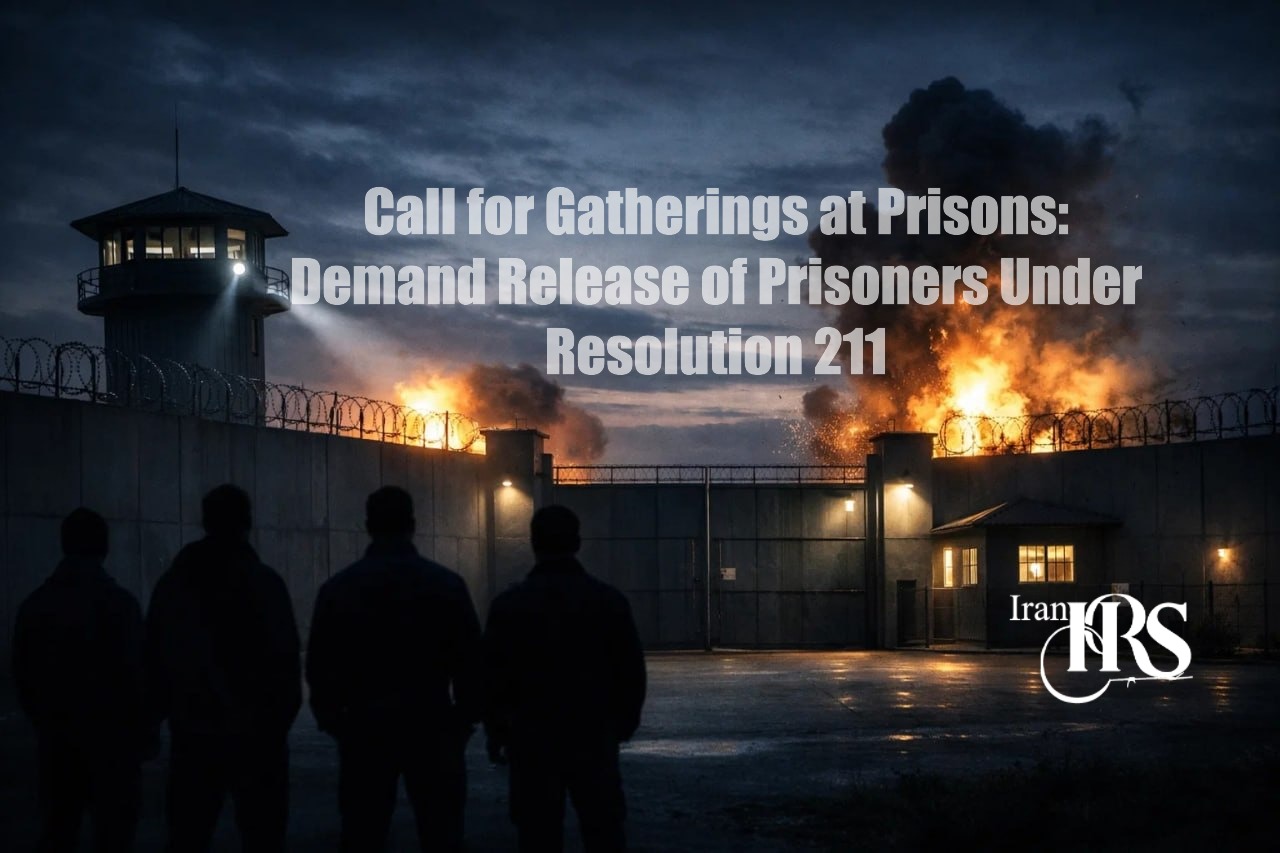
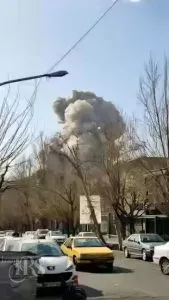
Iran Human Rights Society, Monday, 2 March 2026 – Following reports of a strike hitting the administrative section of Tehran Great Prison, concerns about the lives of prisoners have increased unprecedentedly. In circumstances where military threats continue, the danger of prisoners being killed in the event of repeated attacks is considered a serious and immediate possibility.
According to received reports, after the strike on the administrative section of the prison, prisoners exited the wards but were returned to the wards through suppression by the prison guards. Informed sources have reported severe confrontations after this incident. No official details about the condition of the injured or the extent of the damage have been published.
The Lives of Prisoners Are in Direct Danger
In wartime conditions, any location can become a target of attack. When a prison is hit, this is a serious warning that the lives of prisoners are in direct danger. Prisoners neither have the possibility of independent shelter nor the possibility of leaving the place of danger.
Considering the history of the attack on Evin Prison in the past, concern about the repetition of such incidents has increased. In that incident as well, the issue of prisoners’ safety became one of the main concerns. Now, with the expansion of military threats, the probability of repetition of such scenarios cannot be ignored.
Experts warn that in the event of another attack, prisoners will practically remain in a closed space without the possibility of escape. This situation can lead to extensive casualties.
Critical Conditions and the Danger of Escalation of Internal Violence
In addition to the external danger, reports of suppression of prisoners after the incident have been published. In crisis conditions, the probability of imposing stricter restrictions, cutting off communications, and punitive confrontations increases.
In such a situation, prisoners are placed between two dangers: the external threat caused by attacks and the internal pressure caused by security conditions. This combination can place the lives of defenseless individuals in immediate danger.
Preserving the lives of prisoners in all circumstances is the direct responsibility of the Judiciary and the Prisons Organization. This responsibility becomes heavier and more urgent in wartime conditions.
Resolution 211; A Specific Legal Obligation for Immediate Action
In these circumstances, Resolution No. 211 of the Supreme Judicial Council dated 12 January 1987 has provided a specific legal tool to reduce the danger. According to this resolution, in emergency situations resulting from war, the Judiciary is obliged to take action to preserve the lives of prisoners.
These actions include converting the type of bail, granting conditional release, accepting bail or suretyship, and transferring prisoners to safe locations. The purpose of this regulation is to prevent prisoners from being placed in direct danger.
According to this resolution, if ordinary measures are insufficient, prosecutors can release low-risk prisoners until the emergency situation is resolved. Political prisoners, ideological prisoners, financial prisoners, non-intentional crimes, and minor crimes fall into this category.
In the case of prisoners convicted of violent crimes, transfer to safe locations is also provided for. Jurists emphasize that the implementation of this regulation in the current conditions is an immediate legal obligation, not an administrative option.
Necessity of Immediate Action to Prevent a Catastrophe
Considering the strike on part of the prison and the continuation of military threats, any delay in decision-making can have irreparable consequences. Prisoners have no possibility of defending themselves against bombardment or aerial attacks.
If preventive action is not taken, there is a possibility of a human catastrophe occurring. The lives of defenseless prisoners should not be endangered due to indecision or administrative delay.
Follow-up by Families and Demand for Ensuring Safety
In circumstances where the ruling authorities are taking no effective action for the release of defenseless prisoners, the ethical and social responsibility falls on the shoulders of families and society. The presence of people and prisoners’ families in front of prisons and demanding the opening of prison gates and the release of prisoners can be a collective effort to save their lives; a protest action with the aim of preventing the continuation of serious dangers, exposing the inaction of the authorities, and drawing public attention to the situation of prisoners.
Recent developments have turned the issue of releasing low-risk prisoners and transferring other prisoners to safe locations into an immediate demand. In circumstances where the danger of bombardment and military conflict continues, ensuring the safety of prisoners must be prioritized.
In summary, the report of the strike on Tehran Great Prison has sounded a serious alarm about the situation of prisoners. In conditions where attacks may be repeated at any moment, the immediate implementation of Resolution 211 and the adoption of practical measures to protect the lives of prisoners has become an urgent necessity.
See also the below articles:
- Khamenei Death: A Legacy of Suppression, Killings, and Regional Interventions
- Emergency Situation in Evin Prison: Concerns Grow Over Prisoners’ Safety and Basic Rights
Follow Iran Human Rights Society on social networks:
Telegram /Twitter /Instagram / YouTube / Facebook
Join Iran Human Rights Society on Twitter







Discussion about this post