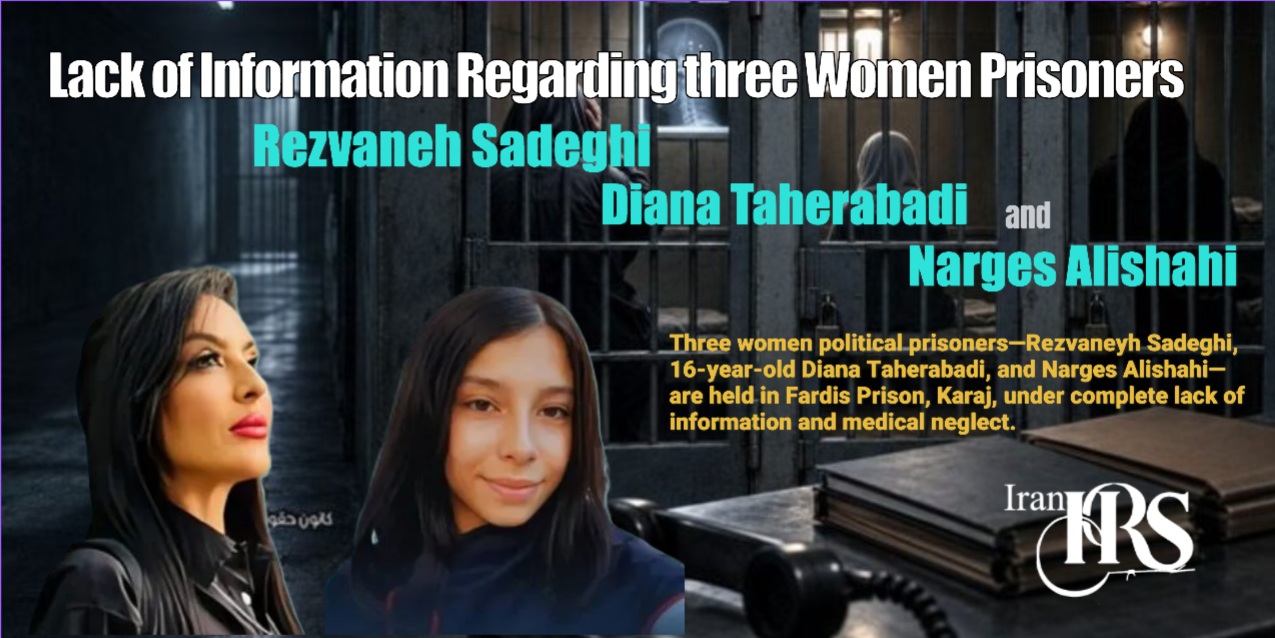
Rezvaneh Sadeghi faces a medical emergency with three pellets remaining lodged in her head; 16-year-old juvenile Diana Taherabadi faces “Moharebeh” charges; no judicial details have been released regarding Narges Alishahi
Iran Human Rights Society, Sunday, September 13, 2026 – Reports from Fardis Prison in Karaj indicate a total lack of information regarding the condition of three women prisoners: Rezvaneh Sadeghi, Diana Taherabadi, and Narges Alishahi. Their access to family contact, legal counsel, and necessary medical care remains unconfirmed, while transparent details about their judicial proceedings are entirely absent.
According to available information, Rezvaneh Sadeghi and Narges Alishahi are being held in Hall 5 of Fardis Prison. Meanwhile, Diana Taherabadi is detained in a section designated for underage prisoners, referred to as the “kindergarten” ward.
Emergency Medical Condition of Rezvaneh Sadeghi

Rezvaneh Sadeghi has been held in detention since January 2026 and currently faces the most critical physical condition among the three prisoners. Three bullet pellets from initial shootings remain lodged in her head, with no steps taken thus far to surgically extract them.
Retaining metal pellets in the head poses severe risks of infection, hemorrhaging, neurological damage, severe chronic headaches, and other permanent injuries. Her situation requires immediate examination by medical specialists, diagnostic imaging, and prompt surgical intervention. However, no information exists indicating her transfer to a specialized hospital or regular access to a physician.
The identity of any medical center where Sadeghi may have been examined prior to or during her detention remains unstated. Furthermore, it is unknown what official medical records have been compiled by prison authorities or whether adequate medication and specialized care are being provided.
Neglecting a prisoner’s emergency medical needs and denying effective treatment endangers their life and physical integrity. Full responsibility for ensuring Rezvaneh Sadeghi’s medical treatment rests with prison management, the Prisons Organization, and the supervising judicial authorities.
Diana Taherabadi: 16-Year-Old Juvenile Facing Heavy Sentences

Diana Taherabadi, a 16-year-old minor, is detained in the juvenile ward of Fardis Prison. The charge raised against her relates to allegedly setting fire to a police kiosk during the January 2026 protests.
Her legal file has been pursued under the charge of “Moharebeh” (enmity against God)—an offense in current penal laws carrying severe punishments, including the death penalty. Nevertheless, clear details regarding the judicial branch, evidence, trial dates, or her access to chosen legal representation have not been made public.
Available reports suggest that judicial decision-making in her case may have been stalled due to her being 16 years old, with final rulings potentially delayed until she reaches legal adulthood. Such procedural delays do not alter her age at the time of the alleged offense. International legal prohibitions against sentencing minors to death strictly evaluate the individual’s age at the exact time the alleged act occurred, regardless of their age during trial or execution.
Narges Alishahi: Continued Ambiguity Surrounding Case Status
Narges Alishahi is incarcerated alongside Rezvaneh Sadeghi in Hall 5 of Fardis Prison. Although her physical location of detention is confirmed, details regarding her initial arrest date, precise charges, health status, court branch, and access to legal representation or family visitation remain completely unknown.
The absolute absence of information regarding Alishahi’s file heightens concerns over her continued detention under prolonged judicial uncertainty. It remains unclear whether any court sessions have been held for her case or if she remains in pre-trial limbo.
Ambiguity Regarding Right to Legal Counsel, Visitation, and Contact
No clear information has been released confirming phone access or family visitation for any of the three prisoners. Additionally, it remains unconfirmed whether they have been permitted access to defense attorneys or given opportunities to review their case files and prepare legal defenses.
Families retain the basic right to be informed of their relatives’ detention location, health status, and judicial progress. Prison authorities are legally obligated to guarantee prisoners access to communication, family visits, medical services, and independent legal representation.
Information Box | Case Details at a Glance
| Subject | Rezvaneh Sadeghi | Diana Taherabadi | Narges Alishahi |
| Age / Profile | Adult | 16 years old (Juvenile) | Adult |
| Detention Location | Fardis Prison (Hall 5) | Fardis Prison (“Kindergarten” Ward) | Fardis Prison (Hall 5) |
| Detention Context | Detained since January 2026 | January 2026 Protests | In custody / Unclear date |
| Primary Charges | Unspecified | Moharebeh (Enmity against God) | Unspecified |
| Critical Issues | 3 pellets lodged in head; severe medical neglect | Minor facing potential capital charge; trial delayed | Complete legal and judicial uncertainty |
| Rights Denied | Specialized medical care, family/legal contact | Fair juvenile trial guarantees, legal representation | Case transparency, access to attorney/family |
Legal Review of the Cases Based on Domestic Laws
The laws of the dictatorship ruling Iran have consistently been criticized due to conflicting with fair trial standards and restricting citizens’ rights. Reviewing these cases based on domestic laws does not mean confirmation of these laws; rather, it demonstrates that even internal regulations mandate observing fundamental prisoner rights.
Legal Ambiguities of the Cases
- Articles 32, 35 & 39 of the Constitution: Mandate formal notification of charges, guarantee the right to legal defense, and strictly prohibit the violation of a prisoner’s dignity and security.
- Articles 48, 50 & 190 of the Code of Criminal Procedure: Guarantee the right to access an attorney from the outset of detention and mandate notifying family members of a detainee’s location.
- Article 91 of the Islamic Penal Code: Establishes explicit restrictions regarding offenses allegedly committed by individuals under 18 years of age.
- Statutory Violations: Withholding critical medical care from Sadeghi, keeping Alishahi in indefinite limbo, and subjecting 16-year-old Taherabadi to capital charges directly violate statutory protections under domestic law.
Reviewing the Cases from the Perspective of Human Rights and International Standards
Denying specialized medical care to an injured prisoner, subjecting a juvenile to capital charges, and keeping detainees incommunicado represent severe breaches of international human rights treaties.
Human Rights Ambiguities of the Cases
Refusing emergency medical treatment to a prisoner carrying severe physical injuries constitutes cruel, inhuman, and degrading treatment. Furthermore, subjecting minors to severe capital charges violates fundamental international prohibitions on juvenile justice.
Related International Documents
- Article 6 of the ICCPR & Article 37 of the Convention on the Rights of the Child (CRC): Strictly prohibit the issuance or execution of the death penalty for crimes committed by individuals under 18 years of age. Reaching legal adulthood during proceedings does not remove this absolute prohibition.
- UN Nelson Mandela Rules (Rules 24–35): Mandate that healthcare for prisoners is a state responsibility and that medical care must be provided without discrimination.
- Articles 5, 9 & 10 of the UDHR and Articles 7, 9 & 14 of the ICCPR: Protect individuals from arbitrary detention, guarantee human dignity, and ensure the right to a fair trial and outside communication.
See also the below articles:
- Execution 6 Prisoners Zabol Jiroft Iranshahr Zahedan
- Six Months of Incommunicado Status for Mahmoud Hosseinian
Follow Iran Human Rights Society on social networks:
Telegram /Twitter /Instagram / YouTube / Facebook
Join Iran Human Rights Society on Twitter