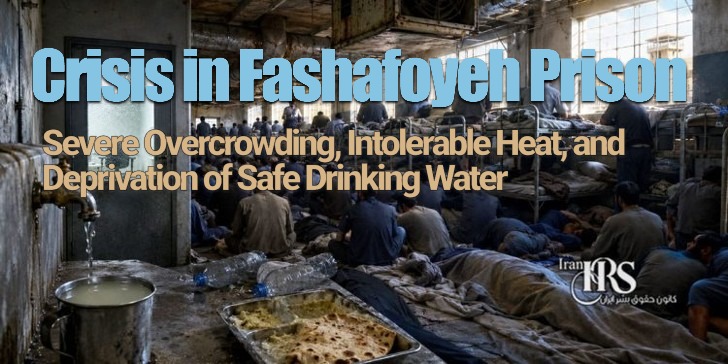
Fresh reports from Greater Tehran Prison indicate the holding of thousands of prisoners beyond capacity, inefficiency of the cooling system, unsuitable quality of water and food, and inadequate access to medical services
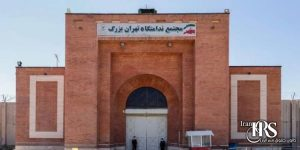
Iran Human Rights Society, Saturday, August 22, 2026 – Newly received information from Fashafoyeh Prison (Greater Tehran), famous as Greater Tehran Prison, speaks of the continuation of critical conditions in this complex.
Severe population density, unbearable heat, inefficiency of cooling systems, lack of safe drinking water, very low quality of food and bread, and problems related to prisoners’ access to doctors and medical services have faced the lives of thousands of prisoners with serious dangers.
Based on this information, Greater Tehran Prison consists of six separate brigades and its population in total is estimated at about 22,000 people. These statistics have not been officially published by government officials and require independent verification; nevertheless, reports received from inside the prison show that some brigades hold far more prisoners than their anticipated capacity.
In the new report, “Modabber” is also named as the head of Greater Tehran Prison and “Jalilvand” as the head of Brigade Five. Iran Human Rights Society has not had the possibility of independent confirmation of these appointments and the exact statistics of the prison population, and the mentioned information is published based on reports from sources inside the prison.
What You Read in This Report
- The population of Fashafoyeh Prison is estimated at about 22,000 people;
- Some prison brigades face a population far beyond nominal capacity;
- Brigade Six is reported as the location of holding a number of protest detainees and political prisoners;
- Worn-out “air handler” systems are unable to cool overcrowded halls;
- Available water is not suitable for drinking and prisoners are forced to buy packaged water;
- Using prison water has been considered related to skin problems and hair loss among prisoners;
- Quality of food and bread is reported to be very low and part of the food is thrown away;
- Reports about medical services are not identical and speak of inadequate access in some sections;
- The previous report of Brigade Five had informed of floor-sleeping, skin diseases, visit restrictions, and inequality in access to facilities.
Information Box | Fashafoyeh Prison
| Subject | Reported Status |
| Name of Complex | Greater Tehran Prison or Fashafoyeh Prison |
| Structure | Six separate brigades |
| Total Population | About 22,000 people; estimated and unconfirmed statistics |
| Declared Capacity of Each Brigade | About three thousand people |
| Crowded Brigades | Brigades Two and Five, location of holding a large number of financial prisoners |
| Political Prisoners | Holding a number of political prisoners and protest detainees in Brigade Six |
| Cooling System | Old, high-consumption, and inefficient air handlers |
| Drinking Water | Unsuitable; forcing prisoners to buy packaged water |
| Health Problems | Reports of skin diseases, fungus, and hair loss |
| Food and Bread | Very low quality and throwing away part of the food |
| Medical Services | Reports of inadequate access in some brigades; Brigade Five status described as “ordinary” |
How Are the Six Brigades of Greater Tehran Prison Divided?
Based on new information, Fashafoyeh Prison has six brigades, each of which is intended for holding a group of prisoners. Brigade One is dedicated to prisoners accused or convicted of theft and drug-related crimes. In Brigade Two, financial prisoners and a number of prisoners related to theft cases are held.
Brigade Three is stated as the quarantine location and holding of newly arrived prisoners. Brigade Four is dedicated to prisoners who are classified as “dangerous” in the internal structure of the prison. Brigade Five is mainly the location of holding financial prisoners, and Brigade Six is also used at the current period for holding a number of nationwide protest detainees and political prisoners.
This division may change with the relocation of prisoners and internal decisions of prison officials. Nevertheless, received reports show that Brigades Two and Five are among the most crowded sections of Greater Tehran Prison due to the concentration of financial prisoners.
Ambiguity in Statistics; Estimate of 22,000 Prisoners in Fashafoyeh
The admission capacity of each brigade is stated as about three thousand people in the new report. The source of the report also declared the population of some crowded brigades to be close to five thousand people and estimated the total population of Fashafoyeh Prison at about 22,000 people.
Since the estimate of five thousand prisoners for all six brigades is not consistent with the total number of 22,000 people, these figures cannot be considered a definitive census. It is probable that the number of five thousand relates to the more crowded brigades or that the population of brigades changed at different periods. The publication of official statistics of capacity, number of beds, and real population of each brigade is necessary to remove this ambiguity.
What is common in new and previous reports is holding a population far greater than the capacity of beds and available space. In the previous report of Iran Human Rights Society from Brigade Five of Greater Tehran Prison, the population of each hall was declared as about 400 people and its bed capacity as 240.
In this way, about 160 prisoners were present beyond bed capacity in each hall and a number of them were forced to floor-sleep in hallways or the religious hall (Hosseiniyeh).
Population density does not mean only lack of beds. Gathering of hundreds of prisoners in a limited space places more pressure on showers, toilets, ventilation system, clinic, store, and communication facilities, and increases the probability of spreading skin, respiratory, and infectious diseases.
Unbearable Heat and Worn-out Air Handlers
One of the most important problems of Fashafoyeh Prison in the warm season is the inefficiency of the cooling system. Based on the received report, old devices known as “air handlers” are still used in this prison. These devices, despite consuming thousands of liters of water daily, are unable to properly cool overcrowded halls.
When the number of prisoners exceeds designed capacity, heat produced in enclosed space increases and limited air flow also lacks the power to reduce temperature. In such conditions, extreme heat can create greater danger for the elderly, heart and respiratory patients, individuals with high blood pressure, and prisoners who consume medication.
The cooling problem continues under conditions where according to internal regulations, prison officials are obligated to provide suitable temperature and standard ventilation of halls proportionate to season and climate conditions. Using high-consumption and inefficient equipment, without modifying infrastructure or reducing density, practically places prisoners in a warm, enclosed, and exhausting environment.
Water in Fashafoyeh Prison Is Not Suitable for Drinking
The water crisis is among the most serious axes of the new report. According to sources, water available in Greater Tehran Prison is not suitable for drinking and its use has been considered related to the occurrence of skin problems and severe hair loss among prisoners. To determine a definitive relationship between water quality and diseases, independent water testing and medical examination of prisoners is necessary.
To drink water, prisoners are forced to buy packaged water at personal expense. This situation relies access to one of the most basic human needs on the financial capability of the prisoner or their family. Prisoners who lack financial resources, in practice, are placed between consuming unsuitable water and enduring thirst.
In the previous report of Brigade Five, prison water was also described as salty and unsuitable. Sources even reported unpleasant smell of some packaged waters supplied in the store. Therefore, buying water also does not necessarily guarantee access to a healthy and reliable product.
According to Article 128 of the Executive Regulations of the Prisons Organization, access to safe drinking water matching health standards is a “prisoner’s right” and the Prisons Organization has the duty to continuously test and confirm water safety. Consequently, forcing prisoners to buy water to meet daily needs cannot replace the prison’s legal responsibility in providing free safe water.
Daily Sanitation on the Shoulders of Prisoners; The Main Problem Still Remains
Showers, light rooms (kitchens), toilets, and parts of the public space of the prison are cleaned daily by the prisoners themselves. This action may prevent the accumulation of contamination, but without suitable water, sufficient detergents, effective ventilation, and density control, the possibility of maintaining sustainable sanitary conditions does not exist.
Prison regulations place the performance of daily cleaning of some sections on prisoners with planning and supervision of officials; but this rule does not eliminate the responsibility of the Prisons Organization in providing safe water, hygiene items, sufficient showers, and standard environment. Cleaning work by prisoners cannot compensate for infrastructural weakness and water contamination.
Low-Quality Food and Throwing Away Prisoners’ Rations
The quality of bread and food distributed in Fashafoyeh Prison is reported to be very low. Sources say part of the food is thrown away by prisoners due to unsuitable quality. This topic has serious consequences especially for prisoners who do not have the ability to buy food or supplementary items from the store.
The previous report from Brigade Five also indicated that some prisoners faced digestive distress after consuming prison bread. Making usable water and food dependent on purchase from the store creates inequality between wealthy prisoners and low-income prisoners.
Based on Articles 153 and 154 of Prison Regulations, raw food ingredients must be of high quality and excellent, and prisoners must receive three meals of food containing sufficient calories and vitamins, along with safe drinking water. The text of regulations related to health, treatment, and nutrition of prisoners also places supervision over quality of food items and water on the health and treatment unit of the prison.
Status of Doctor and Clinic; Different Reports from Brigades
Information about the status of doctor and clinic in all sections of the prison is not identical. The new report speaks of shortage or inadequate access of prisoners to doctors at the level of Fashafoyeh Prison, but the status of the clinic,
medication, and presence of doctor in Brigade Five is described as “ordinary.”
Therefore, total absence of doctors in all brigades cannot be concluded. The main issue is the proportion of the number of doctors, nurses, and treatment facilities with a population estimated at about 22,000 people. Even the existence of a clinic or limited presence of a doctor does not mean effective access of thousands of prisoners to timely examination and treatment.
Article 139 of Prison Regulations specifies that in institutions having more than three thousand prisoners, doctors must be present 24 hours a day in three shifts. This regulation also makes hourly presence of specialist doctors mandatory. The health and treatment unit is also obligated based on Article 149 to permanently and daily monitor all prisoners regarding disease and treatment needs.
Previous Reports of Inequality and Visit Restrictions
The previous report of Brigade Five, in addition to density, unsuitable water and food, informed of dedicating some rooms to prisoners with financial capability. Based on that report, in some halls, four rooms out of a total of 16 rooms were placed at the disposal of prisoners who were able to pay money; at the same time, other prisoners were floor-sleeping in hallways and the religious hall (Hosseiniyeh).
Also, claims regarding entry and sale of narcotics, access to mobile phones in special rooms, and the role of some internal factors were raised. These items have not been independently confirmed, but due to their importance, they must become the subject of impartial investigation and inspection outside the managerial structure of the prison.
A three to four-month wait for in-person visits and improper treatment of families were among other reported items. Population density can affect visit times, but responsibility for providing regular communication of prisoners with family remains on prison management.
Legal Review of Fashafoyeh Prison Status Based on Domestic Laws
The laws of the dictatorship ruling Iran in past years have been criticized repeatedly due to conflict with standards of fair trial, ambiguity in handling security cases, and restricting rights and freedoms of citizens. Reviewing the status of Fashafoyeh Prison based on domestic laws does not mean confirmation of these laws; the goal is to show instances where even these same laws have not been observed by prison officials and government bodies.
Legal Ambiguities
The most important ambiguities are the absence of official and verifiable statistics of population and capacity of brigades, lack of results of water health tests, unclear number of active doctors and nurses in each shift, and absence of a transparent report on food quality, store performance, and manner of handling prisoners’ complaints.
In case reports are correct, prisoners are forced to pay money to enjoy drinkable water, while providing safe water is a legal duty of the prison. Also, existence of a doctor without possibility of timely visit, sufficient medication, and treatment follow-up will not mean implementation of legal commitment of medical care.
Related Legal Articles
- Article 22 of the Constitution: Considers life, rights, and dignity of persons immune from violation;
- Article 39 of the Constitution: Prohibits violation of honor and dignity of arrested and imprisoned individuals;
- Article 128 of Prisons Organization Regulations: Considers safe drinking water a prisoner’s right;
- Articles 133 and 134 of Regulations: Makes providing standard cooling, heating, and ventilation mandatory;
- Articles 136 to 140 of Regulations: Emphasizes providing treatment needs, presence of doctor, and treatment follow-up;
- Articles 153 and 154 of Regulations: Obligates the prison to provide sufficient food and safe drinking water;
- Article 156 of Regulations: Considers supervision over quality of equipment, medication, and food items a duty of the health and treatment unit;
- Article 157 of Regulations: Stipulates providing cooling and heating equipment and prioritizing political, sick, and elderly prisoners.
Cases of Law Violation
- Holding prisoners beyond space and existing bed capacity;
- Lack of access to safe drinking water and forcing the purchase of water;
- Reports of skin problems and hair loss in connection with water quality;
- Inefficiency of the cooling and ventilation system during the warm season;
- Inadequate access to doctors and medical services proportionate to the population;
- Low quality of food and bread;
- Inequality in access to facilities based on financial ability;
- Absence of transparency and accountability regarding conditions in prison brigades.
Reviewing Fashafoyeh Prison Status from the Perspective of Human Rights and Violation of International Standards
Extreme overcrowding, unbearable heat, lack of safe drinking water, unsuitable nutrition, and inadequate access to medical services can violate prisoners’ health and dignity simultaneously. Deprivation of liberty is not a permission to deprive an individual of water, food, treatment, suitable sleeping space, or humane conditions of holding.
Related International Documents
- Article 5 of the Universal Declaration of Human Rights: Prohibition of cruel, inhuman, or degrading behavior or punishment;
- Article 10 of the International Covenant on Civil and Political Rights: Obligation for humane and respectful treatment of all persons deprived of liberty;
- Article 12 of the International Covenant on Economic, Social and Cultural Rights: Right to enjoy the highest attainable standard of physical and mental health;
- Rules 12 to 23 of the Nelson Mandela Rules: Provision of adequate space, ventilation, suitable temperature, sanitary facilities, drinking water, and sufficient food;
- Rules 24 to 27 of the Nelson Mandela Rules: Government responsibility in providing medical services to prisoners at a standard equal to the community;
- Basic Principles for the Treatment of Prisoners: Necessity of respecting inherent dignity of all prisoners.
Immediate and independent inspection of Fashafoyeh Prison, publication of exact population statistics of each brigade, general and independent testing of water, free provision of safe drinking water, modification of cooling and ventilation system, increasing the number of doctors and medical staff, improving food quality, and impartial handling of reports of corruption and discrimination are among the most urgent demands raised regarding this prison.
See also the below articles:
Follow Iran Human Rights Society on social networks:
Telegram /Twitter /Instagram / YouTube / Facebook
Join Iran Human Rights Society on Twitter