
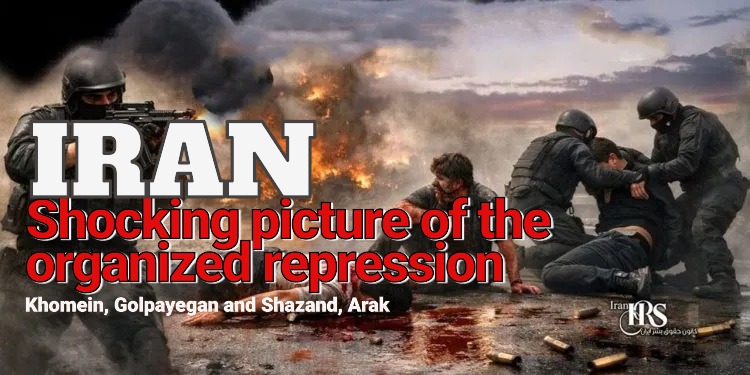
Reports received from Khomein, Golpayegan and Shazand, Arak paint a shocking picture of the organized repression of the nationwide protests of 2026; a repression that has been accompanied by the firing of live ammunition, the killing of dozens of people, widespread arrests and systematic pressure on families.
Iranian Human Rights Society, Saturday, February 24, 2026 – Continuing the wave of bloody repression of the people in the nationwide protests of 2026, reports received from the three cities of Khomein, Golpayegan and Shazand, Arak indicate the widespread killing of protesters, direct firing with live ammunition, mass arrests and an organized effort to conceal the true dimensions of the crimes. These reports show that the security and military forces of the Islamic Republic have implemented a policy of all-out repression in these areas using deadly violence.
Bloody repression of the people of Khomein and the killing of two former political prisoners
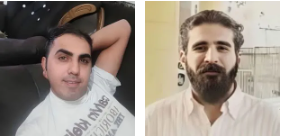
On January 1, 2026, as nationwide protests spread in the Markazi province, security forces in the city of Khomein opened fire with live ammunition on protesting people. As a result of this attack, at least five people were killed on the streets of Khomein. The names of the deceased are: Hossein Qashqai, Sajjad Bakhshali, Erfan Behdari, Amir Omidi and another citizen with the last name Chamani. All five people lost their lives by direct gunshots.
Among the victims are the names of two former political prisoners; Hossein Qashqai and Sajjad Bakhshali, who had previously been arrested and imprisoned for their protest and political activities.
Hossein Qashqai was a well-known protest figure in Khomein. He was arrested once in November 2018 for his activities in cyberspace and again in February 2019 during the protests of that year and was then released. He was later sentenced to three years in prison on charges of “propaganda against the regime,” “insulting Khamenei,” and “spreading lies” and transferred to Greater Tehran Prison. Hossein Qashqai was released from prison in 2022, but was eventually shot and killed by government forces during the nationwide protests of 2026.
Sajjad Bakhshali was also 27 years old and was arrested in September 2024 for participating in the Bazaar protests. He was sentenced to five years in prison on charges of “gathering and collusion” and “propaganda against the regime” and was eventually released on January 1, 2024. However, during the nationwide protests of 2026, he joined the ranks of the protesters again and was killed by direct fire from security forces. Permission to bury his body was granted after a week, and his family was only able to bury him on Friday, January 16, 2026.
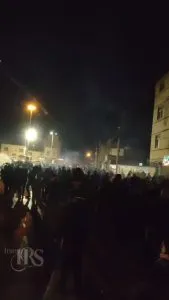
Local sources in Khomein have emphasized that the actual death toll in the city is much higher than the five people announced. According to witnesses, the number of victims of Khomein during the nationwide uprising is estimated to be at least 50 to 70 people, a figure that indicates the vast extent of the killings in the city.
Golpayegan; Direct Role of the IRGC in the Killings and Dozens of Deaths
In Golpayegan County, the suppression of the nationwide protests of 2026 was also carried out in an organized and deadly manner. According to reports received by the Iranian Center for Human Rights, a Guardsman named “Sardar Afra” has been introduced as directly responsible for the killings of people in this county. This IRGC commander was dispatched to Golpayegan from Isfahan and was in charge of leading the suppression operations.
According to unconfirmed news, the number of injured people in Golpayegan has reached about 600 people. The number of people killed in the uprising in this county has also been announced to be at least 35 people, among whom were three citizens from Khansar.
Eyewitnesses say that security forces fired live ammunition into protest gatherings without prior warning. Many of the injured were not taken to medical centers for fear of arrest and were treated in secret. Families of the dead were also under intense pressure to refrain from informing the public and accept the official government narrative.
Shazand Arak; Eleven Official Deaths and People’s Accounts of Hundreds of Victims
In Shazand, a province of Markazi Province, the nationwide protests of 2026 have also been met with bloody repression. As of the time of writing, at least 11 people have been killed in Shazand and families have buried the bodies of their children. However, people’s accounts paint a much more horrific picture of the scale of the disaster.
According to Araki citizens, the actual number of deaths in Arak is around 830; a figure that, if true, would represent one of the largest urban massacres during the nationwide protests of 2026.
Simultaneously with the street massacre, a large wave of arrests has also been launched in Shazand and Arak. The names of a number of those arrested have been announced as follows: Rashid Shahmansouri (high school principal and teacher), Yavar Allahyari, Saeed Najafi, Khalil Hajgoli (teacher and veteran runner). Local sources say that many of the detainees were arrested without a judicial warrant and severely beaten, and the health condition of some of them is reported to be critical.
Attempts to conceal crimes and suppress information
In all three cities of Khomein, Golpayegan, and Shazand, Arak, a common pattern of behavior by government forces is seen: direct shooting at protesters, transfer of bodies by security forces, pressure on families to remain silent, and severe restrictions on access to information. Witnesses say that in some cases, officers have taken the bodies of the deceased with them, and families have spent days searching in complete ignorance for any sign of their loved ones.
Internet outages and disruptions in communication networks have also played a significant role in concealing the true extent of the killings. This situation has caused a significant gap between the official statistics announced by the government and the accounts of citizens on the ground.
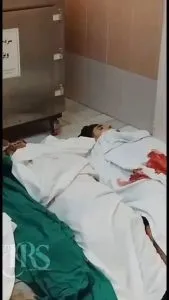
Widespread human rights violations in the suppression of nationwide protests in 2026
The bloody repression of the people in Khomein, Golpayegan, and Shazand, Arak, is a clear example of the systematic violation of human rights; from the right to life to the right to peaceful protest and the right to a fair trial. Direct shooting of protesters, arbitrary arrests, and pressure on families to remain silent are common patterns of this repression.
- Article 3 of the Universal Declaration of Human Rights – Right to Life
The killing of protesters with live ammunition is a clear violation of the fundamental right of every human being to life and personal security.
- Article 5 of the Universal Declaration of Human Rights – Prohibition of Torture and Inhuman Treatment
Beating detainees and humiliating treatment of the families of the deceased are examples of inhuman treatment and psychological torture.
- Article 9 of the Universal Declaration of Human Rights – Prohibition of Arbitrary Detention
Arresting protesters without a judicial warrant and keeping them in complete ignorance is a clear violation of this article.
- Article 19 of the Universal Declaration of Human Rights – Freedom of Expression
The suppression of public protests and restrictions on the dissemination of information are violations of freedom of expression and the right to access information.
- Article 20 of the Universal Declaration of Human Rights – Freedom of Peaceful Assembly
Firing on peaceful protest gatherings is a clear violation of the people’s right to assemble and protest.
A shocking picture of organized repression
Reports from Khomein, Golpayegan, and Shazand, Arak, paint a shocking picture of the organized repression of the 2026 nationwide protests; a repression that has been accompanied by live ammunition, the killing of dozens of people, widespread arrests, and systematic pressure on families. The stark discrepancy between official statistics and popular narratives highlights the need for independent international investigations.
Human rights observers emphasize that what has happened in these cities is not simply a series of isolated violations, but part of a nationwide policy to silence popular protests through deadly violence. In such circumstances, calls for the immediate intervention of international institutions and holding the perpetrators of these crimes accountable are increasing, as global inaction could pave the way for the continuation of this bloody cycle.
See also the below articles:
- Let the world know what happened in Iran! suppression of nationwide protests in 2026
- Arrest of hundreds of citizens on charges of participating in the nationwide protests of 2026 + List No. 4
Follow Iran Human Rights Society on social networks:
Telegram /Twitter /Instagram / YouTube / Facebook
Join Iran Human Rights Society on Twitter

Discussion about this post