
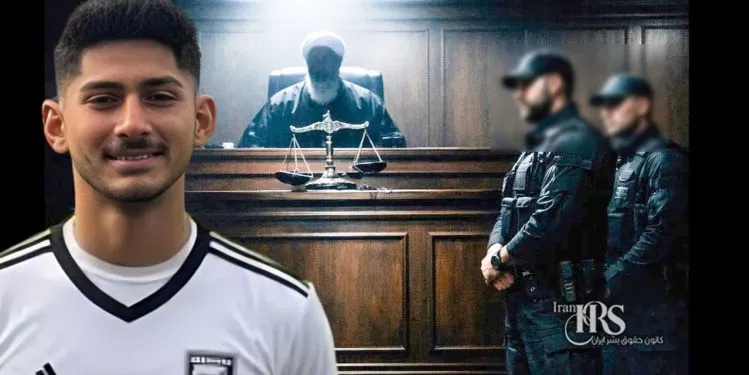
The lawyer of Ehsan Hosseinipour’s case announced that he has been prohibited from continuing representation by the order of the judge of Branch 26 of the Revolutionary Court; simultaneously, reports of forced confessions, contradictions in the documents, and concern about the issuance of a death sentence have been published.
Iran Human Rights Society, Monday, February 16, 2026 – In the continuation of the proceedings of the so-called Pakdasht Mosque case, Amir Raisian, a practicing lawyer, announced his prohibition from representation in Ehsan Hosseinipour’s case. He stated that this action was carried out by the order of Judge Afshari, the head of Branch 26 of the Tehran Revolutionary Court, and is in conflict with the Criminal Procedure Code. This case concerns three of the detainees from the 2025-2026 protests who face heavy accusations.
Prohibition of Chosen Lawyer in Ehsan Hosseinipour’s Case
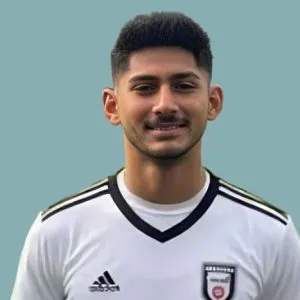
Amir Raisian announced that he has been prohibited from representation in Ehsan Hosseinipour’s case by the order of the case judge. He considered this action to be in explicit violation of the Criminal Procedure Code.
According to current laws, the accused has the right to introduce his chosen lawyer. Depriving the accused of this right affects the trial process.
In this case, Ehsan Hosseinipour faces accusations including participation in setting fire to a mosque and the death of two people. The two other accused, Matin Mohammadi and Erfan Amiri, are also present in this case.
Court-Appointed Lawyer; In the Service of the Judge or the Accused?
With the prohibition of the chosen lawyer, the role of the court-appointed lawyer in this case practically becomes prominent. In such circumstances, concerns arise about the independence of the defense.
Critics of the trial process in Ehsan Hosseinipour’s case believe that the court-appointed lawyer operates in a practically limited framework. In some cases, there is the perception that the court-appointed lawyer moves more in line with the court’s wishes than providing effective defense for the accused.
In such an atmosphere, the possibility of providing complete defense and precise examination of the case contradictions decreases.
Claim of Forced Confessions in Ehsan Hosseinipour’s Case
According to Raisian’s statements, Ehsan Hosseinipour rejected all accusations in the first two court sessions. He announced that the confessions were taken under pressure and violence while he was in handcuffs and leg irons.
According to the lawyer, a large part of the case documents were prepared based on these same confessions. This is while the accused has stated that the confessions were made under abnormal conditions and accompanied by pressure.
Raising the issue of forced confessions is one of the main axes of criticism of the trial process in this case.
Time Contradiction in the Case Documents
One of the points raised by the lawyer is the time discrepancy between the arrest and the incident. According to Raisian, Ehsan Hosseinipour was arrested at 21:30 on Dey 18, 1403 (January 8, 2025).
In contrast, the time of the start of the mosque fire is announced as 22:30 the same night. This time gap raises questions about the possibility of the accused’s presence at the scene of the incident.
The lawyer also announced that the examination of images from cameras around the incident location does not show Ehsan Hosseinipour’s presence at the location. However, these matters have not been reflected in the official court report.
Rushed Process and Concern About Issuance of Death Sentence
Raisian described the trial process as “rushed.” According to him, three court sessions have been held so far.
The families of the accused are also in a state of unawareness. This situation increases concerns about the possibility of issuing a death sentence for the 18-year-old Ehsan Hosseinipour and the two other 17-year-old accused.
In cases where heavy accusations are raised, it is expected that the trial process be conducted with precision and sufficient time. But in this case, some observers speak of unusual acceleration in the proceedings.
Official Reaction and Continuation of Proceedings
The Media Center of the Judiciary announced that the first session of the trial of the accusations of these three accused was held in the Tehran Revolutionary Court. In this notice, emphasis was placed on the presence of the accused’s lawyers.
However, the revelation about the prohibition of Ehsan Hosseinipour’s chosen lawyer has created ambiguities about the quality and independence of the defense.
Ehsan Hosseinipour’s case is now in a critical stage. Simultaneously, the issue of the right to access a chosen lawyer and the claim of forced confessions have become the main axis of legal discussions.
Violation of the Right to a Fair Trial in Ehsan Hosseinipour’s Case
The trial process in Ehsan Hosseinipour’s case is evaluated as being in conflict with the fundamental principles of fair trial:
- Violation of the Right to Choose a Lawyer: Article 14 of the International Covenant on Civil and Political Rights – Every accused has the right to benefit from a lawyer of his own choosing.
- Violation of the Prohibition of Compelled Confession: Principle 38 of the Constitution and international standards – Obtaining confession under pressure lacks legal validity.
- Violation of the Presumption of Innocence: Article 11 of the Universal Declaration of Human Rights – Every person is presumed innocent until guilt is proven.
- Violation of the Right to Impartial Trial: The court must examine contradictory documents and pay attention to defenses.
See also the below articles:
- Trial of Three Protesters from the 2025–2026 Nationwide Protests Held in Tehran Revolutionary Court
- Issuance of Death Sentence for Saleh Mohammadi, One of the Detainees from the Nationwide Protests of 2025-2026
Follow Iran Human Rights Society on social networks:
Telegram /Twitter /Instagram / YouTube / Facebook
Join Iran Human Rights Society on Twitter




Discussion about this post