
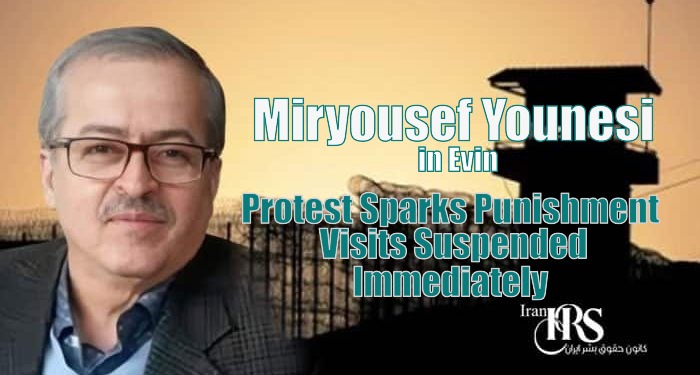
Iran denies family visits to political prisoner Miryousef Younesi in Evin after he protests death-row transfer. Health risks rise.
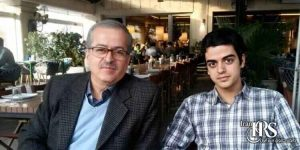
Iran Human Rights Society, Saturday, October 25, 2025 – Iran intensifies pressure on political prisoners in Evin Prison. Authorities banned visits for Miryousef Younesi, a 70-year-old inmate, starting October 26, 2025. He protested the transfer of death-row prisoner Ehsan Afraashte. Younesi serves time in Ward 7. This father of elite student Ali Younesi faces isolation. Officials issued a verbal suspension order. His action clashed with guards. Human rights defenders condemn this tactic. It targets elderly detainees harshly. Explore the arrest, trial flaws, and health dangers below.

Protest Sparks Punishment: Visits Suspended Immediately
Miryousef Younesi joined fellow prisoners in defiance. They confronted officials on October 26, 2025. The group blocked Ehsan Afraashte’s execution transfer. Guards reacted swiftly. They issued a verbal ban on Younesi’s family visits. This penalty lasts multiple turns. Informed sources confirm the link. Younesi’s stand delayed the sentence briefly. However, it cost him dearly. Prison rules weaponize isolation. Furthermore, this method breaks spirits. Elderly inmates suffer most. Younesi’s family waits in anguish.
Arrest and Solitary: Brutal Interrogation Phase
Plainclothes forces raided Younesi’s Shahroud home. This occurred on December 28, 2022. Agents dragged him away without warning. Initial interrogations lasted days. Then, they moved him to Evin Prison’s Wards 209 and 240. Solitary confinement stretched three and a half months. Continuous pressures mounted physically and psychologically. Agents denied vital medications. They withheld medical care entirely. Insults flew during sessions. Threats forced false confessions. Younesi resisted bravely. Yet, his health deteriorated sharply. Families report ongoing concerns.
Vague Charges: Ministry Announces Membership Allegation
The Ministry of Intelligence broadcasted Younesi’s arrest. They claimed “membership in a network financing People’s Mojahedin teams” on January 1, 2023. Limbo dragged over a year. Finally, Branch 26 of Tehran Revolutionary Court acted. Judge Iman Afshari led a closed, brief session in December 2023. The court slapped a five-year ta’zir sentence. Younesi boycotted attendance in prison garb. Therefore, he missed physical presence. His chosen lawyer stayed absent too. This setup mocks justice. Non-transparent processes hide truths.
Health Crisis: Chronic Issues Ignored in Custody
Miryousef Younesi battles age-related ailments. He exceeds 70 years now. Prison neglects his needs ruthlessly. No medications reach him consistently. Psychological strains compound problems. Visit bans worsen isolation. This threatens his life directly. Sources close to family sound alarms. Elderly prisoners face systematic denial. Chronic diseases flare without care. Younesi’s condition demands urgent attention. However, officials turn blind eyes. Activists highlight patterns of abuse.
Trial Flaws: No Lawyer, No Fairness
Younesi’s court session violated basics. No independent counsel defended him. The hearing stayed private. Duration? Shockingly short. Refusal of prison clothes barred his entry. Virtual options failed fairness. Defendants deserve presence and representation. Iran’s system denies both routinely. Human rights sources decry this sham. It contravenes global standards. Younesi’s rights evaporated. Appeals seem futile.
Broader Suppression: Visits as Torture Tool
Prisons deploy visit deprivation widely. This punishes dissent effectively. Elderly or ill inmates endure extra hardship. Younesi exemplifies the tactic. It inflicts mental torment. Families suffer alongside. Psychological pressure builds relentlessly. Dictatorship prisons refine cruelty. Activists expose these methods. They demand reforms now.
Human Rights Violations: Multiple Breaches Exposed
Authorities crush Younesi’s protections systematically. They risk his life through medical neglect. This defies
Article 6 of the International Covenant on Civil and Political Rights. Everyone holds inherent life rights. Visit bans strip dignity.
Nelson Mandela Rules and Article 10 of the Universal Declaration uphold family contact. Fair trial? Absent entirely.
Article 14 of the Covenant requires independent hearings. Younesi got none. Torture bans fall too.
Article 7 prohibits inhuman treatment. Threats, pressures, and medication denial qualify. Interrogations turned degrading.
Overall, Younesi’s ordeal reveals elderly prisoner abuses. Officials deny and ignore. Silence enables escalation. International scrutiny grows essential. End these violations. Support political prisoners. Act today.
See also the below articles:
- Killing of Hashem Eidani: Security Forces’ Deadly Raid on Ahvazi Arab Activist
- Death Sentence for Political Prisoners Zahra Shahbaz Tabari
Follow Iran Human Rights Society on social networks:
Telegram /Twitter /Instagram / YouTube / Facebook
Join Iran Human Rights Society on Twitter



Discussion about this post