
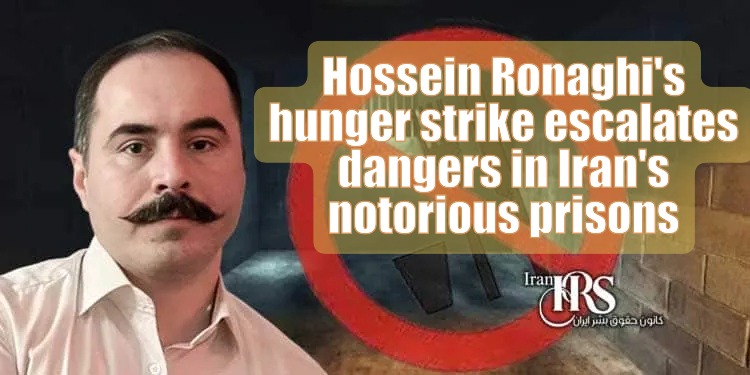
Hossein Ronaghi’s health deteriorates on day 4 of dry hunger strike. Blood in urine signals kidney failure risk. Iran ignores pleas for medical care amid protests. Act now to save his life.
Iran Human Rights Society, Sunday, September 28, 2025– Hossein Ronaghi’s hunger strike escalates dangers in Iran’s notorious prisons. This political prisoner started his dry protest on September 23, 2025, after 22 days without food. Now, on day four, he battles severe weakness. However, authorities deny him vital medical aid. Therefore, his family fears imminent death. Civil activists worldwide demand urgent action. Read on for details on this critical crisis.
Deteriorating Physical Condition in Hossein Ronaghi Hunger Strike
Hossein Ronaghi faces extreme risks today. On Friday evening, September 26, 2025, his family shared updates. He accepted one IV drip and a glass of water.

Fellow inmates urged him due to dire weakness. Yet, he recommits to the dry strike. No food or water resumes immediately.
Alarming signs appeared yesterday. Blood now stains his urine. This symptom terrifies everyone. Ronaghi’s past kidney problems amplify the threat. Doctors warn repeatedly. Acute kidney failure looms large. Severe infections follow closely. Sudden death strikes without mercy.
His sister Sakineh Ronaghi raised the alarm on September 28, 2025. She described stomach and kidney bleeding. Blood sugar dropped to 56. Blood pressure fell to 80. He lost consciousness fully. Seizures gripped his body. Prison guards withheld essential medications. These details paint a grim picture. The Islamic Republic holds full responsibility, she insists.
Experts highlight dry hunger strike perils. Vital organs fail fast. Death arrives within days, often. Ronaghi’s history of strikes underscores the stakes. He risks everything for justice.
- Related Crisis: Abolhassan Montazer’s Critical State – Authorities deny this political prisoner treatment, mirroring Ronaghi’s plight.
- Tragic Neglect: Mohammad Ali Akbarimanfred Suffers in Fashafouyeh Prison – Deliberate inaction claims another life.
Why Hunger Strikes Become Last Resorts for Prisoners Like Hossein Ronaghi
Political prisoners in Iran turn to hunger strikes out of desperation. They protest brutal conditions. Basic rights vanish behind bars. Security forces apply relentless pressure. Ronaghi voices this frustration clearly. Judicial officials ignore his complaints. They dismiss medical pleas. Protests fall on deaf ears. Thus, he stakes his life as the ultimate stand.
Dry strikes surpass wet ones in danger. Dehydration accelerates collapse. Organs shut down swiftly. However, Ronaghi persists. He demands fair treatment. Release on medical grounds seems logical. Yet, officials stonewall every request.
Furthermore, this tactic exposes systemic failures. Families and allies amplify calls for change. They refuse silence. International pressure builds accordingly.
Iran’s Neglect of Sick Prisoners Fuels Hossein Ronaghi Hunger Strike
Ronaghi’s loved ones sound alarms daily. Associates join the chorus. But judicial and security forces stay silent. No treatment arrives. Conditional release remains a dream. Meanwhile, global voices grow louder.
Human rights groups act decisively. Amnesty International urges immediate freedom. They stress adequate care access. UN Special Rapporteurs echo these pleas. The Islamic Republic must comply now.
For years, Iran weaponizes medical denial. It torments political dissidents psychologically. Physically, it breaks bodies. Ronaghi embodies this cruelty. His case demands global scrutiny.
Global Outcry Over Hossein Ronaghi Hunger Strike
Ronaghi’s protest sparks fire worldwide. Civil activists rally fiercely. Families of fellow prisoners unite. Human rights organizations mobilize quickly. Concern spills beyond Iran’s borders.
International advocates issue stark warnings. His death would spotlight abuses. Systematic human rights violations in Iran would glare brighter. Therefore, pressure mounts on Tehran. UN experts, like Mai Sato, call for intervention. Social media buzzes with #FreeHosseinRonaghi.
Activists craft calls to action. They tag leaders and media. Letters flood inboxes. Phone lines ring nonstop. Everyone stresses urgency. Every second counts for Ronaghi.
Human Rights Violations in Hossein Ronaghi Hunger Strike Case
Ronaghi’s ordeal violates core principles. Article 3 of the Universal Declaration safeguards life. Yet, denied care endangers him directly. Article 5 bans torture. Inhumane denial equates to slow agony. Article 10 guarantees fair trials. He lacks lawyer access. Justice evades him entirely.
These breaches extend far. They reveal patterns in Iran’s prisons. Political prisoners suffer routinely. Ronaghi’s fight highlights the epidemic. However, change requires collective resolve.
Inhumane Prison Conditions Spotlighted by Hossein Ronaghi Hunger Strike
Ronaghi’s decline refocuses eyes on Iran’s prisons. Inhumane setups breed suffering. He enters day four of dry denial. Grave risks hover constantly. Civil activists point fingers firmly. The government owns his safety outright.
International bodies reinforce this. They warn of repercussions. Domestic unrest could surge. Global isolation looms larger. Therefore, Tehran faces a crossroads.
Ronaghi’s strike cries for medical rights. It screams for life itself. Moreover, it symbolizes defiance. Oppression meets unyielding resistance. Injustice crumbles under such light. His potential sacrifice exposes Iran’s dark truths to the world. Yet, hope lingers if action follows swiftly.
See also the below articles:
- Mai Sato Report: Exposing Iran’s Human Rights Violations on Women, Prisoners, and Minorities
- Iran’s Forced Labor: Exploiting Prisoners for Profit
Follow Iran Human Rights Society on social networks:
Telegram /Twitter /Instagram / YouTube / Facebook
Join Iran Human Rights Society on Twitter




Discussion about this post