
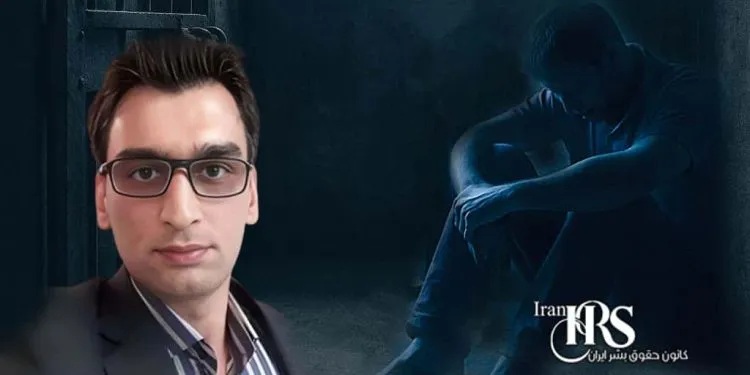
Bijan Kazemi, a political prisoner, faces human rights violations in a Ministry of Intelligence safe house in Qom, Iran, amid torture and enforced disappearance risks.
Iran Human Rights Society, Wednesday, July 16, 2025 – Bijan Kazemi, a political prisoner detained since January 2025, now faces grave human rights violations in a Ministry of Intelligence safe house in Qom, Iran. After 12 days of silence, he made a brief call to his mother, confirming his transfer to this secretive facility. This alarming development raises concerns about torture, enforced disappearance, and security pressures. The Iranian regime’s use of safe houses to silence dissent violates international human rights standards, demanding urgent global attention. This article explores Kazemi’s case, the role of safe houses, and the broader human rights implications.
Ministry of Intelligence Safe Houses: Centers of Human Rights Abuses

Safe houses, controlled by Iran’s Ministry of Intelligence, operate outside official prison systems and judicial oversight. These secretive locations serve as hubs for intensive interrogations, psychological pressure, and physical torture. Authorities use them to extract forced confessions from political prisoners like Bijan Kazemi. Human rights activists label these sites as breeding grounds for gross violations, including enforced disappearances. The lack of transparency and accountability in these facilities heightens the risk of inhumane treatment, making them a stark symbol of the regime’s oppressive tactics.
The absence of oversight allows security forces to act with impunity. Prisoners held in safe houses often face isolation, threats, and coercion to fabricate confessions. For instance, Kazemi’s access to legal rights, such as a lawyer or family contact, depends on his cooperation with interrogators. This conditional approach violates basic human rights principles, including the right to a fair trial. Furthermore, the current regional tensions, including the Iran- Israel conflict, exacerbate the vulnerability of detainees in such covert facilities.
Bijan Kazemi’s Detention: A Timeline of Arbitrary Transfers
Bijan Kazemi’s ordeal began on January 20, 2025, when authorities arrested him in Kuhdasht, Lorestan province. Initially, he faced interrogation at the Khorramabad Intelligence Department’s detention center. Shortly after, officials transferred him to Ward 241 of Evin Prison, managed by the Judiciary’s Intelligence Protection Unit. Later, he moved to Ward 209, directly under the Ministry of Intelligence’s control. Following a bombing at Evin Prison, Kazemi landed in Fashafouyeh Prison (Greater Tehran). On June 30, 2025, authorities moved him again, this time to an undisclosed location. A brief call on July 3, 2025, revealed his transfer to a Qom safe house.
These repeated transfers, conducted without clear charges or judicial oversight, breach international standards for fair treatment. Each move isolates Kazemi further, denying him access to legal representation or family communication. Such actions reflect a deliberate strategy to pressure political prisoners into compliance, undermining the rule of law. Moreover, the lack of transparency about his current location fuels fears of enforced disappearance, a tactic often used to silence dissent.
Security Pressures and Forced Confessions
Security authorities have explicitly tied Kazemi’s access to basic rights, like legal counsel or family contact, to his cooperation with the Ministry of Intelligence. This coercive tactic aims to extract fabricated confessions, a common practice against political activists in Iran. Interrogators have accused Kazemi of providing weapons to assailants of two regime executioners, Moghiseh and Razini, despite no formal charges or evidence. This pattern mirrors historical cases where prisoners endured torture to admit baseless allegations.
The regime’s reliance on forced confessions violates the principle of presumption of innocence. Without a public trial or independent legal process, Kazemi faces immense pressure to comply. Human rights groups warn that such tactics, especially in safe houses, often involve physical and psychological abuse. The isolation and secrecy of these facilities amplify the risk, leaving prisoners vulnerable to inhumane treatment.
Enforced Disappearance: A Growing Concern
The transfer to a Qom safe house raises alarms about enforced disappearance, a practice where detainees vanish from oversight, inaccessible to families or lawyers. Kazemi’s 12- day silence before his brief call to his mother exemplifies this tactic. Safe houses, by design, evade scrutiny, allowing authorities to operate without accountability. This situation endangers Kazemi’s safety, as human rights organizations note the heightened risk of torture or even execution in such conditions.
The broader political climate in Iran, marked by escalating tensions with Israel and internal unrest, worsens the plight of political prisoners. The regime’s crackdown on dissent, coupled with its fear of infiltration, creates a volatile environment for detainees. Activists fear that Kazemi’s case could lead to televised forced confessions or further abuses, a tactic used to intimidate other dissidents.
Human Rights Violations in Kazemi’s Case
Bijan Kazemi’s detention violates several articles of the Universal Declaration of Human Rights:
- Article 5: Prohibition of Torture
The potential for physical and psychological torture in a Qom safe house constitutes inhuman treatment. The regime’s history of abusing prisoners in such facilities underscores this violation.
- Article 9: Prohibition of Arbitrary Arrest
Kazemi’s repeated transfers without judicial orders or family notification exemplify arbitrary detention. The lack of transparency in his case breaches international standards.
- Article 10: Right to a Fair Trial
Denying Kazemi access to an independent lawyer and a public trial violates his right to due process. The regime’s security- driven approach bypasses legal norms.
- Article 11: Presumption of Innocence
Accusing Kazemi without evidence and pressuring him for confessions disregards the principle of innocence until proven guilty.
- Article 12: Protection of Privacy and Family
Blocking regular family contact and threatening Kazemi’s relatives violate their right to privacy and communication.
- Article 19: Freedom of Expression
Kazemi’s arrest for his civil activism directly suppresses his freedom of expression, a cornerstone of human rights.
Follow Iran Human Rights Society on social networks:
Telegram /Twitter /Instagram / YouTube / Facebook
Join Iran Human Rights Society on Twitter







Discussion about this post