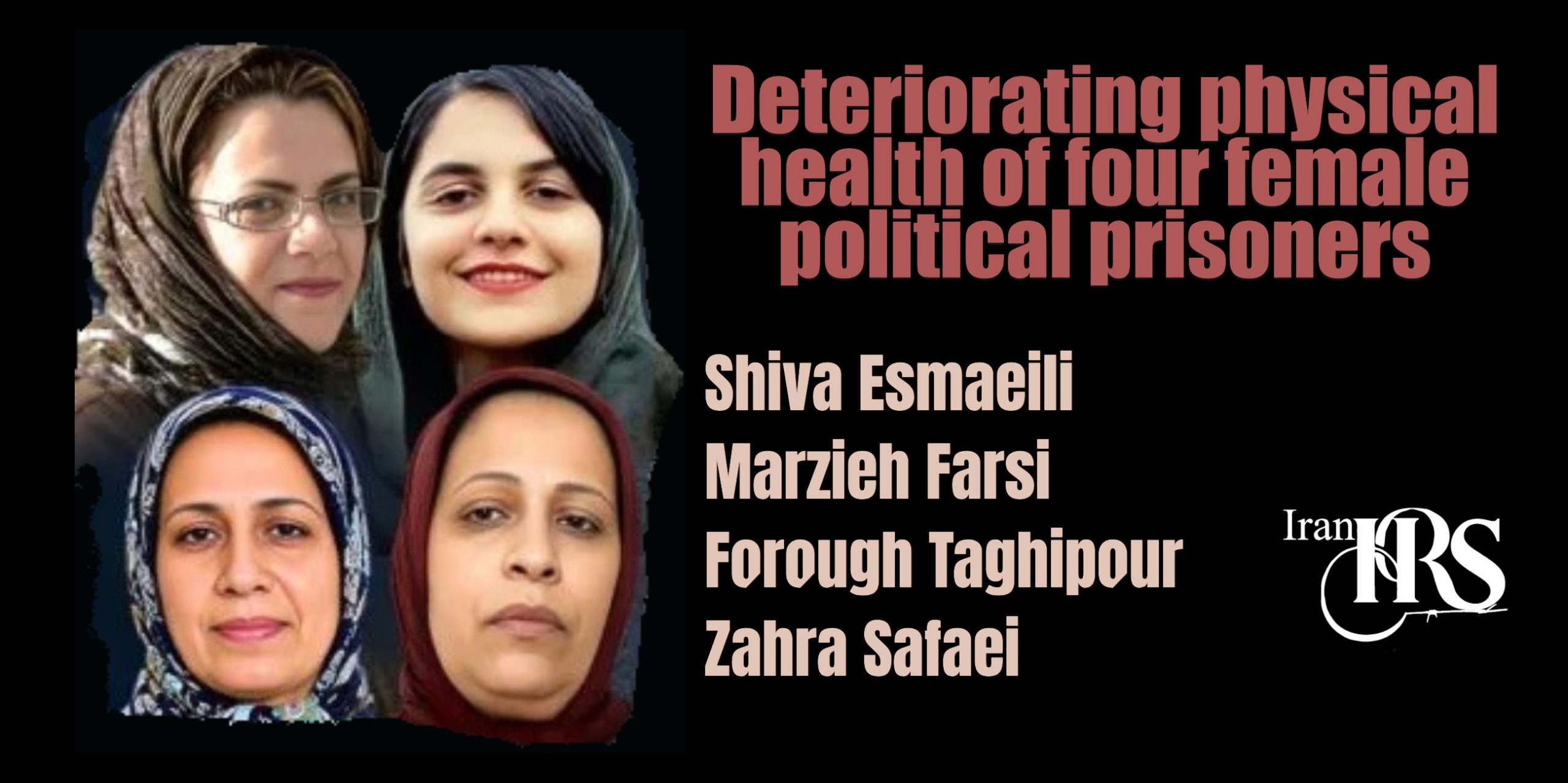
The ongoing deprivation of Shiva Esmaeili, Marzieh Farsi, Forough Taghipour, and Zahra Safaei from phone calls, coupled with reports regarding the deteriorating physical health of some of them, has increased the concern of human rights activists regarding the detention conditions of female prisoners in Evin Prison.
Iran human rights Society, Friday, July 10, 2026 – Fresh reports from Evin Prison indicate that four female political prisoners—Shiva Esmaeili, Marzieh Farsi, Forough Taghipour, and Zahra Safaei—remain deprived of their right to make phone calls to their families. This comes alongside news from informed sources regarding the critical health conditions of Shiva Esmaeili and Elaheh Fouladi, a severe shortage of medical facilities, and inadequate nutrition in the women’s ward. Human rights activists emphasize that the continuation of these restrictions places psychological and emotional pressure on both the political prisoners and their families.
Continuation of the Phone Ban for Four Political Prisoners in Evin Prison
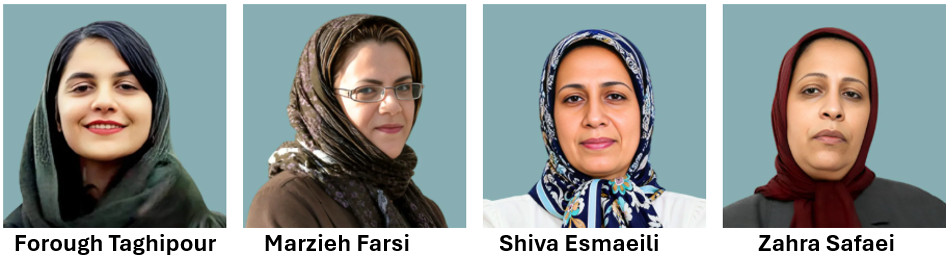
According to published reports, Shiva Esmaeili, Marzieh Farsi, Forough Taghipour, and Zahra Safaei are still barred from placing telephone calls to their families.
Informed sources state that this restriction has persisted for weeks, and prison authorities have yet to restore their phone access. Human rights activists stress that prolonged deprivation of family contact, besides its psychological toll on the inmates, drastically intensifies the families’ anxiety over the well-being of their loved ones.
When Did the Phone Ban Begin?
In late May/early June 2026, reports emerged from Evin Prison showing that five female political prisoners—Golrokh Ebrahimi Iraee, Zahra Safaei, Marzieh Farsi, Shiva Esmaeili, and Sakineh Parvaneh—had been punitively banned from using the prison phones.
According to published data, prison authorities deactivated these inmates’ phone cards. Human rights sources stated that this disciplinary measure was taken after the prisoners participated in the “Tuesdays Against Execution” campaign and chanted slogans to protest the implementation of death sentences.
While recent updates indicate that the phone ban has been lifted for some of these inmates, Shiva Esmaeili, Marzieh Farsi, Forough Taghipour, and Zahra Safaei remain actively deprived of this right.
Shiva Esmaeili’s Physical Condition Described as Critical
Simultaneously with the ongoing phone ban, reports indicate a severe decline in Shiva Esmaeili’s physical health. This political prisoner suffers from acute back pain, yet despite requiring specialized treatment, she has not been transferred to an external medical facility.
Informed sources note that the intensity of her pain is so severe that it has impaired her breathing and caused her to lose the ability to walk independently. According to her cellmates, Shiva Esmaeili now depends entirely on other prisoners to carry out basic daily tasks.
Reports of Obstruction in Shiva Esmaeili’s Treatment Process
Informed sources emphasize that prison authorities and security agencies are actively obstructing Shiva Esmaeili’s medical care.
According to these reports, even in instances where prison doctors officially declared her transfer to a specialized hospital an absolute necessity, authorities refused the request. Human rights defenders warn that the continuation of this medical neglect puts her life at serious risk.
Elaheh Fouladi Also Facing Severe Medical Issues
Published reports also highlight the failing health of Elaheh Fouladi. Informed sources have stated that she suffers from severe pelvic and lumbar complications, requiring urgent specialized medical evaluation. However, reports show that her path to receiving adequate medical care has been met with systemic restrictions.
What are the Medical and Nutritional Conditions for Women in Evin Prison?
Human rights activists describe the healthcare and nutritional services provided to female inmates in Evin Prison as highly substandard.
According to informed sources, a severe lack of medical supplies, delayed hospital transfers for critically ill patients, restricted access to basic healthcare, and poor food quality are among the most persistent grievances in the women’s ward. Inmates suffering from chronic illnesses or pre-existing physical conditions bear the brunt of these systemic deficiencies.
Why Does the Deprivation of Phone Calls Matter?
Human rights activists note that telephone calls constitute one of the few available lifelines for inmates to maintain contact with the outside world. Severing this link inflicts severe psychological pressure on both the prisoners and their relatives.
Using phone bans as a punitive tool against political prisoners has been documented repeatedly in recent years, serving as a tactical measure to deepen their isolation and break their morale.
Legal Review of the Case Based on Domestic Laws
Introduction
Before initiating a legal review, it must be noted that many criminal laws within the ruling dictatorship—especially concerning political and security cases—are consistently criticized by international human rights bodies for violating due process, the right to life, and basic human dignity. However, even under these domestic statutes, prison administrators are legally bound to protect prisoners’ health, provide medical services, and respect their right to correspond with their families.
Legal Ambiguities
The ongoing denial of phone access for these four political prisoners, the systemic obstruction of specialized medical care for Shiva Esmaeili, and the substandard living and nutritional conditions in the women’s ward form the core legal ambiguities of this case. Furthermore, the punitive use of communication bans requires close scrutiny regarding its alignment with the Prisons Organization’s own executive regulations.
Related Legal Articles
- Article 22 of the Constitution: Inviolability of the life, rights, and dignity of individuals.
- Article 29 of the Constitution: The right to medical and health services.
- Article 39 of the Constitution: Absolute prohibition of affronts to the honor and dignity of prisoners.
- Executive Regulations of the Prisons Organization: Mandates prisoners’ right to medical services, regular contact with family, and the preservation of physical and mental well-being.
Violations of Law
- Prolonged and continuous deprivation of telephone communication.
- Obstruction of urgent hospital transfers.
- Deliberate delays in administering specialized treatment.
- Punitive deactivation of communication cards.
- Substandard food and nutrition quality.
- Disregarding the explicit orders of medical personnel, thereby threatening the lives of sick prisoners.
Human Rights Violations in Evin Prison via the Phone Ban on Female Inmates
The ongoing phone ban against these four female political prisoners, occurring alongside reports of their deteriorating health and restricted access to medical care, raises grave human rights concerns. International bodies have repeatedly emphasized that depriving prisoners of family contact and withholding necessary healthcare—especially as a form of collective or individual punishment—violates standard minimum rules for the treatment of prisoners and compromises their fundamental mental and physical integrity.
Violated Articles
- Article 3 of the Universal Declaration of Human Rights: The right to life, liberty, and security of person.
- Article 5 of the Universal Declaration of Human Rights: Absolute prohibition of cruel, inhuman, or degrading treatment or punishment.
- Article 10 of the International Covenant on Civil and Political Rights: Mandates that all persons deprived of their liberty shall be treated with humanity and with respect for the inherent dignity of the human person.
- Article 12 of the International Covenant on Economic, Social, and Cultural Rights: The right of everyone to the enjoyment of the highest attainable standard of physical and mental health.
- The Nelson Mandela Rules: Explicitly guarantees prisoners access to necessary healthcare without discrimination and the right to maintain regular communication with their families.
See also the below articles:
- Execution of Protesters: 12 Detainees in Isfahan Face Imminent Death Sentences
- Dastgerd Prison in Isfahan: Exposure of Torture and Political Prisoner Crackdown
Follow Iran Human Rights Society on social networks:
Telegram /Twitter /Instagram / YouTube / Facebook
Join Iran Human Rights Society on Twitter