
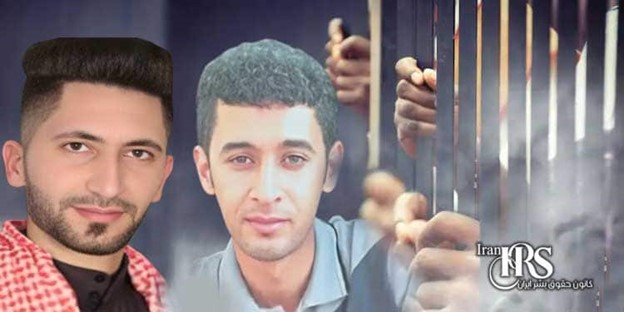
Mustafa Helichi and Reza Hozbavi, two poets and civil activists, have been held in Sheyban Prison in Ahvaz for over six months under conditions of uncertainty, torture, and complete lack of information regarding their judicial process.
Iran Human Rights Society, Monday, May 26, 2025 – More than six months after the arrest of Mustafa Helichi and Reza Hozbavi, two poets and civil activists from Ahvaz, their case remains in limbo. These two cultural activists were detained by security forces in December 2024 and, after a month of interrogation under torture in the Public Security Police detention center, were transferred to Sheyban Prison. However, no transparency has been provided regarding their case, charges, or judicial proceedings.
Severe Torture and Forced Confessions

According to reliable reports, the two detained poets endured severe physical and psychological torture during their detention at the Pava detention center. Methods such as suspension, cable beatings to the soles of their feet and bodies, and strikes to sensitive areas were used to torture these cultural activists. The intensity of the torture has led to a severe deterioration in their physical condition, with reports of repeated transfers to medical facilities. These methods, aimed at extracting “forced confessions,” once again demonstrate that torture has become a routine tool for suppressing political and civil activists in Iran’s security and judicial system. The lack of independent oversight in detention centers and the absence of accountability in security institutions have enabled the continuation of such widespread human rights violations.
Complete Lack of Information for Families
Throughout this period, the families of Helichi and Hozbavi have been kept in total darkness regarding the details of their cases and the health status of their loved ones. Limited contact, denial of in-person visits, and ambiguity surrounding the charges have imposed immense psychological pressure on the families. This deliberate uncertainty is itself a form of psychological torture for the families and part of the broader policy of repression in the Islamic Republic.
Past Records and Previous Arrests

Reza Hozbavi, a 36-year-old poet and father of two, was previously arrested in November 2011 for attending the funeral of Ahvazi poet Sattar Sayyahi and was sentenced to four months in prison and flogging, which was later replaced with a fine. Mustafa Helichi has also been detained on charges of communicating with political activists abroad. Such vague and legally baseless accusations have repeatedly been used against civil and cultural activists in Khuzestan.
Dire Physical Condition and Inhumane Conditions
Due to extensive torture, the physical condition of both political prisoners, Mustafa Helichi and Reza Hozbavi, has been reported as severely critical, requiring urgent medical attention. However, their access to medical care is limited, and the conditions in Sheyban Prison, one of Iran’s most notorious facilities, exacerbate the situation. Sheyban Prison has repeatedly been criticized by human rights organizations due to overcrowding, lack of sanitation, and communication restrictions.
Dire Physical Condition and Inhumane Conditions
The detention and torture of Mustafa Helichi and Reza Hozbavi are examples of the securitized and repressive treatment of intellectuals, artists, and cultural activists in Khuzestan. These two poets are victims of systematic discrimination, judicial injustice, and the regime’s repressive policies.
The authorities’ treatment of Mustafa Helichi and Reza Hozbavi constitutes multiple and serious violations of human rights, including:
1- Violation of Article 7 of the International Covenant on Civil and Political Rights, which prohibits any form of torture or cruel, inhuman, or degrading treatment.
2- Violation of Article 9 of the same Covenant, which states that no one should be arbitrarily detained or imprisoned, and everyone has the right to be informed of the reasons for their detention and to have access to a court.
3- Violation of Article 14, which guarantees the right to a fair trial, while these two poets have been deprived of a transparent judicial process, access to an independent lawyer, and a public trial.
4- Violation of the UN Convention Against Torture, which Iran has not signed but is obliged to respect under customary international law.
Follow Iran Human Rights society on social networks:
Telegram /Twitter /Instagram / YouTube / Facebook
Join Iran Human Rights Society on Twitter




Discussion about this post