
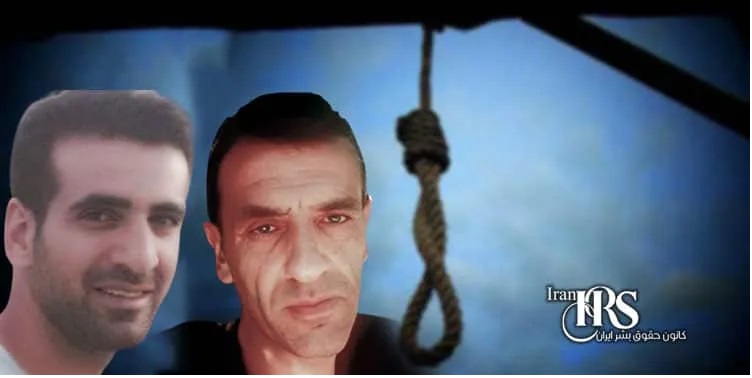
As of this Khordad Persian month, the number of prisoners executed in Iran has reached 103, averaging more than 5 executions per day.
Iran Human Rights Society, June 10, 2025 – Seven prisoners were executed in the central prisons of Karaj, Isfahan, Shirvan, and Mashhad. The total number of prisoners executed in this Khordad Persian month has now reached 103, translating to an average of over 5 executions daily.
Execution of Peyman Jalalian in Isfahan Prison
At dawn on Tuesday, June 10, 2025, Peyman Jalalian was executed in Dastgerd Prison, Isfahan. He was 30 years old, from Bumehen, Tehran, and had been arrested three years prior on drug-related charges, for which he was sentenced to death.
Execution of Saman Khorrami in Central Karaj Prison
On the morning of Monday, June 9, 2025, Saman Khorrami was executed in Central Karaj Prison. He had previously been arrested and sentenced to death on drug-related charges.
Execution of Shirzad Fahimi in Shirvan Prison
At dawn on Sunday, June 8, 2025, Shirzad Fahimi was executed in Shirvan Prison. He was 33 years old, from Borujerd, and had been arrested three years earlier on drug-related charges, leading to his death sentence.
Execution of Four Prisoners in Vakilabad Prison, Mashhad
On the morning of Saturday, June 7, 2025, four prisoners were executed in Vakilabad Prison, Mashhad. Their names are Yashar Haghdoost, Jafar Veysi, Zobaid Ali-Maleki, and Salim (last name unknown).
Yashar Haghdoost was arrested five years ago on drug-related charges and sentenced to death.
Jafar Veysi, from Neyshabur, was arrested four years ago on murder charges and sentenced to death.
Zobaid Ali-Maleki, 38, from Sheberghan, Afghanistan, was arrested three years ago on drug-related charges and sentenced to death.
Salim (last name unknown), from Kabul, Afghanistan, was arrested three years ago on drug-related charges and sentenced to death.
Article 3 of the Universal Declaration of Human Rights explicitly states: “Everyone has the right to life.” This right cannot be deprived except by a verdict issued by a competent court for a crime recognized as such under the law.
The death penalty, as the ultimate punishment, directly contradicts this article because:
Right to Life: The right to life is a fundamental and inalienable right, which the death penalty inherently violates.
Irreversibility: Once executed, judicial errors cannot be rectified.
Torture and Inhumane Treatment: Certain methods of execution are considered torture or inhumane treatment, violating the principles of the Universal Declaration of Human Rights.
Violation of Human Rights Obligations Regarding the Death Penalty
Under Article 6 of the International Covenant on Civil and Political Rights, which Iran has signed, the issuance and execution of the death penalty are permissible only with full guarantees of a fair trial and for the most serious crimes. In many similar cases, the lack of transparency, restrictions on defendants’ legal rights, and rulings issued by courts lacking independence are considered violations of this fundamental human rights principle.
Follow Iran Human Rights Society on social networks:
Telegram /Twitter /Instagram / YouTube / Facebook
Join Iran Human Rights Society on Twitter







Discussion about this post