
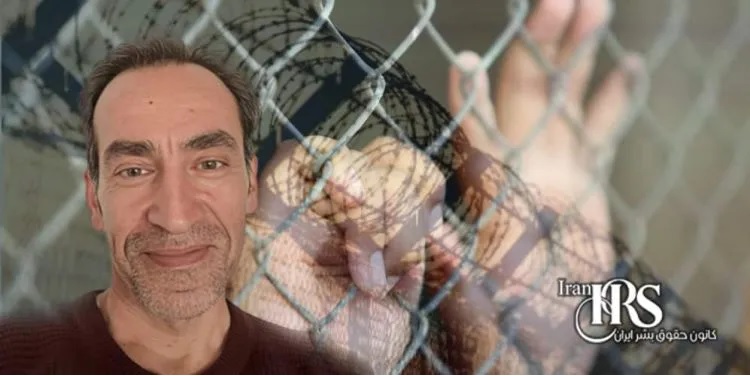
The complete lack of information about Fariborz Babakhani’s status is reminiscent of dozens of similar cases in recent years, where citizens are detained for political or security reasons and disappear for weeks or even months in solitary confinement without access to family, legal counsel, or medical care.
Iran Human Rights Society, Thursday, 12 June 2025 – Growing concerns have emerged over the prolonged lack of information about Fariborz Babakhani, a 47-year-old citizen from Islamabad-e-Gharb residing in Tehran. According to reports received by the Iran Human Rights Society, Babakhani has been missing for over a month, with no information available about his whereabouts or condition. His family and close associates have stated that Babakhani has had no contact with them since an unspecified date in May 2025, and all efforts to locate him have been fruitless.
Unofficial yet reliable sources indicate that Babakhani was likely detained by security forces, possibly linked to intelligence agencies, in Tehran. However, no official entity has taken responsibility for his detention, and no information has been provided regarding his place of detention, possible charges, or his physical and legal status. This situation has caused serious concern among his family and human rights activists.
Secret Detention and Complete Lack of Information

The absolute lack of information about Fariborz Babakhani’s status is reminiscent of dozens of similar cases in recent years, where citizens are detained for political or security reasons and disappear for weeks or even months in solitary confinement without access to family, legal counsel, or medical care. Such detentions violate Iran’s Constitution and the country’s international human rights obligations, particularly conventions related to personal freedom and security.
According to Article 32 of Iran’s Constitution, “No one may be arrested except by legal order, with immediate notification to the family and the right to access a lawyer.” However, cases like Babakhani’s disappearance demonstrate that even the most basic principles of fair trial are often disregarded in many cases.
Fariborz Babakhani: A Victim of Systematic Injustice
Information about Fariborz Babakhani remains limited. He is originally from Islamabad-e-Gharb and has been a resident of Tehran for years. According to sources close to his family, prior to his disappearance, there were no signs of security threats or official summons from judicial or security authorities. This strengthens the likelihood of an abduction or unlawful detention by security agencies.
Given the recent history of arbitrary detentions and holding individuals in a state of “disappearance” by intelligence agencies, concerns about Babakhani’s health and safety have intensified. Numerous reports of torture, psychological pressure, and denial of medical care during secret interrogations have prompted reactions from families and international organizations.
Silence of Responsible Authorities: Normalizing Human Rights Violations
More than a month after Fariborz Babakhani’s disappearance, no judicial or official authority has provided clarity about his situation. This silence not only heightens the family’s distress but also brings the issue of “enforced disappearance” to the forefront of human rights concerns in Iran.
Enforced disappearance is considered one of the gravest human rights violations. According to Article 9 of the Universal Declaration of Human Rights and Article 7 of the International Covenant on Civil and Political Rights (ICCPR), any detention without official notification or access to family or legal counsel constitutes psychological torture and inhumane treatment.
Flagrant Human Rights Violations in Fariborz Babakhani’s Case
The detention and lack of information about Fariborz Babakhani, a citizen from Islamabad-e-Gharb residing in Tehran, is a clear example of the violation of fundamental human rights principles and international conventions. This conduct by security agencies not only infringes on individual rights but also creates a highly securitized and repressive atmosphere in society.
Human Rights Violations Include:
Enforced Disappearance:
According to the UN definition, the detention of individuals by state institutions without official announcement, withholding information from families, and concealing the place of detention constitutes enforced disappearance, which is considered an international crime.
Violation of Article 9 of the ICCPR:
This article stipulates that no one should be arbitrarily detained or imprisoned. In Babakhani’s case, no official notification, access to a lawyer, or issuance of a judicial ruling has been reported.
Violation of the Right to Freedom and Personal Security:
Every individual has the right to personal freedom and security. Untransparent detention and the inability to contact family have deprived Fariborz Babakhani of this right.
Violation of the Prohibition of Torture and Inhumane Treatment:
The family’s lack of information about their loved one’s status, concerns about detention conditions, and the history of unlawful conduct by security forces increase the likelihood of inhumane treatment and physical or psychological pressure, violating Article 7 of the ICCPR.
Government Responsibility for Transparency:
According to human rights principles, governments are obligated to inform the family and lawyer of any detained individual and publicly disclose the reasons for detention. The silence regarding Babakhani’s fate places direct responsibility on security and judicial institutions.
Follow Iran Human Rights Society on social networks:
Telegram /Twitter /Instagram / YouTube / Facebook
Join Iran Human Rights Society on Twitter








Discussion about this post