

Following his arrest, Mojahed Kourkour was held in solitary confinement in Sheyban Prison in Ahvaz for over two years. Prolonged solitary confinement is considered a form of psychological and physical torture under international law.
Iran Human Rights Society, Friday, June 30, 2025 – Ten days have passed since the execution of Mojahed Kourkour, a political prisoner from Izeh, yet significant ambiguities and serious questions regarding his arrest, torture, forced confessions, and unfair trial remain unanswered. Mojahed Kourkour’s case is a stark example of the systematic violation of human rights under Iran’s ruling dictatorship, once again drawing the attention of the public and human rights organizations.
Violent Arrest of Mojahed Kourkour: Violation of the Right to Freedom and Personal Security
Mojahed Kourkour was arrested on December 20, 2022, during an armed raid by security forces on his home in the village of Persila, Izeh. During this assault, security forces used heavy weaponry to attack his residence, and in addition to his violent arrest, two other citizens, Hossein Saeidi and Mahmoud Ahmadi, were killed. This method of arrest—without a judicial warrant, using weapons, and creating public fear—clearly violates the right to freedom and personal security and represents a blatant example of illegal conduct by security forces, a pattern frequently observed in cases involving protesters in Iran.
Torture and Forced Confessions: Violation of Fundamental Rights
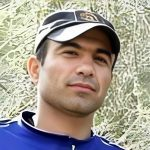
Following his arrest, Mojahed Kourkour was held in solitary confinement in Sheyban Prison in Ahvaz for over two years. Prolonged solitary confinement is recognized as a form of psychological and physical torture under international law. Multiple sources have confirmed that throughout his detention, he was subjected to severe physical and psychological torture to extract forced confessions against himself. A fellow prisoner in Sheyban Prison described Mojahed Kourkour’s inhumane conditions as follows:
“Mojahed Kourkour was a good person. From the first day, he was in solitary confinement, or as they call it, Ward One, until the day of his execution. God rest his soul, he was innocent. I was in solitary for a few days myself and wished for death a hundred times. No one can truly understand what he went through in that cell for so long. Despite everything, he never gave in to the authorities, knowing what his fate would be. They beat him severely several times, once so badly that he fell into a coma. No one could comprehend the pressure he endured in that place, what he went through in that tiny room with a toilet right there, the foul smell, no sight of the sky, not knowing if it was day or night, no space to walk…”
This account clearly illustrates the psychological and physical torture inflicted on Mojahed Kourkour, conditions that international organizations like Amnesty International have described as “cruel, inhuman, and degrading treatment.”
Fabrication of Charges and Changing Narratives: Case-Building Against Protesters
Initially, security authorities attempted to frame Mojahed Kourkour as the perpetrator of the killing of Kian Pirfalak, a child killed during the protests. However, Mahmonir Molaei-Rad, Kian’s mother, repeatedly stated that her son’s killers were security forces, not Mojahed Kourkour. Kian’s father, Meysam Pirfalak, also testified in a video that security forces fired on their vehicle and that he had no complaint against Mojahed Kourkour. Following the exposure of this truth, the murder charge was quickly changed to charges of “moharebeh” (waging war against God), “corruption on earth,” and “rebellion.” This abrupt shift in charges further reinforces suspicions of a fabricated case and the targeting of Mojahed Kourkour as a political scapegoat.
Denial of Fair Trial: Violation of the Right to Defense
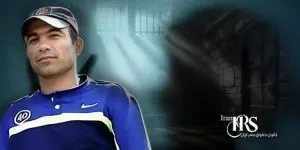
Throughout his detention and trial, Mojahed Kourkour was denied access to a lawyer of his choice. He was allowed only one meeting with his family. The right to access a chosen lawyer and to receive a fair trial is a fundamental right of every defendant under the International Covenant on Civil and Political Rights (ICCPR), to which Iran is a signatory. Initially, Mojahed Kourkour’s death sentence was issued by the Ahvaz Revolutionary Court. Although the Supreme Court once overturned the sentence and referred the case to a parallel branch, the Third Branch of the Ahvaz Revolutionary Court reissued the death sentence. Even a request to apply Article 477 of Iran’s Criminal Procedure Code, which could have led to a retrial, was rejected, and the sentence was carried out without notifying his family or lawyers.
Hasty Execution: Instrumental Use of Execution for Suppression
Mojahed Kourkour’s execution was carried out at dawn on June 11, 2025, without prior notice to his family and under highly securitized conditions. Human rights organizations have repeatedly warned that the Iranian government uses executions as a tool to create public fear and suppress protests. In recent months, a new wave of executions targeting detainees from the 2022 protests has intensified. Such executions, carried out without adhering to minimum fair trial standards, are a clear violation of human rights and an instrumental use of execution to maintain a climate of repression.
Human Rights Organizations’ Response to Mojahed Kourkour’s Execution
International organizations such as Amnesty International have strongly condemned the handling of Mojahed Kourkour’s case. Citing torture, denial of access to a chosen lawyer, forced confessions, and an unfair trial, they emphasized that his execution constitutes a clear instance of judicial killing. Mojahed Kourkour’s case has now become a symbol of resistance against judicial and security suppression, with human rights activists calling for an end to the cycle of political executions and accountability for the ruling dictatorship’s atrocities.
Widespread Human Rights Violations in Mojahed Kourkour’s Case
Mojahed Kourkour’s case is a glaring example of the systematic violation of human rights under Iran’s ruling dictatorship, where fundamental principles of defendants’ rights and international standards have been grossly disregarded. Based on available evidence, the following violations are evident in this case:
Article 5 of the Universal Declaration of Human Rights: Prohibition of torture and cruel, inhuman, or degrading treatment. Mojahed Kourkour was repeatedly subjected to severe physical and psychological torture to extract forced confessions.
Article 9 of the Universal Declaration of Human Rights: Prohibition of arbitrary detention. Kourkour’s arrest was conducted without a valid judicial warrant and through a violent raid.
Article 10 of the Universal Declaration of Human Rights: Right to a fair and public trial. He was denied access to a chosen lawyer, and his trial was non-transparent and closed.
Article 3 of the Universal Declaration of Human Rights: Right to life, liberty, and personal security. His hasty execution without adherence to judicial standards blatantly violates this principle.
Article 14 of the ICCPR: Right to a fair and public trial with access to a chosen lawyer. Kourkour had no access to a lawyer of his choice at any stage.
Article 7 of the ICCPR: Prohibition of torture and coercion to confess. Kourkour’s confessions were obtained under torture and lack legal validity.
Article 6 of the ICCPR: Inherent right to life and restrictions on the use of the death penalty. His execution constitutes a clear violation of this fundamental principle.
The simultaneous violation of these articles demonstrates a complete disregard for basic human rights principles in this case and the instrumental use of the judicial system to suppress protesters.
Follow Iran Human Rights Society on social networks:
Telegram /Twitter /Instagram / YouTube / Facebook
Join Iran Human Rights Society on Twitter




Discussion about this post