
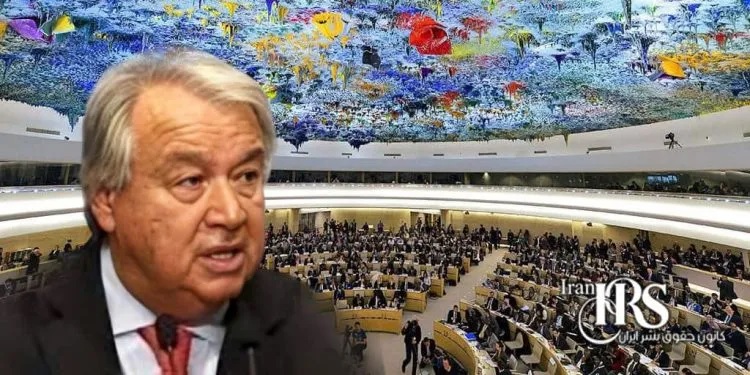
According to a report by UN Secretary-General António Guterres, presented on Wednesday at the UN Human Rights Council in Geneva, Iran executed at least 975 individuals in 2024.
Iran Human Rights Society, Friday, June 20, 2025 – The United Nations, in its latest report, has painted an alarming picture of the human rights situation in Iran. The report states that in the past year, Iran has recorded one of the worst human rights records, marked by a high rate of executions, increased arbitrary detentions, torture, severe restrictions on freedom of expression, and suppression of minorities. The UN Secretary-General and other senior UN officials have called on the international community to respond appropriately and pressure Iran to end human rights violations.
Alarming Rate of Executions in Iran
According to António Guterres’ report, presented at the UN Human Rights Council in Geneva, Iran executed at least 975 people in 2024. This figure represents a significant increase from 834 executions recorded in 2023, marking the highest number of executions since 2015. The report highlights that some of these executions were carried out publicly, with four public executions in 2024, which have been strongly criticized by international bodies as a clear violation of human rights.
Details of the executions reveal:
- 52% were executed for drug-related offenses.
- 43% were executed for murder charges.
- 2% were convicted of sexual offenses.
- 3% were executed on security-related charges, including espionage for Israel.
The variety of charges and the opaque judicial processes indicate, according to human rights experts, a systematic violation of the right to life and the right to a fair trial in Iran.
Women, Double Victims of Human Rights Violations
The UN report also highlights a significant increase in the execution of women in Iran. In 2024, at least 31 women were executed, a notable rise compared to 22 women the previous year. Many of these women were convicted in cases involving domestic violence, forced marriages, or child marriage. Among them, nine women were hanged for killing their husbands, often in situations where evidence of sustained domestic abuse existed. From a human rights perspective, this represents a gross violation of gender justice and a disregard for international standards protecting women victims of violence.
Suppression of Protesters and Ethnic Minorities
A significant portion of the report addresses the execution and suppression of protesters linked to the nationwide uprisings following the death of Mahsa Amini in 2022. According to the UN Human Rights Office, several of those executed were associated with protests against the ruling dictatorship. Human rights organizations had previously emphasized the lack of fair trial standards in the courts handling these cases, further raising concerns about widespread human rights violations in Iran.
Additionally, the UN warned that ethnic minorities have been disproportionately targeted with harsh punishments and executions:
- At least 108 of the executed prisoners were Baloch citizens.
- At least 84 Kurdish prisoners were among those executed.

These figures, according to UN experts, indicate systematic discrimination and human rights violations against ethnic minorities in Iran.
Arbitrary Detentions, Torture, and Suppression of Freedom of Expression
Another section of the Secretary-General’s report highlights the increase in arbitrary detentions and widespread use of torture in detention centers. According to the UN Human Rights Office, many trials have been conducted without adhering to legal standards or fair procedures, constituting a serious violation of human rights. Severe restrictions on freedom of expression and peaceful assembly also persist. In 2024, at least 125 journalists in Iran faced judicial prosecution due to their media activities, with 40 of them being women who were summoned or detained for their critical reporting.
The UN Human Rights Office emphasized that these repressive measures violate Iran’s international human rights obligations and constitute a clear breach of the International Covenant on Civil and Political Rights.
UN Calls for Immediate Halt to Executions
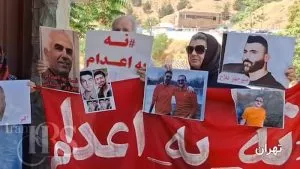
Nada Al-Nashif, Deputy UN High Commissioner for Human Rights, while presenting the report, called on Iran’s ruling dictatorship to immediately halt all executions as a critical step toward respecting human rights. She also urged the international community to apply effective diplomatic pressure to stop human rights violations in Iran, particularly executions and the suppression of protesters.
Al-Nashif explicitly stated that the continuation of widespread executions, torture, arbitrary detentions, and severe restrictions on freedom of expression paints a grim picture of the human rights situation in Iran, necessitating urgent international intervention.
Global Attention Needed on Iran’s Human Rights Situation
The UN’s recent report reaffirms the widespread and systematic violation of human rights in Iran. Extensive executions, discrimination against minorities, suppression of freedom of expression, arbitrary detentions, and torture are among the documented issues. The continuation of this situation could lead to further international isolation for Iran. Human rights organizations have repeatedly emphasized that an immediate halt to executions, judicial reform, respect for civil liberties, and adherence to human rights standards must be prioritized in demands made of Iran’s ruling dictatorship.
As the international community grows increasingly concerned about the human rights situation in Iran, targeted sanctions and increased legal and diplomatic pressure could serve as effective measures to halt the cycle of violence and human rights abuses. Without immediate reform, human rights violations in Iran will remain a serious international crisis.
Follow Iran Human Rights Society on social networks:
Telegram /Twitter /Instagram / YouTube / Facebook
Join Iran Human Rights Society on Twitter





Discussion about this post