
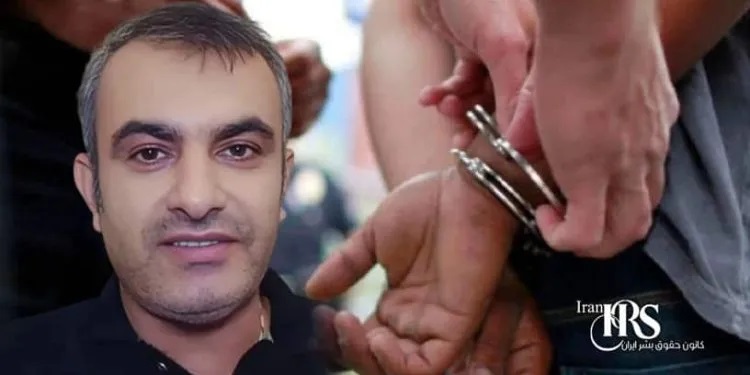
Since June 14, 2025, a widespread wave of arrests on security-related charges has begun. According to reports published in domestic media, at least 300 individuals have been detained across various parts of the country in less than a week. It is believed that the actual number of arrests exceeds this figure.
Iran Human Rights Society, Thursday, June 19, 2025 – Since June 14, 2025, a massive wave of arrests on security-related charges has swept across Iran. According to reports from domestic media, at least 300 individuals have been detained in various parts of the country within less than a week. It is believed that the actual number of arrests may be significantly higher.
Following recent Israeli airstrikes, a new wave of arrests has begun in Iran, raising serious concerns about escalating restrictions on civil liberties and the suppression of freedom of expression. The ruling dictatorship, citing “wartime conditions” and the prevailing security environment, is cracking down on any critical activities and content published on social media.
Arrest of a Behbahan Citizen for Sharing a Satirical Video
On Tuesday, June 17, 2025, Ali Shahbazi, a resident of Behbahan, was arrested by security forces and taken to an undisclosed location solely for sharing a satirical video related to the recent Israeli attack. The video was purely critical and humorous in nature and posed no threat to national security. Informed sources report that Ali Shahbazi has been denied contact with his family and access to a lawyer since his arrest, leaving his fate uncertain. Human rights activists have emphasized that such actions are a clear violation of freedom of expression and an attempt to suppress online activity.
Arrest of Four Individuals in Kerman
Concurrently, the Kerman Provincial Police Commander announced on Tuesday the arrest of four other citizens in Kerman—three men and one woman. According to security officials, these individuals were detained in connection with publishing content deemed to “disrupt public order and incite public unrest.” Specific details about these arrests and the charges against the individuals have not yet been transparently disclosed by judicial authorities. However, it appears that this action is part of a broader escalation of security crackdowns on online activities across the country in recent days.
Nationwide Expansion of Arrests
Since June 14, 2025, a widespread wave of arrests on security grounds has been reported. According to domestic media, at least 300 people have been detained across various provinces, including Yazd, Hormozgan, Kerman, Isfahan, Chaharmahal and Bakhtiari, Golestan, Tehran, Alborz, Ardabil, Fars, Mazandaran, North Khorasan, Razavi Khorasan, Lorestan, Ilam, Bushehr, West Azerbaijan, Zanjan, Qazvin, Markazi, Kermanshah, and Kurdistan. The geographical scope of these arrests indicates a coordinated and extensive operation to suppress criticism and control the public sphere.
The charges leveled against the detainees are broad and often appear baseless, including accusations such as “collaboration with Israel,” “photographing sensitive locations,” “inciting public unrest,” “creating fear and panic,” “media support for Israel,” “disrupting the psychological security of society,” “connection with Mossad,” and “espionage.”
Judicial Pressure and Threats of Harsher Penalties
In this context, Gholamhossein Mohseni Ejei, the head of Iran’s judiciary, has stated that individuals accused of collaborating with Israel must be “swiftly” tried and punished. He emphasized that, under current conditions, cases related to these charges should be processed outside standard procedures and with exceptional speed. Additionally, the Iranian Parliament has approved, with urgency, a bill to intensify penalties for “collaborators with Israel.” Under this legislation, “espionage or collaboration with hostile states, including the United States and Israel,” is considered “corruption on earth,” potentially leading to the death penalty.
These legal changes and judicial statements have heightened concerns among international human rights organizations about the broader suppression of protesters, civil activists, and ordinary citizens. Such processes often lack judicial transparency, access to legal counsel, and fair trials.
Human Rights Violations in Recent Arrests
The recent wave of arrests has involved numerous violations of fundamental human rights, including:
Violation of Article 19 of the Universal Declaration of Human Rights: Restrictions on freedom of expression and the free dissemination of opinions.
Violation of Article 9 of the Universal Declaration of Human Rights: Arbitrary arrests without clear legal justification.
Violation of Article 14 of the International Covenant on Civil and Political Rights (ICCPR): Denial of access to legal counsel and lack of fair and public trials.
Violation of Article 22 of the ICCPR: Suppression of freedom of assembly and expression.
Threats to impose harsher penalties without adhering to fair trial standards and the use of vague security-related concepts to suppress dissent.
These violations highlight the ongoing trend of repression, infringement on citizens’ rights, and the expansion of a security-driven atmosphere in Iran, which has intensified with this new wave of arrests.
Follow Iran Human Rights Society on social networks:
Telegram /Twitter /Instagram / YouTube / Facebook
Join Iran Human Rights Society on Twitter




Discussion about this post