
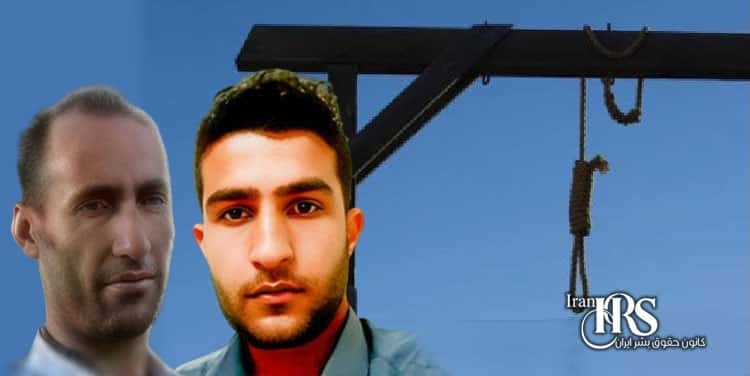
Six prisoners, including a woman, executed in Qom, Nahavand, Rasht, and Ahvaz prisons in July 2025, raising concerns about Iran’s death penalty practices.
The Iran Human Rights Society Thursday, July 9, 2025- Iran’s execution rate has surged alarmingly in July 2025, with 33 prisoners executed so far, averaging nearly two per day. This article examines the recent executions of six prisoners, including a woman, in Qom, Nahavand, Rasht, and Ahvaz prisons.
Recent Iran Executions in Qom Prison

On June 23, 2025, Qom Prison saw the execution of three prisoners, including a woman. The male prisoners were Hadi Nasri, 26, from Robat Karim, and Freydoun Naziri, 36, from Mehrshahr, Karaj. Both were arrested three years ago on murder charges and sentenced to death. The female prisoner’s identity remains under investigation. Additionally, on July 9, 2025, another female prisoner was executed in Qom, with her identity still undisclosed. These cases reflect a troubling trend in *Iran executions*, raising questions about transparency and fairness in judicial processes.
Execution in Nahavand Prison
On July 8, 2025, Ahmadali Mehdi-Nejad was executed in Nahavand Prison. Hailing from Sahneh County, he faced murder charges and received a death sentence. This execution, reported by the Iran Human Rights Society, underscores the rapid pace of *death penalty in Iran*. The lack of detailed public information about such cases often fuels concerns about due process violations.
Rasht’s Lakan Prison Execution
Jafar Khoshkalam, a 41-year-old boutique shop owner from Rasht, was executed at dawn on July 8, 2025, in Lakan Prison. Arrested two years ago on drug-related charges, he faced a death sentence. This case highlights how *Iran executions* extend to non-violent offenses like drug crimes, which international human rights groups argue should not warrant capital punishment.
Ahvaz’s Sepidar Prison Execution

On July 7, 2025, Majid Rahmani, 35, from Masjed Soleyman, was executed in Sepidar Prison, Ahvaz. Arrested four years ago on murder charges, his death sentence was carried out swiftly. This execution adds to the growing tally of *death penalty in Iran*, with Ahvaz being a frequent site for such punishments.
Death Penalty and the Universal Declaration of Human Rights
The UDHR’s Article 3 states, “Everyone has the right to life.” However, *Iran executions* directly challenge this principle. The death penalty’s irreversibility risks fatal judicial errors, and certain execution methods may constitute torture, violating UDHR provisions. Moreover, the lack of fair trials in many cases contradicts international standards. For instance, restrictions on legal representation and opaque court proceedings undermine defendants’ rights, making Iran’s death penalty practices incompatible with global human rights norms.
Violations of International Human Rights Obligations
Iran, a signatory to the International Covenant on Civil and Political Rights (ICCPR), is bound by Article 6, which permits the death penalty only for the “most serious crimes” and with fair trial guarantees. Yet, many Iran executions occur under questionable circumstances. Lack of judicial independence, limited transparency, and restricted access to legal counsel are common issues. These violations not only breach ICCPR obligations but also fuel global calls for Iran to halt its execution spree.
Follow Iran Human Rights Society on social networks:
Telegram /Twitter /Instagram / YouTube / Facebook
Join Iran Human Rights Society on Twitter







Discussion about this post