
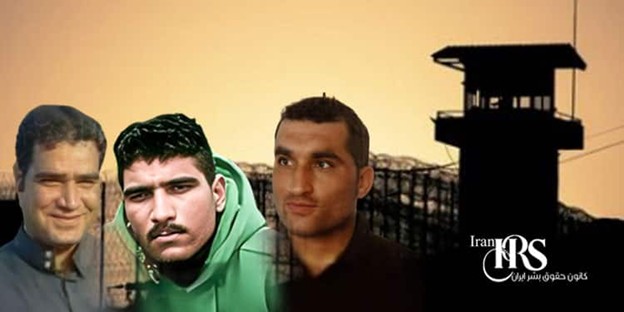
Imminent Threat: Transfer to Solitary Confinement
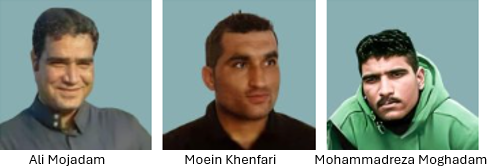
Iran Human Rights Society, Thursday, July 10, 2025 – On June 26, 2025, Ali Mojadam, Moein Khenfari, and Mohammadreza Moghadam were transferred to solitary confinement in Sepidar Prison, Ahvaz. This sudden move aligns with a pattern where such transfers precede executions. Families have received no official updates, and prison authorities have restricted phone calls, heightening fears of imminent executions. This lack of communication violates the prisoners’ rights to family contact and fuels anxiety among their loved ones. Furthermore, the absence of transparency underscores the systemic issues in Iran’s judicial process.
Ali Mojadam: A Father Facing Death
Ali Mojadam, born in 1983 in Kut Seyed Saleh, Ahvaz, is a married father of three. Arrested on February 9, 2019, by the Intelligence Department, he endured 63 days of solitary confinement before transfer to Sheiban Prison’s Ward 8. Charged with “moharebeh” (waging war against God) and membership in the “Harakat al-Nidal” group, Mojadam faced accusations of participating in an armed operation against security forces in September 2018. On February 14, 2023, Branch 4 of the Ahvaz Revolutionary Court sentenced him to death, alongside five others, for allegedly killing two law enforcement officers, a Basij member, and a soldier in Bandar Khomeini. The Supreme Court upheld his sentence on April 24, 2024, during an online hearing.
Moein Khenfari: A Young Man Under Duress
Moein Khenfari, born in 1993 in Kut Seyed Saleh, Ahvaz, was arrested in 2019 in a group case. He endured repeated torture during interrogations, which extracted forced confessions. On February 14, 2023, Branch 4 of the Ahvaz Revolutionary Court sentenced him to death for “moharebeh,” accusing him of involvement in the same killings and membership in “Harakat al-Nidal.” His final court hearing, held online on April 24, 2024, at Sheiban Prison, confirmed the sentence. Khenfari’s case exemplifies the use of coerced confessions to justify severe penalties.
Mohammadreza Moghadam: A Victim of Systemic Abuse
Mohammadreza Moghadam, born in 1992 in Shadegan, Khuzestan Province, was arrested in February 2019. Like his co-defendants, he faced severe torture during interrogations. On February 14, 2023, the Ahvaz Revolutionary Court sentenced him to death for “moharebeh,” alleging his role in the Bandar Khomeini killings and membership in “Harakat al-Nidal.” His final hearing on April 24, 2024, was conducted online, with the Supreme Court upholding the sentence. Moghadam’s treatment reflects the broader pattern of targeting Arab political prisoners with harsh penalties.
Forced Confessions and Unfair Trials
The cases of these three prisoners are marred by forced confessions extracted under torture. During months of solitary confinement in Intelligence Department facilities, they endured physical and psychological abuse. These confessions, later broadcast on state television, aimed to prejudice public opinion and undermine the presumption of innocence. Human rights organizations have condemned such practices as violations of fair trial principles. Moreover, the prisoners were denied access to independent legal counsel, with court-appointed lawyers imposed on them, further eroding their rights.
Sepidar Prison: A Hub of Human Rights Violations
Sepidar Prison in Ahvaz is notorious for its deplorable conditions. Overcrowding, lack of sanitation, and inadequate medical care plague the facility. Arab political prisoners, in particular, face racial and religious discrimination. Former inmates report limited access to food and medicine, with transfers to the infirmary occurring only in critical cases. Additionally, the frequent use of force, beatings, and psychological threats against prisoners underscores the prison’s harsh environment. These conditions exacerbate the suffering of those awaiting execution.
Broader Context: Additional Prisoners in the Case
Beyond the three named prisoners, others in the same case, including Adnan Ghabishavi (Mousavi), Habib Deris, and Salem Mousavi, face similar charges and penalties. Accused of killing two Basij members and two law enforcement officers, they too endured torture and forced confessions. The systemic targeting of Arab political prisoners in Ahvaz highlights ethnic discrimination within Iran’s judicial system. Families and activists fear these cases are being rushed to execution amid media silence.
Human Rights Violations: A Detailed Breakdown
The treatment of these prisoners violates multiple international human rights standards, including:
1. Right to a Fair Trial
The prisoners were denied a public trial with a jury. Closed-door proceedings under security pressure compromised judicial fairness.
2. Access to Legal Counsel
The prisoners could not choose their lawyers, with security-appointed counsel imposed, violating their right to independent representation.
3. Torture and Inhuman Treatment
Forced confessions extracted through physical and psychological torture constitute cruel treatment and violate international law.
4. Prolonged Solitary Confinement
Months in solitary confinement without family contact or medical care amount to psychological torture, known as “white torture.”
5. Forced Confessions on Television
Broadcasting coerced confessions undermines the presumption of innocence and prejudices public perception.
6. Unfair Death Sentences
The Supreme Court upheld death sentences based on tortured confessions, lacking transparent or independent review, violating the right to life.
7. Lack of Family Communication
Families received no updates on the prisoners’ status or execution plans, violating their right to information and contact.
8. Ethnic Discrimination
Systemic bias against Ahvazi Arabs in security-related cases raises concerns about judicial fairness and equality.
Official Silence and Family Appeals
Despite the gravity of these cases, judicial authorities and state media have remained silent on the prisoners’ transfer to solitary confinement. This lack of transparency fuels fears of covert executions. Meanwhile, the prisoners’ families have repeatedly called for a halt to the execution process, urging international intervention to address these injustices.
Urgent Call to Action
The transfer of Ali Mojadam, Moein Khenfari, and Mohammadreza Moghadam to solitary confinement signals a critical moment. Their death sentences, rooted in forced confessions and unfair trials, reflect systemic human rights abuses in Iran. International organizations, activists, and concerned individuals must act swiftly to pressure authorities to halt these executions. Raising awareness about the plight of Arab political prisoners in Sepidar Prison is crucial to ensuring justice and protecting their lives.
Follow Iran Human Rights Society on social networks:
Telegram /Twitter /Instagram / YouTube / Facebook
Join Iran Human Rights Society on Twitter







Discussion about this post