
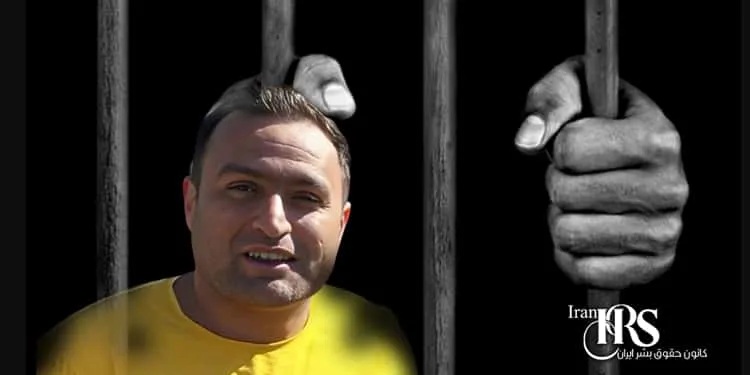
Ruhollah Khosravi, a political prisoner in Iran, faces torture and no trial after two years. Learn about his case and human rights violations.
Iran Human Rights Society, Wednesday, July 23, 2025 – Ruhollah Khosravi, a political prisoner held in Dezful Prison, remains in limbo nearly two years after his arrest in September 2023. His case exposes Iran’s systemic human rights abuses, including arbitrary detention, torture, and denial of fair trials. Authorities have denied Khosravi’s family contact for four months and set an exorbitant 60 billion toman bail for his release. This article explores Khosravi’s plight, the repression in Izeh, and the urgent need for international action to address Iran’s human rights violations.
Khosravi’s Arrest Amid Izeh Crackdown
Security forces arrested Ruhollah Khosravi, a 36-year-old Bakhtiari from Isfahan, on August 23, 2023, during a violent crackdown in Khuzestan. His detention coincided with the killing of two young protesters, Kamar Tahmasebi and Mehdi Almasi, by state forces. In November 2022, 9-year-old Kian Pirfalak and others died in similar violence. Authorities have attempted to blame Izeh’s youth for these deaths, a claim families and activists reject. Khosravi’s arrest seems part of a campaign to silence dissent in the region.
Four Months of Isolation and Uncertainty
Khosravi’s family has had no contact with him for four months and remains unaware of his exact location in Dezful Prison. They report his physical and mental health as alarming. Judicial authorities provide no updates, leaving his wife, two young children, and elderly mother in distress. The judiciary demands a 60 billion toman bail—an unaffordable sum for a working-class family—worsening their financial struggles. Khosravi, the sole breadwinner, supported his elderly mother and young children before his arrest.
Torture and Forced Confessions
After his arrest, authorities transferred Khosravi to an Intelligence Ministry detention center. There, he endured a month of severe physical and psychological pressure to extract forced confessions. On September 22, 2023, officials moved him to Sheiban Prison in Ahvaz, then to Dezful Prison, where he remains without access to a lawyer of his choice. Human rights activists warn about his dire detention conditions. Khosravi faces multiple health issues but receives no medical care, further endangering his well-being.
Family Under Immense Pressure
Khosravi’s family struggles financially and faces security threats. Without their breadwinner, they care for his two children and elderly mother in an atmosphere of fear. His mother shared, “For four months, I’ve had no news of my son—not a call or visit. They demand 60 billion tomans for bail, but we can barely afford bread.” The family’s plight reflects the broader impact of Iran’s repressive policies on ordinary citizens.
Repression in Izeh: A Pattern of Violence

Izeh has faced repeated waves of brutal suppression. During the 2022 nationwide protests, security forces used live ammunition against civilians. The killings of Tahmasebi and Almasi followed the same pattern, accompanied by mass arrests to silence dissent. Activists view Khosravi’s detention as part of this campaign to intimidate families of victims and deter their pursuit of justice. The cycle of violence and arrests continues to devastate Izeh’s community.
Judiciary’s Deliberate Inaction
Nearly two years after his arrest, no court has heard Khosravi’s case. His file remains in the investigation phase, with authorities offering no explanation for the charges or prolonged detention. This delay serves as a tactic to pressure political prisoners psychologically. The lack of transparency and accountability highlights the judiciary’s role in perpetuating human rights abuses.
Human Rights Activists Demand Action
Human rights organizations call for immediate transparency in Khosravi’s case. They condemn the denial of family visits, psychological pressure, and exorbitant bail as forms of “white torture.” These actions violate prisoners’ rights and international standards. Activists also urge the international community to address state killings, arbitrary detentions, and torture in Izeh and Khuzestan, emphasizing the need for global pressure to end these abuses.
Systemic Human Rights Violations
Khosravi’s case reflects Iran’s systemic disregard for human rights, violating key principles of international law:
- Right to Liberty and Security: His arbitrary arrest and detention without trial breach this right.
- Prohibition of Torture: Physical and psychological torture for forced confessions and denial of medical care are clear violations.
- Right to a Fair Trial: Lack of access to a chosen lawyer and failure to hold a public trial deny due process.
- Right to Family Life: Four months without family contact violates this right.
- Right to a Decent Standard of Living: Detaining the family’s breadwinner and imposing unaffordable bail devastate their livelihood.
Follow Iran Human Rights Society on social networks:
Telegram /Twitter /Instagram / YouTube / Facebook
Join Iran Human Rights Society on Twitter




Discussion about this post