

Qezel Hesar Prison’s brutal assault on political prisoners, executions of Mehdi Hassani and Behrouz Ehsani, and Saeed Masouri’s exile spark global outcry.
Iran Human Rights Society, Sunday, July 27, 2025 – On July 27, 2025, Qezel Hesar Prison executed political prisoners Mehdi Hassani and Behrouz Ehsani, just one day after a violent assault by special guards. This incident, coupled with Saeed Masouri’s abrupt exile, highlights Iran’s systematic suppression of political dissent. These actions demand urgent international attention to address ongoing human rights violations.
Violent Assault on Political Prisoners in Qezel Hesar
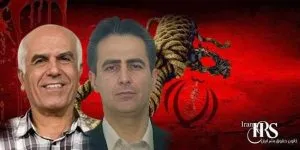
On July 26, 2025, over 100 armed special guards stormed Unit 4 of Qezel Hesar Prison, where political prisoners reside. Led by warden Allahkaram Azizi and deputy Hassan Qobadi, alongside Ministry of Intelligence agents, the assault involved brutal beatings and torture. Guards, including Ismail Farajnejad, Hossein Kamarei, and others, used handcuffs, ankle restraints, and hoods to subdue prisoners. Authorities transferred inmates to solitary confinement, severing all communication with families. Many prisoners sustained severe injuries and lack access to medical care, intensifying concerns about their well-being.
Sudden Executions of Mehdi Hassani and Behrouz Ehsani
On July 27, 2025, authorities executed Mehdi Hassani and Behrouz Ehsani without notifying their families or granting final visits. Charged with membership in the Mujahedin-e Khalq Organization (PMOI/MEK), both faced trials riddled with injustices. The Supreme Court repeatedly rejected their retrial requests, and no appeals hearing occurred. These executions, following the violent raid, have sparked outrage among human rights activists, who condemn the lack of due process.
Saeed Masouri’s Exile: A Threat to a Veteran Prisoner
Saeed Masouri, imprisoned for 25 years without furlough, faced sudden exile to Zahedan Prison, a facility notorious for harsh conditions. His sister posted on X, “Today, Saeed was exiled to Zahedan without notice or court order, threatening his life.” This transfer aims to crush Masouri’s resistance and silence his voice. Such actions reflect a broader campaign to intimidate political prisoners and suppress dissent.
Systematic Suppression in Qezel Hesar Prison
The assault, executions, and exile reveal a calculated policy to break political prisoners’ spirits. Qezel Hesar Prison, one of Iran’s largest, faces criticism for overcrowding, poor sanitation, and torture. The attack on Unit 4 sought to prevent protests and exposés about inhumane conditions. By isolating prisoners and denying family contact, authorities create fear to deter resistance. However, these actions only highlight the regime’s desperation to maintain control.
Human Rights Violations Under International Law
The events at Qezel Hesar violate multiple international human rights standards:
- Article 5, Universal Declaration of Human Rights (UDHR): The brutal beatings, torture, and solitary confinement constitute inhumane treatment.
- Article 9, UDHR: Masouri’s exile without legal basis breaches protections against arbitrary detention and exile.
- Article 10, International Covenant on Civil and Political Rights: The unfair trials of Hassani and Ehsani, lacking appeals, violate fair trial rights.
- Article 3, UDHR: Executions and threats to prisoners’ lives attack their right to life and security.
These violations suggest crimes against humanity, demanding accountability for Iran’s judicial and security officials.
Calls for International Action
Human rights organizations, including Amnesty International and Human Rights Watch, urge immediate action to halt executions and address prisoner conditions. They warn that continued suppression could escalate into further atrocities. The UN Special Rapporteur on Iran has also called for intervention. However, the international community’s response remains limited, allowing violations to persist. Sustained pressure from governments and media could curb these abuses.
Families Demand Justice and Exposure
Families of Qezel Hesar prisoners, cut off from their loved ones, express growing anxiety. They call on media and the public to amplify prisoners’ voices. By exposing these atrocities, they hope to pressure Iran’s government to stop its inhumane actions. Consistent global attention remains critical to preventing further tragedies.
Follow Iran Human Rights Society on social networks:
Telegram /Twitter /Instagram / YouTube / Facebook
Join Iran Human Rights Society on Twitter





Discussion about this post