
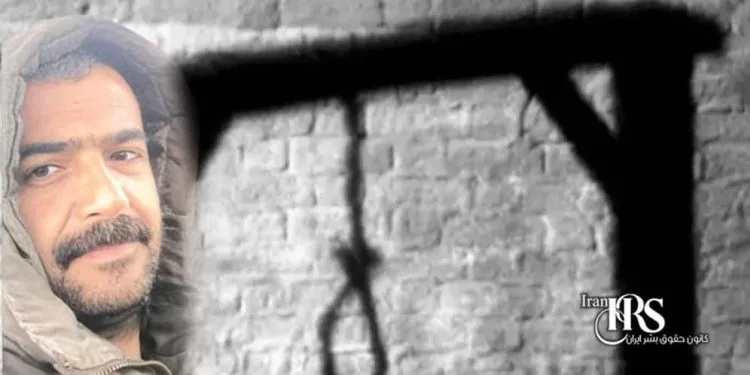
Seven prisoners executed in Esfahan, Khorramabad, Shiraz, Taybad, and Qezel Hesar prisons in the first five days of Tir Persian calendar, including political prisoners, spark human rights outcry.
Iran Human Rights Society, Sunday, July 27, 2025– In the first five days of Tir Persian calendar Iran, executed seven prisoners across Esfahan, Khorramabad, Shiraz, Taybad, and Qezel Hesar prisons, including political prisoners Behrouz Ehsani and Mehdi Hassani. This brings the total executions in the first five days of Tir Persian calendar, raising global concerns about Iran’s use of the death penalty. These actions violate international human rights standards, prompting urgent calls for reform.
Execution in Esfahan’s Dastgerd Prison
On July 27, 2025, authorities executed Reza Mirfaroughi in Dastgerd Prison, Esfahan. A resident of Esfahan, he faced murder charges and received a death sentence. The execution occurred without transparency, fueling criticism of Iran’s judicial process.
Khorramabad Prison Execution

At dawn on July 27, 2025, Hamzeh Moradian faced execution in Khorramabad Prison. Arrested eight years prior for murder, Moradian’s death sentence highlights Iran’s frequent use of capital punishment, often criticized for lacking fair trials.
Qezel Hesar Prison: Two Executions
On July 27, 2025, Qezel Hesar Prison in Karaj executed Saeed Kashani and Naser Nazari, both charged with murder. These executions, alongside those of political prisoners Behrouz Ehsani and Mehdi Hassani, reflect a broader crackdown on dissent. The rapid pace of executions in Qezel Hesar, a notorious facility, draws attention to its harsh conditions and high execution rates.
Shiraz’s Adelabad Prison Executions
On July 27, 2025, Adelabad Prison in Shiraz executed Behzad Gholamzadeh and Latif Karegar. Gholamzadeh, arrested four years earlier, and Karegar, detained for six years, faced drug-related charges. Additionally, Saman Heydari was executed the same day, as reported by human rights groups. These cases underscore the frequent use of the death penalty for non-violent crimes.
Taybad Prison Execution
On July 26, 2025, Khodayar Ahmadkhani, a 46-year-old from Mashhad, was executed in Taybad Prison. Arrested eight years ago for drug-related offenses, his execution further illustrates Iran’s reliance on capital punishment for drug charges, often criticized as disproportionate.
Death Penalty Violates Universal Declaration of Human Rights
Article 3 of the Universal Declaration of Human Rights declares, “Everyone has the right to life.” Iran’s use of the death penalty contradicts this principle for several reasons:
- Inalienable Right: The death penalty strips individuals of their fundamental right to life.
- Irreversible Errors: Judicial mistakes cannot be undone after execution, risking innocent lives.
- Inhumane Practices: Many execution methods constitute torture, violating human rights standards.
These executions, particularly of political prisoners, highlight systemic flaws in Iran’s justice system, including unfair trials and lack of transparency.
Breaching International Human Rights Obligations
Article 6 of the International Covenant on Civil and Political Rights, to which Iran is a signatory, permits the death penalty only for the most serious crimes with strict fair trial guarantees. However, Iran’s judicial processes often lack independence, restrict defendants’ rights, and fail to ensure transparency. The executions of Ehsani and Hassani, convicted without fair trials, exemplify these violations. Human rights organizations condemn these practices as breaches of international law.
Follow Iran Human Rights Society on social networks:
Telegram /Twitter /Instagram / YouTube / Facebook
Join Iran Human Rights Society on Twitter






Discussion about this post