
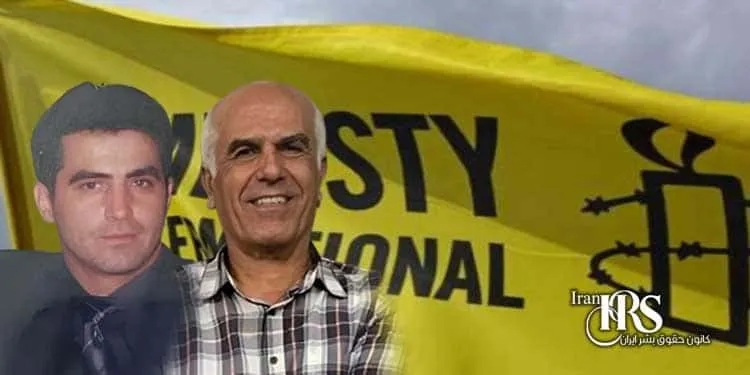
Amnesty International and UN condemn Iran’s execution of Mehdi Hassani and Behrouz Ehsani, highlighting a surge in politically motivated killings.
Iran Human Rights Society, Tuesday, July 29, 2025– Iran’s execution crisis escalates as political prisoners Mehdi Hassani and Behrouz Ehsani face secret executions in Ghezel Hesar Prison. Amnesty International and the UN High Commissioner for Human Rights, Volker Türk, strongly denounce these acts as gross violations of human rights. The rising number of executions, particularly after recent regional tensions, sparks global concern. This article explores the alarming situation, focusing on the unfair trials, torture, and political repression in Iran.
Iran’s Execution Crisis: A Growing Concern

Amnesty International reports nearly 700 executions in Iran this year, a sharp rise from previous years. The executions of Mehdi Hassani and Behrouz Ehsani in Ghezel Hesar Prison highlight this crisis. Arrested during the 2022 nationwide protests, the two faced death sentences on vague “rebellion” charges. Their trials, lasting only five minutes, lacked legal representation and relied on coerced confessions. Such practices violate international human rights laws, including the right to a fair trial.
The UN High Commissioner, Volker Türk, warns that Iran’s ruling regime uses the death penalty as a tool for political repression. He describes the execution surge as “profoundly disturbing,” especially following recent regional conflicts. Consequently, global human rights organizations demand an immediate halt to these politically motivated killings.
Ghezel Hesar Prison: A Center for Repression
Ghezel Hesar Prison in Alborz Province serves as a hub for Iran’s execution campaign. It houses thousands of prisoners, including political dissidents, and frequently conducts secret executions. Security forces often transfer prisoners to solitary confinement without warning, subjecting them to torture. For instance, Mehdi Hassani, 47, and Behrouz Ehsani, 69, endured beatings, prolonged isolation, and threats to their families. These tactics forced confessions used to justify their death sentences.
Moreover, the prison’s authorities deny families prior notification of executions, intensifying their suffering. This lack of transparency violates basic human rights principles, including Article 6 of the International Covenant on Civil and Political Rights, which protects the right to life.
Unfair Trials and Coerced Confessions
The trials of Hassani and Ehsani expose Iran’s judicial system’s flaws. Arrested in 2022, both men faced charges linked to the People’s Mojahedin Organization of Iran (PMOI/MEK), though no independent evidence supported these claims. Their five-minute trial in the Revolutionary Court denied them the right to speak or access lawyers. Instead, authorities relied on confessions extracted through torture, a clear breach of Article 5 of the Universal Declaration of Human Rights, which prohibits inhumane treatment.
Amnesty International’s Christiane Beckerle emphasizes that such trials lack fairness and transparency. She notes, “These coerced confessions formed the basis for their death sentences, highlighting Iran’s blatant disregard for justice.” Therefore, these executions constitute extrajudicial killings, as Volker Türk asserts.
Alarming Execution Statistics in 2025
The UN Human Rights Office reports over 612 executions in Iran from January to June 2025, more than double the number from the same period last year. Prisons like Ghezel Hesar, Rajai Shahr, and Urmia lead this surge. Families often learn of executions only after they occur, deepening their trauma. This secrecy, combined with unfair trials, fuels international outrage.
Furthermore, the execution spike follows a 12-day regional conflict, suggesting the regime uses the death penalty to suppress dissent. Türk warns that this pattern indicates a deliberate strategy to target political opponents, especially during times of unrest.
Human Rights Violations in Hassani and Ehsani’s Case
The treatment of Mehdi Hassani and Behrouz Ehsani violates multiple human rights principles:
- Torture and Inhumane Treatment: Beatings and solitary confinement breach Article 5 of the Universal Declaration of Human Rights.
- Unfair Trials: The five-minute trial without lawyers violates Articles 10 and 11, which ensure fair judicial processes.
- Right to Life: Secret executions disregard Article 6 of the International Covenant on Civil and Political Rights.
- Lack of Transparency: Families received no prior notification, defying UN Human Rights Council provisions.
These violations reveal a systematic pattern of repression, particularly targeting political prisoners.
Political Repression Through Executions
Iran’s regime intensifies executions during social or regional unrest to intimidate society. Ghezel Hesar Prison’s role in these killings underscores this strategy. For example, Hassani and Ehsani’s executions followed protests and conflicts, signaling the regime’s intent to silence dissent. Amnesty International warns that such actions aim to “send a message of fear” to potential opponents.
However, this approach only fuels global condemnation. Human rights advocates urge stronger diplomatic pressure to curb Iran’s execution crisis. They also call for fair trials and an end to torture in detention centers.
A Call for Global Action
The executions of Mehdi Hassani and Behrouz Ehsani demand urgent international response. Amnesty International and the UN urge countries to pressure Iran’s regime to halt executions and ensure fair trials. Additionally, media campaigns can amplify these violations, raising awareness of Iran’s human rights abuses.
In conclusion, the world must act swiftly to address Iran’s execution surge. By increasing diplomatic efforts and public advocacy, human rights organizations aim to protect lives and uphold justice. The cases of Hassani and Ehsani serve as a stark reminder of the regime’s brutality, calling for immediate global action.
Follow Iran Human Rights Society on social networks:
Telegram /Twitter /Instagram / YouTube / Facebook
Join Iran Human Rights Society on Twitter


Discussion about this post