

Four political prisoners in Iran face 24 months of detention without trial in Sheyban Prison. Hunger strikes and solitary confinement highlight human rights abuses.
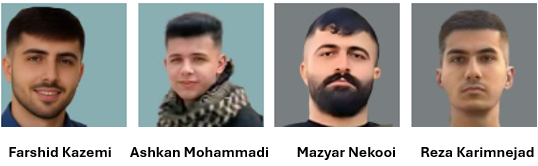
Iran Human Rights Society, Sunday, August 3, 2025 – Iran’s political prisoners endure unimaginable hardship. For nearly two years, Mazyar Nekooi, Ashkan Mohammadi, Farshid Kazemi, and Reza Karimnejad have languished in Sheyban Prison, Ahvaz, without a trial. Their story exposes systemic human rights violations in Iran’s judicial system. These brave individuals demand justice through hunger strikes, yet face solitary confinement instead of fair hearings. This article explores their plight and the urgent need for reform.
Hunger Strikes: A Cry for Justice
In October 2024, these four political prisoners in Iran launched a hunger strike to protest their prolonged detention without judicial progress. This desperate act, their second hunger strike, underscores their frustration. However, authorities responded harshly, transferring them to solitary confinement. This punitive measure violates their basic rights and worsens their physical condition. Families, deeply worried, receive no clear updates from prison officials, amplifying their distress.
Arrests Without Trials: A Pattern of Repression
Security forces arrested Reza Karimnejad on August 13, 2022, in Isfahan. Soon after, they detained Ashkan Mohammadi from Ahvaz and Mazyar Nekooi from Isfahan for protest activities. Farshid Kazemi followed on August 22. Charged with “propaganda against the regime” and “acting against national security,” they face vague accusations often used to silence dissent. Shockingly, after 23 months, no court has heard their case or recorded their defenses. A source revealed the Izeh prosecutor admitted these cases fall under IRGC Intelligence’s control, not the local judiciary.
Security Agencies Override Judicial Independence
The dominance of security agencies over Iran’s judiciary is alarming. A legal expert noted that delegating political prisoners’ cases to such entities is illegal and erodes judicial independence. Consequently, laws and legal procedures lose meaning under political and security pressures. This systemic issue not only violates human rights but also destroys public trust in judicial fairness.
Political Prisoners: Victims of a Broken System
These four political prisoners in Iran are not alone. Labeling protests as security threats remains a common tactic to silence critics. Authorities use case fabrication, prolonged detention, and lack of transparency to inflict psychological torture. Moreover, prisoners in high-security facilities like Sheyban often lack access to lawyers, family visits, or medical care, further violating their rights.
Families and Advocates Demand Fair Trials
The families of these political prisoners in Iran repeatedly call for clarity on their loved ones’ status. They demand public trials within a legal framework or immediate release if no valid charges exist. Similarly, human rights organizations echo these demands, urging Iran to uphold fair judicial processes.
Human Rights Violations: A Global Concern
The prolonged detention of these four political prisoners in Iran violates international human rights principles. Specifically, it contradicts Articles 9 and 14 of the International Covenant on Civil and Political Rights. Article 9 ensures liberty and security, prohibiting arbitrary detention and mandating prompt notification of charges. Article 14 guarantees a fair trial by an impartial court. Iran’s failure to provide trials or legal access inflicts injustice and undermines human dignity. Therefore, all nations must uphold detainees’ rights to fair and timely judicial processes.
A Reflection of Iran’s Judicial Failures
The plight of these four political prisoners in Iran mirrors the broader failures of the country’s judicial system. Authorities detain critics, deny due process, and impose uncertainty under security pretexts. This pattern persists without domestic or international intervention. Furthermore, the lack of judicial independence highlights the ruling system’s approach to dissent: repression over justice.
Call to Action: End the Injustice
The case of these four political prisoners in Iran demands urgent attention. For nearly 24 months, they have endured detention without trials, facing uncertainty and harsh conditions. Their hunger strikes and solitary confinement reflect a desperate plea for justice. Thus, global communities must pressure Iran to respect human rights, ensure fair trials, and release those unjustly detained.
Follow Iran Human Rights Society on social networks:
Telegram /Twitter /Instagram / YouTube / Facebook
Join Iran Human Rights Society on Twitter







Discussion about this post