

New sentences for Ali Younesi and Amirhossein Moradi, elite students, spark human rights concerns. Iran’s judiciary targets dissent with harsh penalties.
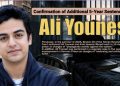
Iran Human Rights Organization, Saturday, August 8, 2025 – Iran’s judiciary continues to target political prisoners, with Ali Younesi and Amirhossein Moradi, two elite students, facing new sentences. On August 8, 2025, Branch 29 of Tehran’s Revolutionary Court sentenced both to 15 months in prison for “propaganda against the system.” Additionally, Ali Younesi received a five-year sentence in Kerman Prison for “supporting and strengthening Israel.” These harsh penalties, coupled with severe communication restrictions, highlight Iran’s ongoing suppression of academic dissent. Therefore, the international community must act urgently to address these human rights violations.
Continued Persecution of Medal-Winning Students
Ali Younesi and Amirhossein Moradi, detained since April 2020, are prominent Sharif University students. Initially sentenced to 16 years in prison, with 10 years enforceable, they now face extended incarceration. The new 15-month sentences for both students stem from vague charges of “propaganda against the system.” Moreover, Younesi’s additional five-year sentence includes a ban on social media and phone calls, except in urgent cases under prison supervision. These restrictions severely limit their contact with the outside world, raising concerns about psychological hardship.
Detention in a “Safe House”: A Violation of Rights

After an attack on Evin Prison, authorities transferred Younesi to a security-affiliated “safe house” in Qom, resembling prolonged solitary confinement. He lacks free access to lawyers, and his family receives no updates on his conditions. This secretive detention violates judicial transparency and the prohibition of secret detentions under international law. Human rights experts warn that such conditions increase the risk of torture and further rights abuses. Consequently, the lack of communication intensifies fears for Younesi’s well-being.
- Maryam Akbari Monfared’s Life at Risk in Qarchak Prison
- Warning: Qezel Hesar Prison’s Role in Forced Disappearances of Political Prisoners
Academic Excellence Under Attack
Ali Younesi, born in 1998, is a computer engineering student at Sharif University. He earned a silver medal in the 2016 National Astronomy Olympiad and a gold medal in the 2017 International Astronomy Olympiad. Amirhossein Moradi, a physics student, won a silver medal in the 2016 National Astronomy Olympiad. Their academic achievements make their persecution a stark example of Iran’s crackdown on intellectual talent. The judiciary’s actions aim to silence dissent within academic communities, creating fear among students.

Judicial and Security Pressures Intensify
Mostafa Nili, the students’ lawyer, reported that the new sentences extend their already lengthy imprisonment. Younesi’s additional penalties, including bans on communication, create severe isolation. Nili noted that these measures “minimize contact with the outside world and cause significant psychological hardship.” The judiciary’s use of vague charges, such as “supporting Israel,” reflects a pattern of fabricating cases to suppress dissent. Furthermore, holding trials without full legal access undermines fair judicial processes.
Human Rights Violations in Focus
The treatment of Younesi and Moradi violates several international human rights standards:
- Article 9, ICCPR: Prohibits arbitrary detention. Younesi’s secretive transfer to a Qom safe house breaches this right.
- Article 14, ICCPR: Guarantees a fair trial. Issuing sentences without full legal access violates this principle.
- Article 19, Universal Declaration of Human Rights: Protects freedom of expression. Younesi’s communication bans infringe on this right.
- Article 10, ICCPR: Mandates humane treatment. Detaining Younesi in an unofficial facility with unknown conditions violates this standard.
These violations highlight Iran’s systematic use of the judiciary to silence political prisoners. The lack of transparency in Younesi’s detention raises fears of further mistreatment.
Families’ Growing Concerns
The families of Younesi and Moradi express deep concern for their physical and mental health. Prolonged detention, restricted communication, and lack of access to academic resources have disrupted their education. A source close to the Younesi family stated, “Ali is not even in a prison; he’s in an unknown place with unknown conditions. This is torture for us.” The uncertainty surrounding their loved ones’ fate compounds the families’ distress.
Urgent Call for International Action
International organizations, including Amnesty International and the UN Working Group on Arbitrary Detention, have previously called for the immediate release of these two students. With the issuance of new sentences and the revelation of Ali Younesi’s detention in a Qom safe house, these demands have gained renewed urgency.
Follow Iran Human Rights Society on social networks:
Telegram /Twitter /Instagram / YouTube / Facebook
Join Iran Human Rights Society on Twitter





Discussion about this post