
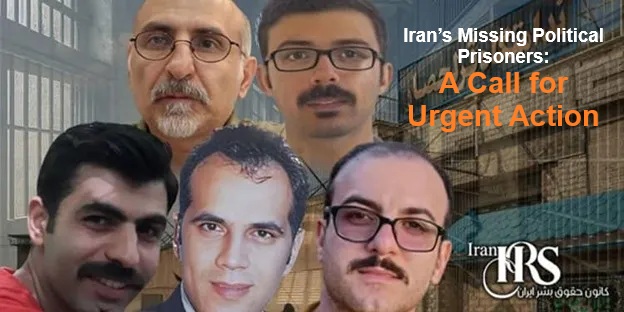
Five political prisoners in Iran face imminent execution. No information on their whereabouts sparks fear. Demand transparency now to stop human rights violations.
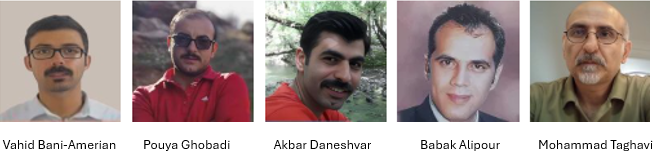
Iran Human Rights Society, Thursday, August 14, 2025 – On August 8, 2025, five political prisoners—Vahid Bani-Amerian, Pouya Ghobadi, Akbar Daneshvar, Babak Alipour, and Mohammad Taghavi—disappeared during a prison transfer. Their whereabouts remain unknown, raising fears of secret executions. Families and activists demand answers, yet Iranian authorities remain silent. This article explores the crisis, the prisoners’ backgrounds, and the urgent need for global action to prevent a human rights catastrophe.
Violent Transfer Sparks Alarm
On August 8, 2025, authorities transferred prisoners from Fashafouyeh to Evin Prison. During this process, they forcibly separated the five political prisoners. Witnesses report brutal beatings and heavy security measures. Initially, officials claimed the prisoners were headed to Qezel Hesar Prison, a facility known for executions. However, Qezel Hesar authorities later denied their arrival, deepening the mystery. Families have had no contact, and the prisoners’ physical and mental conditions remain unknown. This lack of clarity fuels fears of enforced disappearance, a serious human rights violation.
- Fatemeh Ziaei’s Re-Arrest: A Critically Ill Political Prisoner in Peril
- Maryam Akbari Monfared’s Life at Risk in Qarchak Prison
Who Are the Missing Political Prisoners?
These five men face death sentences on charges like “corruption on earth” and “collaboration with opposition groups.” Their trials, held in recent years, lacked fairness. Reports indicate confessions were extracted through torture. Vahid Bani-Amerian, a management graduate, endured prolonged solitary confinement. Pouya Ghobadi, an electrical engineer, suffered severe beatings. Akbar Daneshvar, a civil engineer, faced flogging. Babak Alipour, a law graduate, and Mohammad Taghavi, a veteran activist, also experienced torture. International organizations have condemned these verdicts as unjust, calling for retrials.
Enforced Disappearance: A Growing Concern
The absence of information about these prisoners violates international law. Enforced disappearance constitutes a serious crime, stripping individuals of their rights to contact family or legal counsel. Authorities have ignored families’ pleas and formal letters to the prosecutor’s office. Human rights activists warn that such secrecy often precedes sudden executions or further torture. Recent cases in Iran, including secret executions of political prisoners, heighten these concerns. Transparency is critical to prevent irreversible outcomes.
Families Demand Accountability
The prisoners’ families have appealed to the public for support. They urge pressure on Iranian authorities to reveal the prisoners’ whereabouts. Without this, they fear secret executions. The families’ repeated attempts to contact judicial and security officials have yielded no results. Their messages emphasize that public silence could enable authorities to act with impunity. Solidarity from media and global communities is essential to protect these prisoners’ lives.
International Outcry and Legal Violations
Human rights organizations have issued statements demanding immediate transparency. They insist authorities allow phone calls and in-person visits. Any execution plans must be publicly announced. The lack of information mirrors past cases where prisoners faced sudden executions. This situation violates multiple international laws, including Article 9 of the ICCPR, which ensures liberty and security, and Article 14, which guarantees a fair trial. Article 7 prohibits torture, while the International Convention for the Protection of All Persons from Enforced Disappearance bans secret detention. These violations highlight Iran’s disregard for human rights.
Risk of Secret Executions Looms
The confirmed death sentences increase fears of sudden executions. Experts note that Iran’s history of secret executions, particularly for political prisoners, raises alarms. A human rights activist stated, “This lack of information is a tactic to pressure prisoners and families. It often signals imminent executions or further interrogations.” The international community must act swiftly to demand accountability and prevent a tragedy.
A Call to Action
The disappearance of these five political prisoners signals a broader crisis in Iran’s treatment of ideological detainees. Past cases, like the execution of Navid Afkari, show the danger of silence. Transparency and timely information are vital to protect these prisoners. The global community must amplify the families’ voices and pressure Iranian authorities. Public awareness and international intervention can prevent further human rights violations. The responsibility lies with judicial and security officials to disclose the prisoners’ fates immediately.
Conclusion: Stop the Silence
The lack of information about Vahid Bani-Amerian, Pouya Ghobadi, Akbar Daneshvar, Babak Alipour, and Mohammad Taghavi is a stark violation of their rights. It also warns of the dangers facing other political prisoners in Iran. Families, activists, and organizations call for urgent action to ensure transparency and accountability. The international community must stand united to demand answers and protect these lives. Silence enables further abuses, but collective action can stop this human rights crisis. Act now to save these prisoners.
Follow Iran Human Rights Society on social networks:
Telegram /Twitter /Instagram / YouTube / Facebook
Join Iran Human Rights Society on Twitter







Discussion about this post