
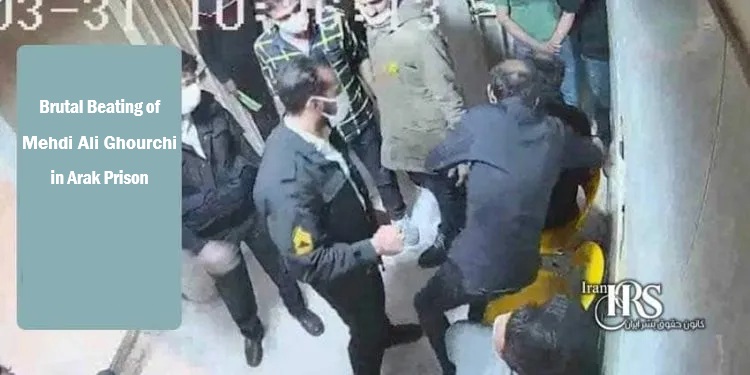
Mehdi Ali Ghourchi, a political prisoner, endured brutal beating in Arak Prison on August 13, 2025. Demand justice and transparency to end Iran’s human rights abuses.
Iran Human Rights Society, Thursday, August 14, 2025 –On August 13, 2025, Mehdi Ali Ghourchi, a political prisoner in Arak Prison, suffered a brutal beating by guards. This violent assault highlights Iran’s systematic abuse of political prisoners. Authorities tied his hands and feet, bound him to an iron door, and beat him severely, causing visible injuries. Despite clear evidence, officials deny accountability. This article examines the incident, its implications, and the urgent need for global action to stop human rights violations in Iran’s prisons.
Violent Assault on Mehdi Ali Ghourchi
Guards at Arak Prison attacked Mehdi Ali Ghourchi on August 13, 2025. They restrained him and beat him repeatedly, leaving bruises and serious injuries. Witnesses confirm the assault occurred under CCTV surveillance, yet authorities have taken no action. Furthermore, they denied Ghourchi medical care, intensifying concerns about his health. His family, unable to contact him, fears for his safety. This incident reflects a broader pattern of violence against political prisoners in Iran.
- Tuesdays Against Execution: A Growing Cry for Justice in Iran
- New Sentences Against Ali Younesi and Amirhossein Moradi: A Crackdown on Elite Students
A Pattern of Abuse in Iran’s Prisons
This assault is not isolated. On June 13, 2025, guards attacked another political prisoner, Abolfazl Khouran, slamming his head against the ground. Both incidents, captured on CCTV, reveal a culture of impunity. Prison officials face no consequences, suggesting state approval of such violence. Human rights experts argue this reflects an unwritten policy to intimidate political prisoners. Consequently, these acts aim to break their spirit and deter dissent. The lack of accountability fuels ongoing abuses in Iran’s prison system.
Human Rights Violations in Ghourchi’s Case

The beating of Mehdi Ali Ghourchi violates international law. Article 7 of the International Covenant on Civil and Political Rights prohibits torture and cruel treatment. The Nelson Mandela Rules mandate timely medical care for prisoners, yet authorities denied Ghourchi treatment. Additionally, they blocked his access to a lawyer and family, breaching his right to communication. These violations highlight Iran’s disregard for domestic and international standards. Such actions constitute serious human rights abuses, demanding immediate attention.
Physical and Psychological Toll
The assault left Ghourchi with severe pain in his limbs and joints. Without medical care, his condition worsens. Human rights experts warn that such violence causes lasting physical and psychological harm. The denial of family contact further isolates him, increasing mental distress. These tactics aim to crush the resilience of political prisoners like Ghourchi. His case symbolizes both their strength and the ongoing human rights crisis in Iran’s prisons.
Families and Activists Demand Action
Ghourchi’s family has appealed for justice, urging authorities to investigate the assault. They demand transparency and accountability, yet officials remain silent. Human rights organizations echo this call, pressing for prosecution of those responsible. They warn that silence enables further violence. The international community must amplify these demands to protect political prisoners. Public pressure and media attention are critical to ending this cycle of abuse.
A Broader Campaign of Repression
Violence against political prisoners follows a deliberate pattern. Authorities use beatings, torture, and isolation to suppress dissent. Recent cases, like the secret executions of Behrouz Ehsani and Mehdi Hassani on July 27, 2025, underscore this strategy. The state’s refusal to address clear evidence of abuse suggests complicity. This systematic repression targets political prisoners to silence opposition, revealing the regime’s desperation to maintain control.
Global Call for Accountability
Human rights groups, including Amnesty International, demand immediate action. They urge Iran to allow medical care and family contact for Ghourchi. Additionally, they call for investigations into prison violence. The international community must impose sanctions on officials involved in these abuses. Without accountability, Iran’s prison system will continue its brutal tactics. Global pressure can disrupt this cycle and protect vulnerable prisoners.
Follow Iran Human Rights Society on social networks:
Telegram /Twitter /Instagram / YouTube / Facebook
Join Iran Human Rights Society on Twitter



Discussion about this post