
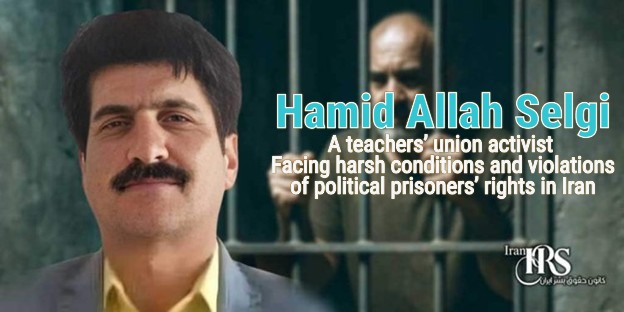
Hamid Allah Selgi, a teachers’ union activist, returns to Nahavand Prison, facing harsh conditions and violations of political prisoners’ rights in Iran.
Iran Human Rights Society, Monday, September 1, 2025– On September 1, 2025, the Iran Human Rights Society reported that Branch 18 of the Hamadan Appeals Court ordered Hamid Allah Selgi, a teachers’ union activist and political prisoner in Iran, to return to Nahavand Prison. This facility lacks a dedicated ward for political prisoners and disregards the principle of separation of offenses. The decision revokes Selgi’s electronic monitoring bracelet, forcing him to serve the remainder of his sentence in prison after four months of house arrest.
Who Is Hamid Allah Selgi?
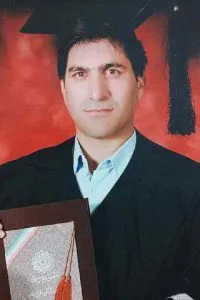
Born on January 22, 1972, in Nahavand, Hamid Allah Selgi taught at Islamic Azad University and Payame Noor University. As a dedicated teachers’ union activist, he championed educators’ rights, which led to his arrest. The Revolutionary Court convicted him of “propaganda against the regime” and “insulting Khamenei,” sentencing him to two years and seven months. His case highlights how Iran’s authorities often equate union activism with political crimes to suppress dissent.
Nahavand Prison’s Failure to Protect Political Prisoners
Nahavand Prison houses political prisoners alongside those convicted of common crimes, ignoring the principle of separation of offenses. This practice endangers the safety, health, and rights of political prisoners in Iran. Legal experts warn that mixing these groups risks violence, psychological harm, and inhumane treatment. For Selgi, returning to such conditions amplifies the pressure on him as a political prisoner.

Why the Principle of Separation Matters
The principle of separation of offenses, a standard in domestic and international law, ensures prisoner safety by housing political and ideological prisoners separately. This protects them from harm and upholds their dignity. However, Nahavand Prison’s failure to implement this principle violates legal and ethical obligations. Consequently, political prisoners in Iran face threats to their physical and mental well-being, underscoring systemic rights violations.
Human Rights Violations in Selgi’s Case
Selgi’s return to Nahavand Prison breaches multiple international standards:
- Article 5 of the Universal Declaration of Human Rights prohibits inhuman and degrading treatment.
- Article 10 of the International Covenant on Civil and Political Rights guarantees humane prison conditions and dignity.
- UN Standard Minimum Rules for the Treatment of Prisoners (Nelson Mandela Rules) mandate separating prisoners based on offense types.
These violations reveal how Iran uses prison conditions to exert additional pressure on political prisoners.
Increasing Pressure on Activists in Iran
Selgi’s case reflects a broader pattern of targeting union and political activists in Iran. Authorities often impose harsh sentences and restrictive conditions to silence dissent. By revoking Selgi’s electronic monitoring and returning him to a prison unfit for political prisoners, the state intensifies its suppression tactics. This not only violates his rights but also signals a crackdown on activism.
What This Means for Political Prisoners’ Rights
The absence of a dedicated political ward in Nahavand Prison and the disregard for the separation of offenses highlight Iran’s failure to meet international obligations. Political prisoners face heightened risks, from physical harm to psychological stress, in environments meant to punish rather than rehabilitate. Selgi’s situation exposes these structural deficiencies and calls for urgent reform.
Hamid Allah Selgi’s return to Nahavand Prison underscores the ongoing challenges for political prisoners in Iran. The lack of a dedicated ward and the violation of the separation of offenses principle threaten their safety and dignity. Furthermore, these conditions reflect Iran’s disregard for human rights standards. Therefore, addressing these issues requires global attention to ensure justice and humane treatment for activists like Selgi.
See also the below articles:
- Volker Türk’s Alarm Over Iran’s Rising Executions
- Complete Lack of Information on Ruhollah Karkhi: Arbitrary Arrest and Enforced Disappearance of a Justice-Seeker in Andimeshk
Follow Iran Human Rights Society on social networks:
Telegram /Twitter /Instagram / YouTube / Facebook
Join Iran Human Rights Society on Twitter







Discussion about this post