
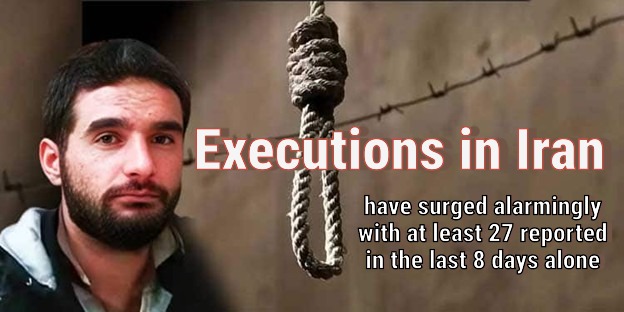
Iran executes 10 prisoners, including 2 women, in August 2025 across multiple cities, raising human rights concerns.
Iran Human Rights Society, Friday, 29 August 2025- Executions in Iran have surged alarmingly, with at least 27 reported in the last 8 days alone, averaging four daily. This article explores the recent executions of 10 prisoners, including two women, across cities like Abhar, Gorgan, Isfahan, Shiraz, Yasuj, Semnan, Sanandaj, Aligudarz, and Sabzevar. These cases highlight serious human rights violations, conflicting with international standards.
Executions in Iran: A Disturbing Trend

On August 28, 2025, authorities executed 10 prisoners in multiple Iranian prisons. This brings the August total to at least 174, with September already at 27. Such numbers reflect a troubling pattern, as Iran’s execution rate continues to climb, drawing global condemnation. Observers have urged Iran to halt this escalation and impose a moratorium on the death penalty.
Execution of Banu Moghadam in Abhar Prison
On August 28, 2025, Banu Moghadam, a 60-year-old woman, faced execution in Abhar Prison. Arrested for murder, she struggled with mental health issues before her arrest. Her case raises questions about the fairness of trials for individuals with mental health challenges, a critical concern under international human rights law.
Arman Aghcheli’s Execution in Gorgan
Authorities executed Arman Aghcheli at dawn on August 27, 2025, in Gorgan Prison for drug-related charges. Iran’s harsh stance on drug offenses fuels its high execution rate, often disregarding calls for leniency or alternative sentencing.
Hesam Dadkhah Executed in Isfahan
On August 27, 2025, Hesam Dadkhah, a 40-year-old from Qazvin, faced execution in Isfahan Prison. Arrested four years earlier for drug-related charges, his case underscores the frequent use of the death penalty for non-violent crimes in Iran.
Mitra Yasini and Milad Mohammadsalehi Executed in Shiraz
At dawn on August 27, 2025, authorities executed Mitra Yasini and Milad Mohammadsalehi in Adelabad Prison, Shiraz. Mitra, from Ilam, faced charges of complicity in murder, while Milad, a 32-year-old from Kashan, received a death sentence for murder four years prior. These cases highlight the broad application of capital punishment in Iran.
Samad Seyed Hosseini’s Execution in Yasuj
On August 27, 2025, Samad Seyed Hosseini, a 46-year-old from Yasuj, faced execution in Yasuj Prison. Arrested five years earlier for murder, his execution adds to the growing list of capital punishments carried out in Iran.
Majid Abedi Executed in Semnan
Authorities executed Majid Abedi, a 35-year-old car mechanic, on August 27, 2025, in Semnan Prison. Arrested three years earlier for drug-related charges, his case reflects Iran’s severe approach to drug offenses, often leading to executions.
Sajjad Gholizadeh’s Execution in Sanandaj
At dawn on August 27, 2025, Sajjad Gholizadeh faced execution in Sanandaj Prison. Arrested in 2021 for murder, his case further illustrates Iran’s reliance on the death penalty for serious crimes.
Mohammadreza Moridan Executed in Aligudarz
On August 26, 2025, Mohammadreza Moridan faced execution in Aligudarz Prison. Arrested in 2021 for murder, his execution contributes to the alarming frequency of capital punishment in Iran.
Saeed Jaghtaei’s Execution in Sabzevar
On August 19, 2025, authorities executed Saeed Jaghtaei in Sabzevar Prison for drug-related charges. His case highlights the ongoing use of the death penalty for non-violent offenses.
Death Penalty and Human Rights Violations
The right to life remains a fundamental principle in international law. However, executions in Iran often violate this principle. The death penalty’s irreversibility risks judicial errors, and some execution methods may constitute torture or inhuman treatment. These practices clash with global human rights standards.
Iran’s Breach of International Obligations
Iran, as a signatory to international agreements, must ensure fair trials and limit the death penalty to the most serious crimes. Yet, many executions in Iran lack transparency, restrict defendants’ legal rights, and occur under courts lacking independence. Such actions violate core human rights principles, prompting widespread concern.
See also the below articles:
- Complete Lack of Information on Ruhollah Karkhi: Arbitrary Arrest and Enforced Disappearance of a Justice-Seeker in Andimeshk
- Who is the political prisoner Vahid Chavaran?
Follow Iran Human Rights Society on social networks:
Telegram /Twitter /Instagram / YouTube / Facebook
Join Iran Human Rights Society on Twitter







Discussion about this post