

Leila Sarami, mother of political prisoner Farzad Moazzami Goudarzi, endures detention in Tircheh Block Prison.
Iran Human Rights Society, Monday, September 1, 2025 – Leila Sarami, the mother of political prisoner Farzad Moazzami Goudarzi, languishes in solitary confinement in Borujerd’s Tircheh Block Prison. Over 40 days after her arrest on July 22, 2025, she faces legal limbo, denied basic rights like family contact and legal counsel. Her case underscores a troubling pattern of targeting families of political prisoners in Iran. This situation demands urgent attention to address the injustices she endures.
Violent Raid on the Moazzami Goudarzi Family
On July 22, 2025, security agents stormed the Moazzami Goudarzi family home in Borujerd. At least 17 agents, arriving in five vehicles, entered without a judicial warrant. They brutally beat Leila Sarami and her husband, Ahmad Moazzami Goudarzi, before arresting them. Additionally, the agents searched the house, seizing electronic devices and spreading fear in the neighborhood. Witnesses reported insults and humiliation, highlighting the aggressive tactics used to intimidate the family. These actions reveal a broader strategy of repression.
Solitary Confinement in Tircheh Block Prison
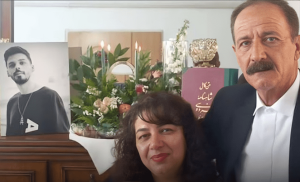
Authorities transferred Leila Sarami to Tircheh Block Prison immediately after her arrest. They placed her in solitary confinement and subjected her to intense interrogations. Fellow prisoners report that Sarami suffers physically and mentally, with no access to family or legal support. This isolation, often called “white torture,” aims to pressure her son, Farzad, a political prisoner. Consequently, such tactics reflect a deliberate effort to break the spirits of activists and their families.
Legal Uncertainty Surrounding Leila Sarami
Leila Sarami faces no formal charges more than 40 days after her arrest. This legal uncertainty creates serious concerns about her case’s future. Judicial and security authorities refuse to provide information to her family or lawyer, violating domestic laws. Furthermore, the lack of transparency fuels fears of an unfair judicial process. Her prolonged detention without clear charges highlights a systemic issue in handling political cases.
Human and Social Impact of Sarami’s Detention
Leila Sarami, a mother worried about her son’s fate, carries a heavy emotional burden. Her arrest delivers a double blow to a family already facing years of security pressures. Human rights activists argue that targeting families represents a policy of collective punishment. This approach not only affects the prisoner but also intimidates their loved ones and communities. As a result, it serves as a tool for broader societal suppression.
Health Risks of Prolonged Detention
Leila Sarami’s ongoing detention poses severe risks to her mental and physical health. Solitary confinement, psychological pressure, and lack of medical care threaten her well-being. Moreover, restricted communication with her family worsens her isolation. These conditions could lead to serious health deterioration.
The case of Leila Sarami exemplifies the challenges faced by families of political prisoners in Iran. Her violent arrest, solitary confinement, and legal uncertainty reflect oppressive tactics aimed at silencing dissent. The denial of basic rights, like family contact and legal counsel, compounds her suffering. Therefore, her situation calls for immediate action to ensure her safety and fair treatment. Addressing these injustices is critical to upholding human rights standards.
See also the below articles:
- Hamid Allah Selgi’s Return to Nahavand Prison: A Violation of Political Prisoners’ Rights
- Surge in Executions in Iran Sparks Global Concern
Follow Iran Human Rights Society on social networks:
Telegram /Twitter /Instagram / YouTube / Facebook
Join Iran Human Rights Society on Twitter





Discussion about this post