
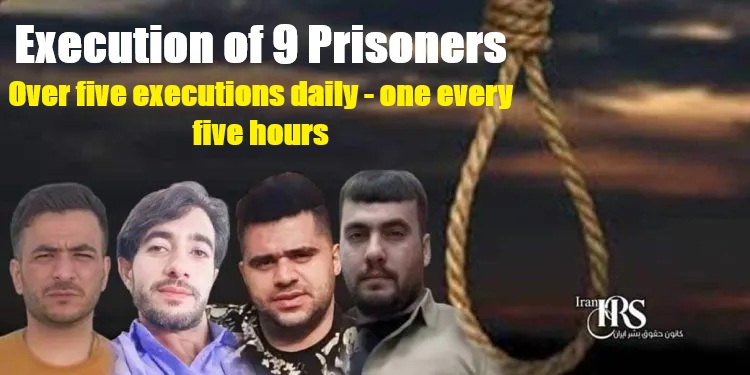
Execution of 9 Prisoners, Including One Woman, in Prisons of Arak, Khorramabad, Isfahan, Zahedan, Gachsaran, Neyshabur, and Sabzevar
Iran Human Rights Society, Sunday, September 21, 2025– Iran’s execution crisis escalates. Authorities hanged nine prisoners, including one woman, in prisons across Arak, Khorramabad, Isfahan, Zahedan, Gachsaran, Neyshabur, and Sabzevar. Furthermore, it raises the August 23–September 21, 2025 total to at least 181 deaths. That means over five executions daily—one every five hours.
Recent Executions in Iranian Prisons: Key Details
Reports confirm the hangings occurred amid a broader 2025 spike. UN data shows over 800 executions year-to-date. Moreover, minorities and drug offenders face disproportionate targeting. Hengaw Organization noted similar cases in Isfahan and Gachsaran. Therefore, families grieve while rights groups protest.
Rasoul Yari’s Execution in Arak Prison
On Sunday, September 21, 2025—the morning of 30 Shahrivar 1404—guards hanged Rasoul Yari in Arak Prison. He faced arrest earlier. Courts convicted him on drug charges and imposed death. This act followed standard procedure. Yet, it highlights Iran’s harsh anti-narcotics stance.
Peyman Jamshidi Hanged in Khorramabad Prison
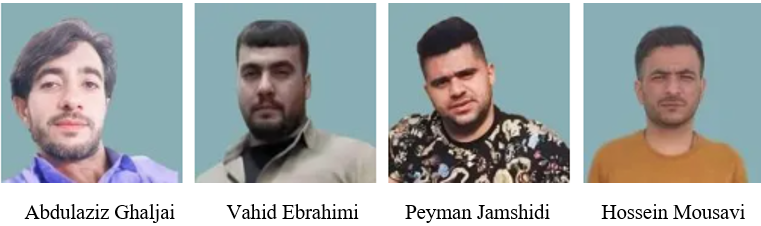
Dawn brought tragedy on the same day. Peyman Jamshidi met his end in Khorramabad Prison. Officials arrested him before. Judges sentenced him to death for drug offenses. Such cases fuel international outcry. However, Iran persists with capital punishment.
Multiple Hangings in Isfahan Prison
Isfahan saw two executions tied to the focus keyword: death penalty in Iran. First, Vahid Ebrahimi died on September 21, 2025. He hailed from Veldan neighborhood. Authorities charged him with murder after arrest. Second, Abbas Yazdani faced the noose on September 16, 2025—25 Shahrivar 1404. He endured six years in custody for drugs. On that day, Sharif Behzadi and Nourmohammad Changizi (Chegali) also perished, per Iran Human Rights. These events underscore rapid enforcement.
Abdulaziz Ghaljai’s Fate in Zahedan Prison
Zahedan Prison claimed Abdulaziz Ghaljai on September 21, 2025. At 35, son of Habibollah, he fathered four children. He lived in Zahedan. Arrest struck in 2022–2023 (1401). Drug charges led to his death sentence. Baluch communities often suffer such verdicts. Therefore, experts call it discriminatory.
Hossein Mousavi Executed in Gachsaran Prison
At 31, Hossein Mousavi lost his life at dawn on September 21, 2025. Married with two daughters, he originated from Abadan. Capture happened in 2018–2019 (1397). Drug-related conviction sealed his doom in Gachsaran Prison. Hengaw reports confirm this. Families now seek justice.
Fazl Sohrabi’s Hanging in Neyshabur Prison
On Wednesday, September 17, 2025—26 Shahrivar 1404—Fazl Sohrabi, 47, died in Neyshabur Prison. Arrest came four years prior. Murder charges prompted the sentence. This execution adds to Shahrivar’s toll. However, details remain sparse.
Double Execution in Sabzevar Prison, Including a Woman
Sabzevar Prison struck twice on September 17, 2025. Peyman Khani, a man, and an unidentified woman faced the gallows at dawn. Both linked to a 2020–2021 (1399) joint murder case. Arrests followed investigations. Her identity awaits confirmation. Such cases spotlight women’s vulnerability in Iran’s system.
Imminent Threats: Transfers in Ghezel Hesar Prison
On September 21, 2025, guards moved at least 15 prisoners to solitary in Ghezel Hesar Prison. They prepare for execution. No updates on outcomes exist yet. This site hosts many drug convicts. Furthermore, UN monitors flag it for mass hangings. Activists fear more deaths soon.
Death Penalty Clashes with Universal Declaration of Human Rights
Article 3 affirms: “Everyone has the right to life.” Courts may deprive it only for grave crimes via fair verdicts. Yet, Iran’s death penalty defies this. First, it strips the fundamental right to life—inalienable for all. Second, executions prove irreversible. Errors stay uncorrected forever. Third, hanging methods inflict torture. They violate human dignity. Therefore, global bodies urge abolition.
Breaches of International Covenant on Civil and Political Rights
Iran signed Article 6. It limits death penalty to serious crimes with fair trials. However, many cases lack transparency. Defendants face restricted lawyers. Courts often bow to regime pressure. This erodes independence. As a result, verdicts violate core principles. UN experts demand moratoriums.
See also the below articles:
- Death of a Female Prisoner in Gharchak Varamin Prison; Lack of Medical Facilities the Main Factor
- World Peace Day: A Harbinger of a Society Free from War and Violence
Follow Iran Human Rights Society on social networks:
Telegram /Twitter /Instagram / YouTube / Facebook
Join Iran Human Rights Society on Twitter






Discussion about this post