
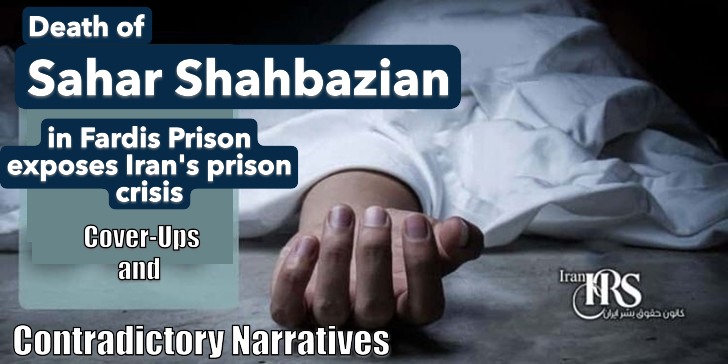
Sahar Shahbazian’s suspicious death in Fardis Prison exposes Iran’s prison crisis: cardiac arrest ignored, overdose cover-up alleged. Chain deaths rise in women’s facilities like Qarchak.
Iran Human Rights Society, Wednesday, November 12, 2025 – Iran women’s prison deaths surge amid medical neglect and cover-ups. On November 11, 2025, Sahar Shahbazian, a 26-year-old inmate at Fardis Prison in Karaj, died from cardiac arrest. Officials claimed overdose, but relatives and witnesses dispute this. This tragedy highlights a deadly pattern in facilities like Qarchak Prison, where at least 23 women perished last year. Activists urge global action. Furthermore, such incidents violate basic human rights. Therefore, families demand transparency and accountability.
Informed sources confirm the delay in hospital transfer sealed her fate. However, prison authorities push a conflicting narrative. This case echoes broader failures in Iran’s penal system.
Death of Sahar Shahbazian: Contradictory Narratives and Cover-Ups
Sahar Shahbazian faced a murder charge initially. Yet, the trial cleared her of killing. Despite this, authorities kept her detained. Then, on Tuesday evening, November 11, 2025, she collapsed in Fardis Prison. An eyewitness explained: “Cardiac arrest struck, but staff delayed aid.” Consequently, she never reached the hospital in time.
Prison officials, however, announced “overdose” as the cause. This claim clashes with family accounts. Relatives insist no drugs were involved. Witnesses inside echo this doubt. Moreover, such discrepancies fuel suspicions of foul play. In fact, independent monitors see patterns of misreporting to hide neglect.
This incident fits a grim trend. Reports from across Iran show prisons lack basics like medications. Treatments vanish too. As a result, unnatural deaths climb. Experts link this to chronic underfunding and indifference. Therefore, Shahbazian’s story demands scrutiny.
Crisis in Medical Care: Qarchak Prison’s Deadly Toll
Varamin’s Qarchak Prison mirrors Fardis’ horrors. Human rights data reveals at least 23 female deaths there in the past year. Inmates endure seizures without help. Transfers lag fatally. For instance, Somayeh Rashidi, a political prisoner, suffered multiple fits. Her family begged for care repeatedly. Yet, guards denied it. She died in hospital on September 25, 2025.
Jamilah Azizi followed soon after. On September 19, 2025, heart attack symptoms hit her. Clinic staff dismissed it. They sent her back untreated. Tragically, she perished that day. Soudabeh Asadi met a similar end on September 16, 2025. Officials blocked her hospital move despite pleas. Financial charges held her, but neglect killed her.
The U.S. State Department condemned these losses. They called the deaths “direct results of ruthless medical deprivation.” Furthermore, they pressed Iran for accountability. Activists agree. Qarchak’s filth and overcrowding worsen everything. Therefore, reforms must come swiftly.
Recurring Pattern: Warnings on Chain Deaths in Iran Women’s Prisons
Sahar Shahbazian’s passing signals deeper rot. Independent sources track rising fatalities nationwide. Prisoners often miss basic check-ups. Medications run dry. Hospital runs delay endlessly. Human rights watchers label this a “systematic disregard.” It tramples dignity, especially for women.
Experts argue it breaches life’s core right. Moreover, it hints at intentional cruelty. Official silence persists. Yet, civil voices grow louder. They warn of chain reactions—more deaths if unchecked. In recent years, protests erupt over these failures. Families rally outside gates. Therefore, global pressure mounts to end the cycle.
Fardis and Qarchak exemplify the peril. Heat, disease, and isolation batter inmates. Hunger strikes follow each loss. For example, after Rashidi’s death, 19 women fasted in Qarchak. They chanted for transfers and justice. Such defiance inspires. However, risks escalate. Guards retaliate harshly. Still, momentum builds against this tide.
Human Rights Violations: Fardis Prison’s Assault on Dignity
Sahar Shahbazian’s death spotlights Iran’s prison abuses. Medical voids, grim cells, and opaque courts fuel violations. Families grieve without answers. Witnesses fear reprisals. This erodes trust entirely.
Key breaches stand out clearly:
- Article 3, Universal Declaration of Human Rights: Everyone claims life, liberty, and security. Yet, neglect stole Shahbazian’s chance. Guards ignored her crisis deliberately.
- Article 5, Universal Declaration of Human Rights: No one faces torture or degrading acts. However, withheld treatment acts as quiet torment. It prolongs agony needlessly.
- Article 10, International Covenant on Civil and Political Rights: Detainees deserve humane handling and dignity respect. But Fardis flouts this. Conditions mock basic humanity.
Activists push for probes. They seek UN intervention. Families unite in calls for change. Furthermore, boycotts and reports amplify their plea. Iran must heed these cries. Otherwise, more lives hang in balance. Therefore, the world watches closely.
See also the below articles:
- Siamak Amini Faces Medical Deprivation in Evin Prison Despite Severe Autoimmune Disease
- Ma’soumeh Asgari: Iran’s Political Prisoner Endures Health Crisis in Evin Prison
Follow Iran Human Rights Society on social networks:
Telegram /Twitter /Instagram / YouTube / Facebook
Join Iran Human Rights Society on Twitter





Discussion about this post