
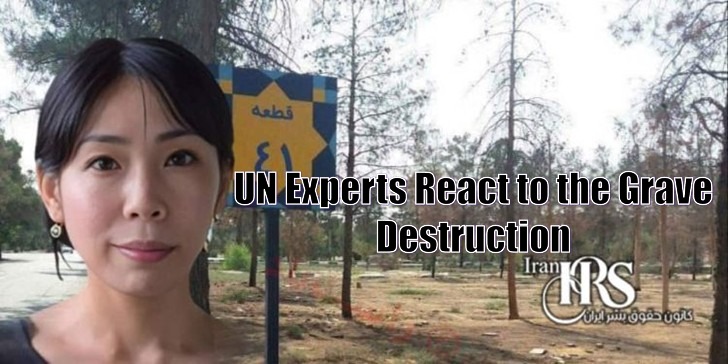
UN experts slam Iran’s destruction of Behesht Zahra’s Section 41, a key political execution burial site. This erasure of collective memory violates human rights and deepens family grief.
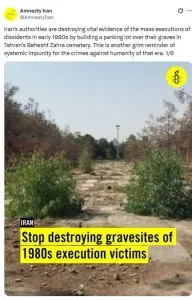
Iran Human Rights Society, Saturday, November 15, 2024 – The destruction of Section 41 in Behesht Zahra has ignited global outrage. This site holds graves of political victims executed after Iran’s 1979 revolution. Authorities razed it in August 2025, planning a parking lot. Families call it a blatant cover-up of crimes. However, international voices rise against this assault on memory.
The destruction of Section 41, a vital burial ground, sparked protests worldwide. Families of victims fiercely reject the “abandoned” label. They fight to preserve these sacred spaces.
Ms. Mai Sato, a UN Special Rapporteur, leads the charge. She joined other experts in a strong condemnation. They view this act as a direct attack on human rights. Furthermore, it mocks the families’ endless pain.
Full Statement from UN Human Rights Experts
“We, UN human rights experts, condemn the destruction of Section 41 in Tehran’s Behesht Zahra cemetery,” the statement begins. In August 2025, authorities demolished this area. They aim to build a parking lot there. Officials claim the site sits abandoned. Yet families dispute this vigorously.
Section 41 buries those executed post-revolution. Political opponents from diverse groups rest here. Over decades, similar sites faced damage or total ruin. Reports highlight fresh outrages too. Graves of 2022 protest victims now lie destroyed. The same fate hit Flight PS752 casualties.

Moreover, access to key cemeteries remains blocked. Khavaran Cemetery, a 1980s mass grave site, closed in March 2025. Families cannot even approach it.
We urged the Iranian government to act. International law demands thorough probes into suspicious deaths. States must safeguard evidence. They also owe respectful handling of remains.
The Minnesota Protocol sets clear rules. It guides investigations of unlawful deaths. Graves from 1980s mass executions count as crime scenes. Experts stress medico-legal safeguards for them.
Graves serve deeper purposes. Families honor loved ones there. They grieve openly and pass down stories. These sites bridge generations. Communities draw strength from shared history.
Destruction shatters this bond. It wipes out personal tales and communal recall. Therefore, such acts breach global norms. They amplify family torment endlessly.
A Pattern of Erasing Collective Memory
The destruction of Section 41 fits a grim pattern. Iran’s leaders long pursue this goal. They scrub signs of political killings from view. Suspicious deaths vanish too.
Consider recent examples. Authorities targeted 2022 protest graves. They damaged Flight PS752 victim sites. Khavaran Cemetery’s closure underscores the trend. This policy silences history’s echoes.
Yet resistance grows. Families declare these spots far from forgotten. Each grave pulses with stories. Memories testify to state violence. Experts warn of dire stakes. Erasing sites kills justice quests at their root.
Families Stand Firm Against Erasure

Victims’ kin refuse to yield. They proclaim burial grounds as living testaments. No grave lacks owners or purpose. History clings to every stone.
Such sites fuel demands for truth. Destroy them, and narratives fade. Justice campaigns weaken. Families vow to protect these legacies. Their voices amplify worldwide.
Legal and Global Fallout from the Destruction
Observers sound alarms. This cemetery assault links to 1980s horrors. It looks like deliberate evidence tampering. International law deems it grave. Such moves rank among top rights abuses.
The global spotlight intensifies. Iran’s dictatorship faces sharper scrutiny. Political executions draw fresh heat. Protest crackdowns gain notoriety. Families’ doubled anguish rallies supporters.
Key Human Rights Violations Exposed
This destruction of Section 41 screams human rights abuse. It shatters Iran’s global pledges. The ruling regime betrays its word. Families endure redoubled sorrow. Yet the world watches closer than ever.
Breaching Dignity of the Dead
Authorities bulldoze graves without remorse. They trample burial sanctity. Global rules forbid this outright. It strikes at core human decency.
Denying Families Truth and Mourning
Kin cannot reach loved ones’ resting places. This blocks vital closure. Customary international law protects these rights. Iran flouts them brazenly.
Shirking Duty on Unlawful Death Evidence
The Minnesota Protocol demands action. States must shield mass execution sites. These qualify as crime scenes. Destruction invites condemnation. Iran ignores this duty callously.
The destruction of Section 41 endures as a stark symbol. It reveals a regime’s fear of memory. However, families and allies persist. They safeguard truths against oblivion. Global pressure mounts. Justice beckons on the horizon.
See also the below articles:
- “From Death Row to the World’s Conscience: Zahra Tabari’s Message to Humanity”
- Ahmad Baledi’s Self-Immolation: A Cry from the Heart of Poverty, Humiliation and Injustice in Ahvaz
Follow Iran Human Rights Society on social networks:
Telegram /Twitter /Instagram / YouTube / Facebook
Join Iran Human Rights Society on Twitter





Discussion about this post