
Families of political prisoners sentenced to death stood in the front row; mothers seeking justice held photos of their children and chanted: “No to execution, execution no no no”
Iran Human Rights Society, Tuesday, 25 November 2025 – The nationwide campaign “Tuesdays No To Executions” has in recent months become one of the most important and widespread popular protests in Iran. This protest movement, held every Tuesday, is now seen in more cities each week, with various groups – from students and workers to families of protesters – taking part. The main goal of this campaign is to protest the widespread and increasing implementation of execution sentences, especially those carried out against political prisoners and protesters.
At the same time, the regime is carrying out execution sentences with greater speed and intensity, creating widespread concern in society. Many people see this campaign as a way to openly express opposition to repressive policies and to prevent the silencing of dissenting voices. For this reason, “Tuesdays No To Executions” has become not only a protest movement but a symbol of resistance, solidarity, and the collective cry of the people against fear, intimidation, and the elimination of opponents.
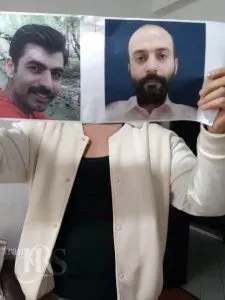
This Week’s Tuesdays No to Executions Marks Massive Street Mobilization
The nationwide “Tuesdays No To Executions” campaign this week became one of the most extensive and organized street protests against the execution policy. In dozens of cities including Tehran, Mashhad, Tabriz, Isfahan, Rasht, Karaj, Yasuj, Baneh, Quchan, Shabestar, Gorgan, Shahreza, Borazjan, Sanandaj, Kerman, and Kordkuy, people took to the streets with placards and flyers and shouted: “No to execution.”
Unprecedented expansion of the campaign
In the latest round of this campaign, protest gatherings were held simultaneously in more than 16 cities. Despite the heavy presence of security forces, participants carried placards that read:
We will not be silent in the face of execution ; The executioner regime will not sleep peacefully ; Support Tuesdays No To Executions ;Execution and exile no longer work ; We swear by the blood of our comrades, we stand until the end ; This is the final message: if you execute, uprising will follow , Abolhassan Montazer must be freed , Iran without execution
In 1404, the number of executions in the country has increased at an alarming rate. These organizations say the regime uses executions not only as a legal punishment but as a tool to create fear, control protests, and suppress society. Many of those executed are from among protesters and political prisoners, including those arrested after the nationwide uprising of 1401. Numerous reports from these cases show that judicial proceedings have been highly unfair, including torture to extract forced confessions, minutes-long trials without opportunity for defense, and complete deprivation of access to an independent lawyer.
Increasing executions to suppress society
Legal and social experts emphasize that the increase in executions does not mean the precise implementation of the law, but rather a sign of the regime’s fear of the spread of popular protests. They say the authorities try to send the message with every execution that protest is costly and dangerous. However, unlike previous years, this policy is now met with a wave of public solidarity and social awareness. Many families of victims, civil activists, and various social groups are trying to make their experiences public and raise awareness about injustices. These efforts have made society more sensitive to the consequences of these policies, and people are reacting more strongly.
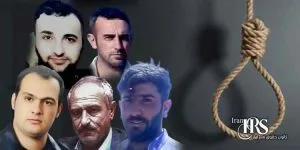
The “Tuesdays No To Executions” campaign; an example of collective resistance
The nationwide “Tuesdays No To Executions” campaign, held weekly in different parts of the country, has now become one of the most important symbols of resistance against the trend of executions. This campaign continues in neighborhoods, universities, streets, and on social media, with more people joining each week. The continuous presence and expanding scope of this campaign show that protest against executions has become a sustained collective movement.
A campaign with a targeted program
Activists of this campaign say that “Tuesdays No To Executions” is not just a momentary reaction or a one-off gathering; rather, it is a weekly, targeted program that strives to keep the people’s voice raised regularly and continuously. They believe the persistence of this movement has made the regime more concerned about the end of societal silence and the increase in public sensitivity. In many cities, this campaign has become an opportunity for dialogue, awareness-raising, and building networks of solidarity among people.
Tuesdays No to Executions Embodies Collective Defiance
The main slogan of this movement, “No to execution,” is now not just a simple human rights demand; it has become a symbol of the people’s broad protest against the repressive and inhumane policies of the regime. This slogan is seen in gatherings, on walls, in cyberspace, and even in cultural and artistic activities. This very breadth shows that opposition to execution has gone beyond a limited social demand and has become an important part of the identity of public protests.
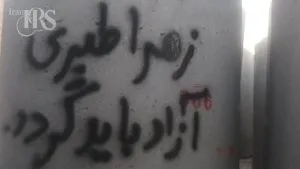
Overall, increasing public awareness, the expansion of resistance networks, and the continuation of campaigns like “Tuesdays No To Executions” show that society is standing against fear-based policies and is trying through various methods to make its voice heard.
Families seeking justice; the beating heart of the campaign
The most important and influential figures of this week’s campaign were the families of political prisoners sentenced to death who stood in the front line and firmly insisted on their humane demands. The mothers and fathers of these prisoners, each carrying the heavy burden of suffering and worry, appeared in the streets holding photos of their children to be the voice of those who, behind prison walls, are deprived of the right to life. They held flyers and placards that read:
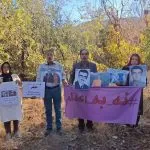
“Support the Tuesdays No To Executions campaign , No to anyone’s execution , Stop the executions.”
Families Form the Vital Core of Tuesdays No to Executions
In circumstances where the regime is trying to intimidate and silence society by accelerating the execution process, the “Tuesdays No To Executions” campaign with its unified slogan “No to execution” has managed to strengthen the structures of social solidarity and show that protest movements in Iran have reached a new level of maturity and organization. This campaign, by using diverse methods of information dissemination and social mobilization, has succeeded in attracting public attention and creating space for dialogue and exchange of views among different segments of society. Moreover, the use of digital media and social networks has allowed the message of this movement to travel beyond national borders and create international solidarity to stop executions.
The “Tuesdays No To Executions” campaign; an example of advanced resistance
This campaign now functions beyond a symbol of social resistance and has become the coordinated voice of society, affected families, political prisoners, and citizens who demand an end to the cycle of governmental violence and repression. In addition, the continuous presence of civil activists and human rights organizations in supporting this campaign has made its effects more lasting and turned it into an influential social current at the level of policy-making and public awareness.
See also the below articles:
- 4 Months of Silence on Yalda Emamdost’s Fate: Fears Mount for Iranian Endurance Champion
- 96th Week of “Tuesdays No to Execution” Campaign Unites 55 Iranian Prisons
Follow Iran Human Rights Society on social networks:
Telegram /Twitter /Instagram / YouTube / Facebook
Join Iran Human Rights Society on Twitter






Discussion about this post