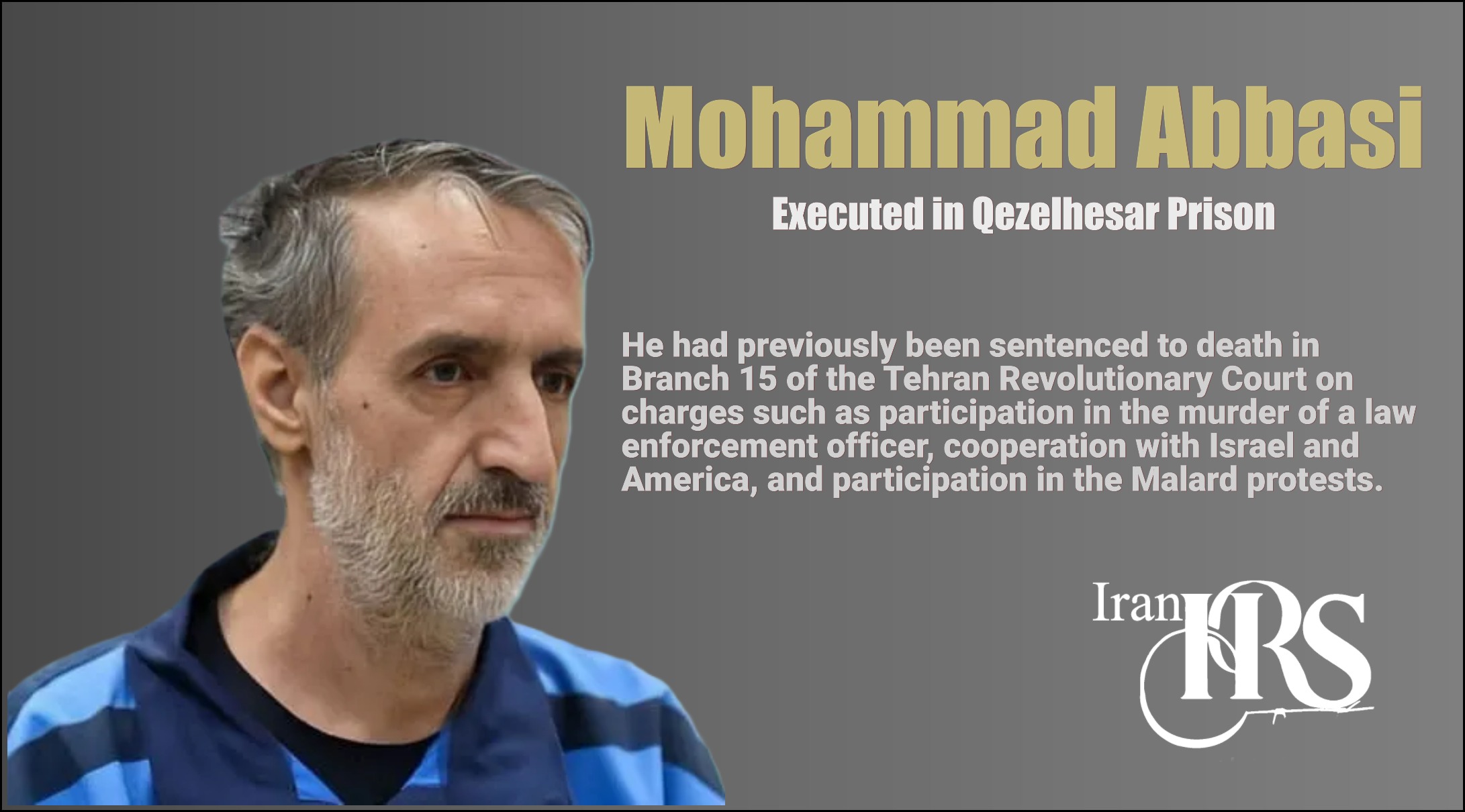
Mohammad Abbasi, 55-year-old political prisoner, was executed at dawn today in Qezelhesar Prison in Karaj; while informed sources say his and his daughter Fatemeh Abbasi’s case was formed based on forced confessions, torture, and security threats.
Iran Human Rights Society, Wednesday, 13 May 2026 – At dawn today, the execution sentence of Mohammad Abbasi, one of those arrested in the nationwide protests of January 2026, was carried out in Qezelhesar Prison in Karaj. This political prisoner had previously been sentenced to death in Branch 15 of the Tehran Revolutionary Court, presided over by Abolghasem Salavati, on charges such as participation in the murder of a law enforcement officer, cooperation with Israel and America, and participation in the Malard protests. Human rights activists say this case was formed based on forced confessions obtained under torture and threats to his daughter.
How Was Mohammad Abbasi Arrested and Sentenced to Death?
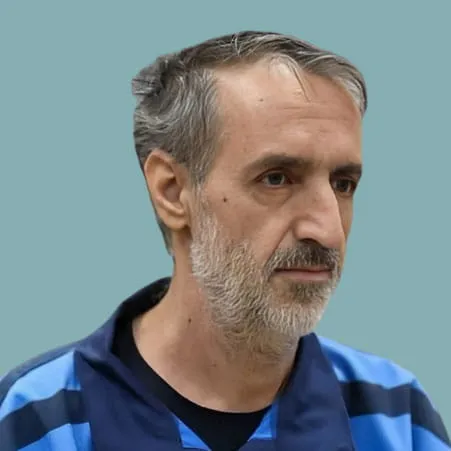
Mohammad Abbasi, 55 years old, was arrested during the nationwide protests of January 2026. After his arrest, his case was handled in Branch 15 of the Tehran Revolutionary Court, presided over by Abolghasem Salavati.
The judicial system charged him with participation in the murder of a law enforcement officer, cooperation with Israel and America, and having a role in the Malard protests, and ultimately issued a death sentence for him.
Human rights activists say the process of handling Mohammad Abbasi’s case was carried out in a completely security-oriented and rushed atmosphere, and his trial lacked the standards of a fair trial. According to them, many cases related to nationwide protests are examined in courts that are under the direct influence of security institutions.
Why Has Mohammad Abbasi’s Case Become Controversial?
Based on published information, Branch 39 of the Supreme Court rejected Mohammad Abbasi’s request for cassation and confirmed his death sentence. At the same time, the 25-year prison sentence for Fatemeh Abbasi, his daughter, was also confirmed without change.
Informed sources and family relatives have emphasized that no independent and reliable document has been presented to prove the charges against Mohammad Abbasi and his daughter, and the main axis of the case has been confessions obtained under pressure and torture.
Legal observers say the quick confirmation of heavy sentences in cases related to protests has increased concerns about the non-transparent judicial process.
How Was the Torture and Threat Against Mohammad Abbasi’s Daughter Carried Out?
Sources close to the Abbasi family say Mohammad Abbasi was under severe physical and psychological pressure during his detention to accept the confessions desired by the interrogators. An informed source has said that in addition to physical torture, the interrogators tried to force him to confess by threatening his daughter.
According to this report, security agents, by making sexual threats against Fatemeh Abbasi and using her as a tool of pressure, had in effect turned Mohammad Abbasi’s daughter into a hostage in the interrogation process. Human rights activists say using family members, especially children of political prisoners, to apply psychological pressure and obtain forced confessions is one of the common methods in security cases.
According to them, such confessions lack legal and judicial validity and cannot be the basis for issuing a death sentence.
Fatemeh Abbasi’s Situation After Confirmation of Her Father’s Sentence
Currently, Fatemeh Abbasi is being held in the women’s ward of Evin Prison. She has been sentenced to 25 years in prison in the same case.
Human rights sources say Fatemeh Abbasi is facing a heavy prison sentence while the process of handling her case was also carried out in a non-transparent and security-oriented atmosphere. According to them, the continued detention and long-term holding of family members of protesters is part of the policy of applying pressure on families of political prisoners and those arrested in protests.
Why Has Qezelhesar Become a Symbol of Execution Sentence Implementation?
Mohammad Abbasi was being held in Qezelhesar Prison in Karaj before the execution of his sentence; a prison that in recent years has turned into one of the main centers for carrying out execution sentences.
Human rights activists say the increase in the number of transfers of political and security prisoners to Qezelhesar has intensified concerns about a new wave of executions. According to them, in many cases, prisoners are transferred to this prison only a few days before the execution of the sentence, and families are also informed of the execution of the sentence in limited and security conditions.
Human Rights Violations; Torture, Forced Confession, and Use of Family for Security Pressure
Mohammad Abbasi’s case is accompanied by serious concerns from a human rights perspective. Reports about torture, sexual threats against his daughter, forced confessions, and the lack of independent documents in the case have increased concerns about the widespread violation of the principles of fair trial. Human rights activists say using family members to apply psychological pressure and obtain confessions is a clear example of hostage-taking and psychological torture.
Violated Articles:
- Violation of the prohibition of torture and forced confession – Article 5 of the Universal Declaration of Human Rights: No individual should be subjected to torture or inhuman treatment. Obtaining confession under physical and psychological pressure is a clear violation of this principle.
- Violation of the right to a fair trial – Article 10 of the Universal Declaration of Human Rights: Security-oriented handling and reliance on forced confessions violates the principles of fair trial.
- Violation of the right to liberty and personal security – Article 9 of the International Covenant on Civil and Political Rights: Using family members to apply pressure and threats violates the fundamental rights of individuals.
- Violation of the right to life – Article 3 of the Universal Declaration of Human Rights: Carrying out a death sentence in cases accompanied by torture and forced confessions threatens the fundamental right to life.
- Violation of the prohibition of hostage-taking and pressure on families of prisoners – Fundamental principles of human rights: Using the detention and threatening of family members to pressure political defendants is a clear example of violation of human rights and the dignity of individuals.
See also the below articles:
- Ehsan Afreshte Execution Sparks Global Human Rights Concerns
- Worsening Situation of Prisoners in Unit 2 of Qazal Hesar Prison
Follow Iran Human Rights Society on social networks:
Telegram /Twitter /Instagram / YouTube / Facebook
Join Iran Human Rights Society on Twitter