Mohammad Zanganeh, who was arrested in February 2026, was sentenced by the court to three years and six months and one day in prison on security charges. This is while previously he faced the heavy charge of “enmity against God”; a charge from which he was ultimately acquitted.
Iran Human Rights Society, Saturday, May 30, 2026 – Mohammad Zanganeh, one of the detainees from the months following the nationwide protests of December 2025, was sentenced by the judicial system to three years, six months, and one day of ta’zir imprisonment. He, who has been in detention since early February 2026, is currently being held in Vakilabad Prison in Mashhad. This verdict was issued in a situation where numerous reports of intensified security measures, widespread arrests, and pressure on citizens after the nationwide protests have been published.

Issuance of Prison Sentence for Mohammad Zanganeh
Based on published information, Mohammad Zanganeh after months of detention and judicial uncertainty, was tried in one of the branches of the Revolutionary Court and sentenced to three years, six months, and one day of ta’zir imprisonment.
In the issued verdict, his charges are titled “assembly and collusion to commit a crime against the internal and external security of the country” and “propaganda activity against the Islamic Republic system”. In the text of the verdict, it is claimed that these charges were related to the subject of calling, invitation to gathering, unrest, and what has been called “sedition”.
Ultimately, the court, without providing more details of the case documents, sentenced this citizen to more than three and a half years in prison.
From the Charge of Enmity Against God to Prison Conviction
Based on received information, Mohammad Zanganeh in the initial stages of the case had also faced the heavy charge of “enmity against God”; a charge that in recent years has been raised against a number of detainees from nationwide protests and in some cases has led to the issuance of execution sentences.
However, he was ultimately acquitted of the charge of enmity against God. Although the removal of this charge did not prevent the issuance of a prison sentence, and the court ultimately sentenced him to three years, six months, and one day in prison.
Human rights activists believe that raising heavy security charges in the interrogation and investigation stages, in many cases, is a tool for applying psychological pressure on the accused and their families.
Widespread Suppression After December 2025 Protests
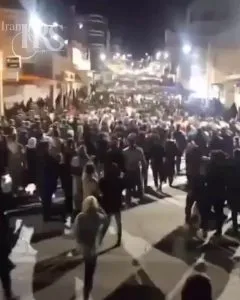
Mohammad Zanganeh’s case is raised in a situation where after the nationwide protests of December 2025, a new wave of arrests and security confrontations began in various cities of Iran.
The December 2025 protests were one of the most widespread protest movements in recent years that took shape in reaction to economic, political, and social conditions. Human rights reports indicate that after these protests, hundreds of people were arrested and some of them faced heavy security cases.
Human rights activists say that security and judicial institutions have tried to create an atmosphere of fear and terror by issuing heavy sentences and prevent the spread of popular protests.
Concerns About Forced Confessions and Security Pressures
In many cases related to protests and civil activities, reports of applying pressure to obtain forced confessions have been published.
Human rights institutions have repeatedly warned that long-term detention in security detention centers, deprivation of access to an independent lawyer, intensive interrogations, and mental and physical pressures can pave the way for forced confessions.
Although the details of Mohammad Zanganeh’s interrogation process have not been officially published, but human rights activists emphasize that concerns about the use of security pressures and illegal methods in similar cases still exist.

Continuation of Imprisonment in Vakilabad Prison in Mashhad
Mohammad Zanganeh is currently serving his sentence in Vakilabad Prison in Mashhad.
Vakilabad Prison in past years has repeatedly come to the attention of human rights organizations due to the conditions of holding prisoners, limited access to medical services, and holding political and security prisoners.
Families of many political prisoners in this prison have complained about restrictions on visits, security pressures, and difficulty in accessing case information.
Violation of the Right to Freedom of Expression and Peaceful Assembly – Articles 19 and 20 of the Universal Declaration of Human Rights:
Security accusations in connection with calls, protest activities, and expressing political views can violate the right to freedom of expression and the right to participate in peaceful assemblies.
- Violation of the Right to a Fair Trial – Article 10 of the Universal Declaration of Human Rights:The lack of transparency about the trial process, details of the case documents, and restrictions on access to judicial information have created serious concerns about compliance with the principles of fair trial.
- Prohibition of Torture and Obtaining Forced Confession – Article 5 of the Universal Declaration of Human Rights and Article 7 of the International Covenant on Civil and Political Rights:Numerous reports about applying pressure on detainees from nationwide protests to obtain confessions have increased concerns about the use of torture and inhuman behaviors in the interrogation process.
- Violation of the Right to Liberty and Personal Security – Article 9 of the Universal Declaration of Human Rights:Arresting citizens due to protest activities and forming security cases against them is considered among serious concerns about arbitrary arrests and limiting fundamental freedoms.
- Violation of the Right to Participate in Public and Political Affairs – Article 21 of the Universal Declaration of Human Rights:Security confrontation with citizens who have participated in protests or civil activities can limit the right of individuals to freely participate in determining the political and social destiny of society.
See also the below articles:
- Supreme Court Confirms Execution for Iran Political Prisoners Raouf Sheikh Ma’roufi and Mohammad Faraji
- Benjamin Naghdi Was Sentenced to Execution; Issuance of Verdict for Detainee of Nationwide Protests of 2025
Follow Iran Human Rights Society on social networks:
Telegram /Twitter /Instagram / YouTube / Facebook
Join Iran Human Rights Society on Twitter