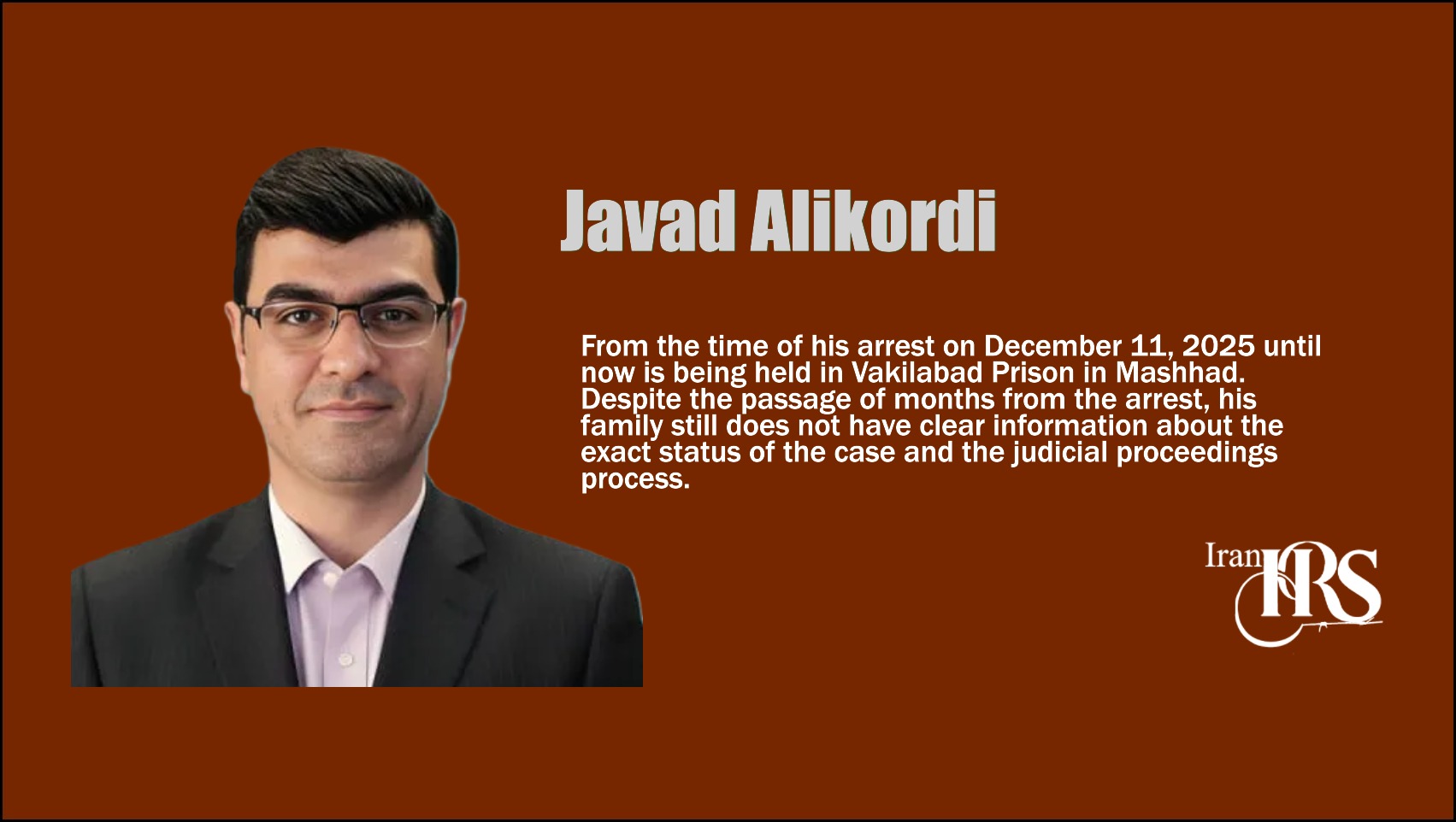
Javad Alikordi, brother of Khosrow Alikordi, with the passage of months from the time of arrest is still being held in Vakilabad Prison in Mashhad and is deprived of the right to telephone contact and meeting with family.
Iran Human Rights Society, Wednesday June 3, 2026 – Javad Alikordi, brother of Khosrow Alikordi, lawyer and human rights defender, months after arrest is still in a state of uncertainty in Vakilabad Prison in Mashhad. His long-term deprivation of telephone contact and meeting with family, along with the lack of transparency about the status of the case and the judicial proceedings process, has aroused widespread concerns among human rights activists. These activists believe that the pressures applied against Javad Alikordi are in continuation of security confrontations with Khosrow Alikordi’s family and efforts to silence the voices of seeking justice.
Why is Javad Alikordi’s status still uncertain?

Based on received information, Javad Alikordi from the time of his arrest on December 11, 2025 until now is being held in Vakilabad Prison in Mashhad. Despite the passage of months from the arrest, his family still does not have clear information about the exact status of the case and the judicial proceedings process.
Sources close to the family say that his case is still being pursued in a security atmosphere and no clear explanation has been provided about the details of the proceedings process or the reasons for the continuation of restrictions. This status has caused concerns about the continuation of uncertainty and psychological pressures on this prisoner to increase.
Although in late May 2026 it was reported that Javad Alikordi was sentenced to 10 years of ta’ziri imprisonment, there are still many ambiguities about the details of the case, the presented documents and the trial process.
Why has Javad Alikordi been deprived of telephone contact and meeting with family?
One of the most important concerns raised in Javad Alikordi’s case is his long-term deprivation of communication with family. According to published reports, he has been deprived of establishing telephone contact and in-person meeting with family members from the time of arrest until now.
Deprivation of contact and meeting, especially in cases that last for months, can impose significant psychological pressures on the prisoner and his family. Human rights institutions have repeatedly emphasized that a prisoner’s communication with family is one of the basic rights of prisoners and restricting it without clear and legal reasons can be an example of applying additional pressure.
Javad Alikordi’s family has also been deprived of direct information about his physical and mental status during this period; a matter that has added to their concerns.
What charges has Javad Alikordi faced?
Javad Alikordi after arrest in Branch 902 of Mashhad Prosecutor’s Office faced charges including “assembly and collusion” and “propaganda against the regime.”
Informed sources have announced that the process of handling his case has been pursued in a security atmosphere. However, the complete details of the charges and case documents have not been published publicly and the family has also not received a clear explanation about the basis for issuing the heavy prison sentence.
Human rights activists believe that ambiguity in the trial process and the limited information of the case makes independent evaluation about the observance of fair trial principles difficult.
What connection did Javad Alikordi’s arrest have with Khosrow Alikordi?
Javad Alikordi’s arrest took place only a few days after the death of his brother, Khosrow Alikordi. He was arrested on the evening of December 11, 2025 and hours after the publication of a video.
In this video, Javad Alikordi protested against the behavior of security forces with participants in his brother’s seventh ceremony and spoke of the existence of documents and information about Khosrow Alikordi’s suspicious death. According to family associates, hours after the publication of these statements, security forces arrested him and transferred him to an unknown location.
Human rights activists believe that his arrest was related to his efforts to pursue the truth about his brother’s death and raising public questions in this regard.
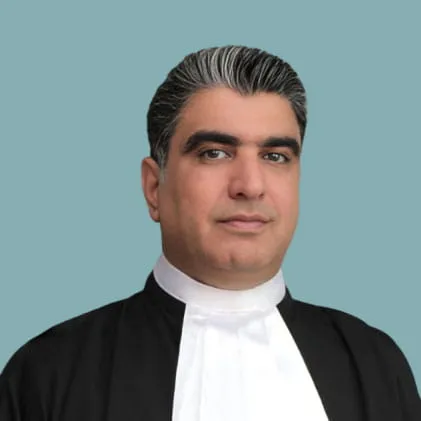
How did Khosrow Alikordi lose his life?
Khosrow Alikordi, lawyer and human rights defender, lost his life on December 4, 2025 in his workplace. Government officials declared the cause of his death as “cardiac arrest.”
However, his family and close associates did not accept the official narrative and demanded clarification of the dimensions of this case. They announced that some evidence and signs, including the existence of unusual bleeding at the place where Khosrow Alikordi lost his life, created questions about the real cause of his death.
According to sources close to the family, efforts to pursue the truth and requests for clarification about this case have been accompanied by security pressures and restrictions.
Why does Javad Alikordi’s case matter to human rights activists?
Human rights activists do not consider Javad Alikordi’s case merely a judicial case, but evaluate it in continuation of the pressures applied on Khosrow Alikordi’s family.
In their belief, the continuation of uncertainty, deprivation of contact and meeting with family and lack of transparency in the judicial proceedings process are signs of additional pressure on individuals who are active in the path of seeking justice and raising questions about sensitive events.
These activists have demanded an end to the restrictions applied against Javad Alikordi and the observance of his legal rights during detention and imprisonment.
Human rights violation; Uncertainty and deprivation of communication with family
Javad Alikordi’s case is accompanied by a set of human rights concerns. Continuation of detention in conditions where the family does not have clear information about the status of the case, long-term deprivation of telephone contact and meeting and lack of transparency in the trial process are among the cases that have drawn the attention of human rights institutions to this case. Human rights experts emphasize that a prisoner’s communication with family is one of his fundamental rights and long-term deprivation of this right can turn into a tool for applying psychological pressure.
Violated articles:
- Article 9 of the Universal Declaration of Human Rights (prohibition of arbitrary arrest): Continuation of detention in ambiguous conditions and lack of transparency about the case process increases concern about arbitrary arrest.
- Article 10 of the Universal Declaration of Human Rights (right to fair trial): Limitation of case information and ambiguity in the proceedings process weakens the right to enjoy a fair trial.
- Article 12 of the Universal Declaration of Human Rights (protection of family life): Long-term deprivation of contact and meeting violates the right to maintain communication with family.
- United Nations Mandela Rules: Prisoners should have the possibility of regular communication with family and long-term restrictions are inconsistent with these principles.
- Principle of prohibition of inhuman and degrading treatment: Cutting off communication with family for months can create severe psychological pressure and lasting emotional damages.
- Principle of human dignity: Keeping a prisoner in conditions of uncertainty and deprivation of communication rights is incompatible with human dignity and fundamental rights of individuals.
See also the below articles:
- Zabihollah Koohkan Faces Execution Danger in Iran
- Zahra Tabari Sentenced to Death Again Amid Global Outcry
Follow Iran Human Rights Society on social networks:
Telegram /Twitter /Instagram / YouTube / Facebook
Join Iran Human Rights Society on Twitter