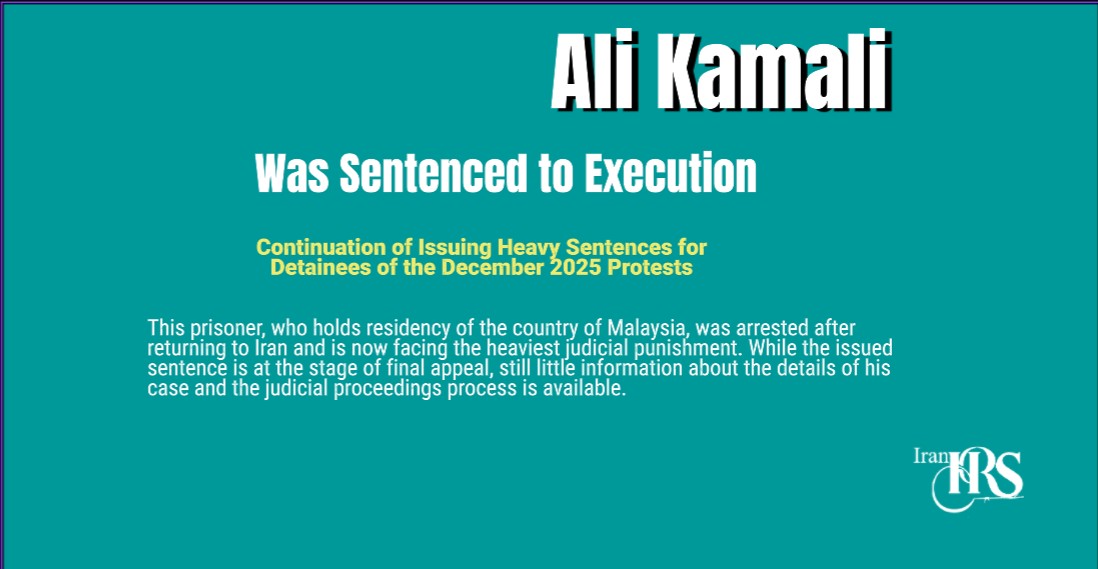
Ali Kamali, One of the Detainees of the Nationwide Protests of 2025-2026 and Holder of Malaysian Residency, Was Sentenced to Execution by Branch 26 of the Tehran Revolutionary Court on the Charge of “Enmity Against God”
Iran Human Rights Society, Friday, June 5, 2026 – Ali Kamali, one of the detainees of the nationwide protests of 2025-2026 who is currently held in Tehran Great Prison, has been sentenced to execution by Branch 26 of the Tehran Revolutionary Court presided over by Judge Iman Afshari.
This prisoner, who holds residency of the country of Malaysia, was arrested after returning to Iran and is now facing the heaviest judicial punishment. While the issued sentence is at the stage of final appeal, still little information about the details of his case and the judicial proceedings process is available.
How Was Ali Kamali Arrested?
According to published information, Ali Kamali was arrested on January 11, 2026 simultaneously with the nationwide protests in Tehran. Reports indicate that he had Malaysian residency and was arrested by security forces only a few days after entering Iran.
After the arrest, he was transferred to Tehran Great Prison and has been in detention since then. Despite the passage of several months from the time of arrest, no official and transparent information about the details of his case has been published.
Why Was Ali Kamali Sentenced to Execution?
Branch 26 of the Tehran Revolutionary Court in mid Ordibehesht of this year (around mid-May 2026) convicted Ali Kamali on the charge of “enmity against God” to execution. However, so far no clear explanation has been provided about the instances of the charge, the case documents, and the reasons for issuing such a heavy sentence.
Human rights activists have repeatedly warned about the extensive use of charges such as “enmity against God” in political cases and those related to protests. According to them, the lack of transparency in the proceedings process and the non-publication of case documents makes independent evaluation of the trial process difficult.
At What Stage Is the Current Status of the Case?
According to published reports, Ali Kamali’s execution sentence has not yet been finalized and is currently sent to the Supreme Court for review.
Final appeal in the Supreme Court is considered the last stage of judicial proceedings in cases leading to execution. However, families and relatives of many political prisoners in recent years have expressed concern about the lack of transparency in the proceedings process and the limited access to case information.
In the case of Ali Kamali as well, still very limited information about the manner of proceedings, court sessions, and presented defenses is available to the public opinion.
What Are the Consequences of Issuing Execution Sentences for Protest Detainees?
Ali Kamali’s case is raised in conditions where in the past months numerous reports of issuing heavy sentences against detainees of nationwide protests have been published.
Human rights activists believe that the use of the death penalty in cases related to protests has created serious concerns about the right to life, fair trial, and civil liberties. They emphasize that in cases where the death penalty is at issue, full observance of fair trial standards and judicial transparency has double importance.
Violation of Human Rights; Ambiguity in the Trial Process and Threat to the Right to Life
Ali Kamali’s case is accompanied by numerous concerns in the field of human rights. The lack of transparent information about the proceedings process, the non-publication of case documents, and the issuance of an execution sentence in circumstances where the details of the trial are not clear have created serious questions about the observance of the principles of fair trial. Human rights institutions emphasize that in cases leading to execution, guaranteeing the right to defense and judicial transparency are among the essential requirements of fair trial.
Violated Articles:
- Article 3 of the Universal Declaration of Human Rights (Right to Life): Issuing an execution sentence places the most fundamental human right, namely the right to life, under threat.
- Article 9 of the Universal Declaration of Human Rights (Prohibition of Arbitrary Arrest): The lack of transparent information about the arrest and proceedings process creates concerns about the observance of legal standards.
- Article 10 of the Universal Declaration of Human Rights (Right to Fair Trial): Lack of public access to the details of the case makes independent evaluation of the fairness of the trial difficult.
- Article 11 of the Universal Declaration of Human Rights (Principle of Presumption of Innocence): Every accused must be considered innocent until legal proof of the crime and enjoy the opportunity of full defense.
- Article 14 of the International Covenant on Civil and Political Rights: Accused persons must enjoy the right to a fair trial, access to a lawyer, and full information about the charges.
See also the below articles:
- Hassan Moslavi Faces Execution Amid Serious Judicial Concerns
- Yaqub Derakhshan Sentenced to Death Again Amid Judicial Concerns
Follow Iran Human Rights Society on social networks:
Telegram /Twitter /Instagram / YouTube / Facebook
Join Iran Human Rights Society on Twitter