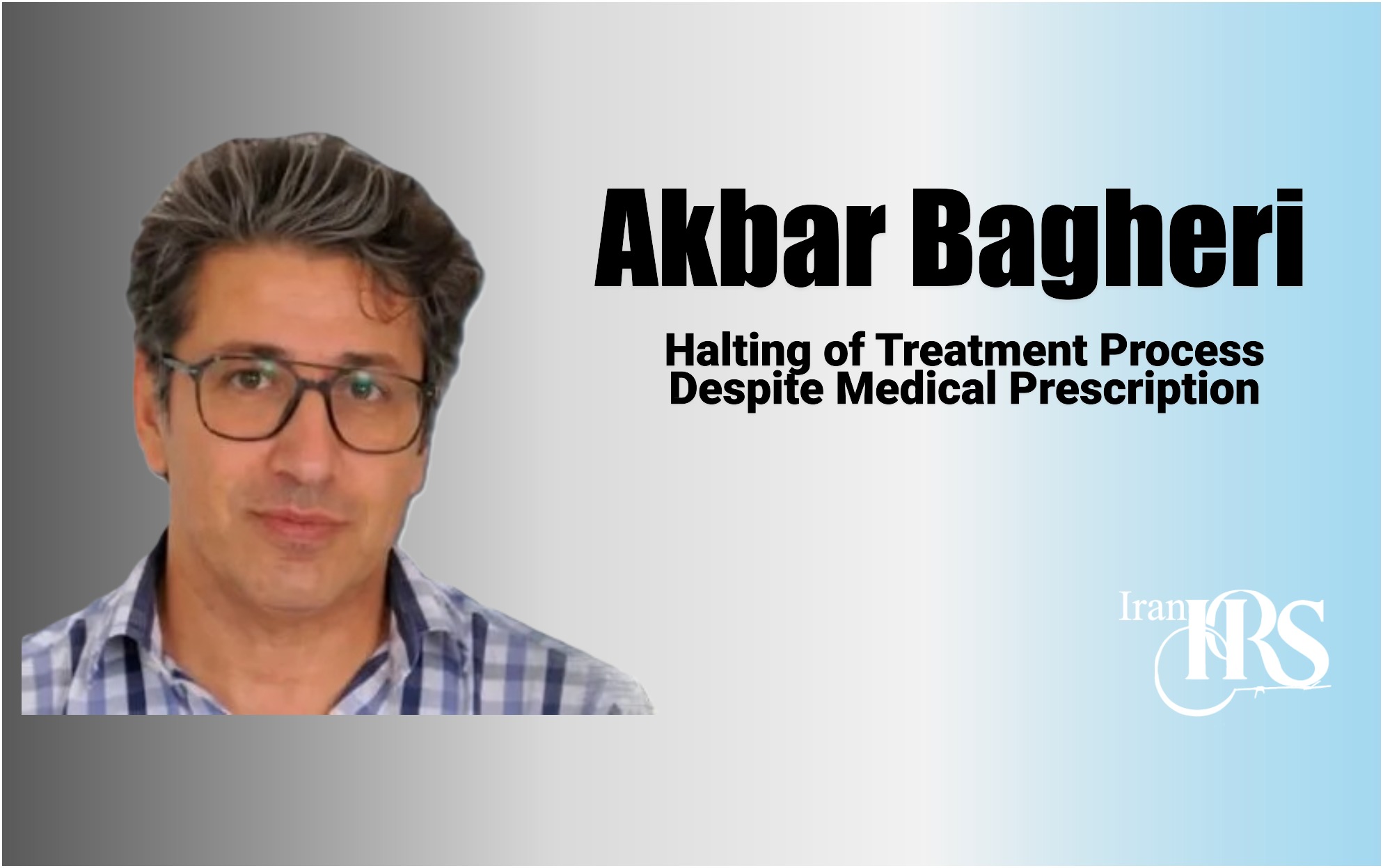
Akbar Bagheri, a political prisoner held in Ghezel Hesar Prison, has been deprived of daily transfers to the medical center despite a doctor’s prescription for several physical therapy sessions; an action that has halted his treatment process and increased the risk of permanent damage.
Iran human rights Society, Wednesday, July 8, 2026 – Akbar Bagheri, a political prisoner held in Ghezel Hesar Prison, continues to be deprived of daily transfers to a medical center after sustaining a severe knee injury and receiving a doctor’s prescription for several physical therapy sessions. According to reports received, this decision has halted his treatment process and increased the likelihood of irreversible
damage to the prisoner’s leg. This comes while reports of his deprivation of access to specialized medical services had also been published previously.
Why has Akbar Bagheri been deprived of continuing treatment?
According to received reports, Akbar Bagheri suffered a serious knee injury during his prison sentence in Ghezel Hesar Prison. Following a visit to a doctor and examinations, several physical therapy sessions were prescribed for him, but prison officials have refused to transfer him daily for this treatment. Consequently, the treatment process has stopped, and the continuation of this situation could lead to the aggravation of the injury and cause permanent damage to this prisoner’s leg. The right to access medical services is considered one of the fundamental rights of prisoners, and implementing a doctor’s medical orders is part of this right.
What is the history of Akbar Bagheri’s medical deprivation?
This is not the first time Akbar Bagheri has faced restrictions on access to medical services. Previously, in August/September 2025, Ghezel Hesar Prison officials prevented his transfer to specialized medical centers for more than two months. At that time, he was struggling with gastrointestinal, intestinal, and stomach diseases, and according to his relatives, his severe pain, intestinal swelling, and physical problems had reached a point where performing daily activities had also become difficult for him. Furthermore, doctors deemed a colonoscopy and ultrasound necessary for continuing the treatment process, but his transfer to specialized medical centers was not carried out.
How is Akbar Bagheri’s physical condition described?
In addition to his recent knee injury, Akbar Bagheri suffers from other chronic illnesses. According to published information, he suffers from blood hemoglobin disorders, liver problems, and hemorrhoids, and some of these diseases require specialized care and, in some cases, surgery. The coincidence of these illnesses with the halt in his knee injury treatment has increased concerns about this prisoner’s physical condition.
How has the judicial process of Akbar Bagheri’s case been?
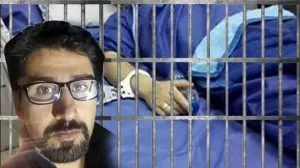
Akbar Bagheri was last arrested by security forces on November 10, 2024. Following two months of interrogation at the IRGC Intelligence detention center, he was transferred to Ghezel Hesar Prison. His trial was held in April/May 2025 at Branch 26 of the Tehran Revolutionary Court, and he was sentenced to three years and seven months in prison on the charge of “assembly and collusion to disrupt national security.” According to available information, he was deprived of access to his chosen lawyer during the judicial proceedings.
What is Akbar Bagheri’s arrest history?
Akbar Bagheri was first arrested in February/March 2018 during a protest rally of defrauded investors in front of the Parliament, and was subsequently sentenced to 9 years in prison by the Revolutionary Court presided over by Judge Salavati.
During the following years, he was moved between Evin, Greater Tehran, Rajai Shahr, and Ghezel Hesar prisons, and it was also reported that he was targeted in an attack by hired prisoners during one of his incarceration periods. Following the Evin Prison fire in September/October 2022, he was transferred to Rajai Shahr Prison and was temporarily released in April/May 2023, but was rearrested a few months later and is currently serving his sentence in Ghezel Hesar Prison.
Legal Review of the Case Based on Domestic Laws
Introduction
Before reviewing this case legally, it should be noted that many criminal laws in the religious dictatorship, especially in political and security cases, have been criticized by international human rights organizations for contradicting the principles of fair trial and fundamental rights. However, even based on these domestic laws, the responsible authorities are obligated to respect the legal rights of prisoners, preserve their health, and implement regulations related to access to medical services.
Legal Ambiguities of the Case
In Akbar Bagheri’s case, preventing his transfer for physical therapy despite a doctor’s prescription, halting the treatment process, and a history of preventing his transfer to specialized medical centers are among the most significant legal ambiguities of this case. Furthermore, the report regarding the deprivation of access to a chosen lawyer during the judicial proceedings is another issue that highlights the necessity of reviewing the proceedings and respecting the legal rights of this prisoner.
Related Legal Articles
- Article 22 of the Constitution: The life, property, rights, and dignity of individuals are inviolable, except in cases prescribed by law.
- Article 35 of the Constitution: All accused individuals have the right to choose a lawyer.
- Article 38 of the Constitution: Any form of torture to obtain confessions or information is prohibited.
- Article 39 of the Constitution: Defaming or violating the dignity of arrested and imprisoned individuals is prohibited.
- Executive Regulations of the Prisons Organization: Providing medical services and transferring prisoners to medical centers in case of medical necessity is among the duties of prison officials.
Violations of the Law
- Preventing transfer for physical therapy despite a doctor’s prescription.
- Halting the treatment process and restricting access to specialized medical services.
- Report of deprivation of access to a chosen lawyer.
- Continued restriction on utilizing required medical services.
Why is Akbar Bagheri’s case important from a human rights perspective?
From a human rights perspective, Akbar Bagheri’s case involves concerns regarding deprivation of access to medical services, preventing the execution of prescribed treatment, continued restrictions on transfers to specialized medical centers, and reports regarding restrictions on access to a lawyer. Human rights organizations have repeatedly emphasized that depriving a prisoner of required medical services and creating obstacles to the execution of medical orders contradict international standards regarding the preservation of health, human dignity, and the rights of prisoners.
Violated Articles
- Article 3 of the Universal Declaration of Human Rights: Everyone has the right to life, liberty, and security of person.
- Article 5 of the Universal Declaration of Human Rights: No one shall be subjected to torture or to cruel, inhuman, or degrading treatment or punishment.
- Article 10 of the International Covenant on Civil and Political Rights: All persons deprived of their liberty shall be treated with humanity and with respect for the inherent dignity of the human person.
- Article 12 of the International Covenant on Economic, Social, and Cultural Rights: Everyone has the right to the enjoyment of the highest attainable standard of physical and mental health.
- The Nelson Mandela Rules: Prisoners should have access to necessary medical services matching their medical needs without discrimination.
- Ahmad Seyed-Abdollahi: Returned to Borujen Prison While Facing a New Case
- Qezelhesar Prison: Disclosure of Hall 37 Unit 3 Officials and Rights Violations
Follow Iran Human Rights Society on social networks:
Telegram /Twitter /Instagram / YouTube / Facebook
Join Iran Human Rights Society on Twitter