
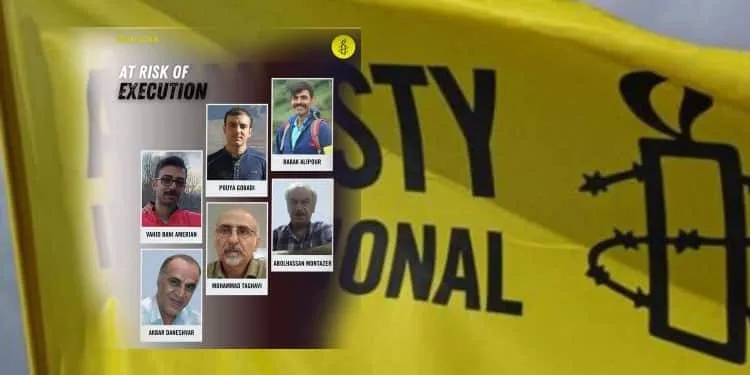
Amnesty International warns of imminent execution risk for five political prisoners in Iran. Urgent global action is needed to halt unfair trials and torture.
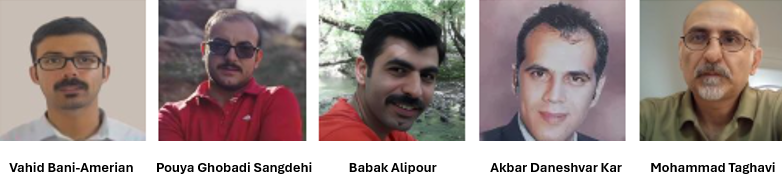
Iran Human Rights Society, Friday, August 8, 2025 – Amnesty International sounds the alarm over the imminent execution risk facing five political prisoners in Iran. On August 7, 2025, authorities forcibly moved Akbar Daneshvar Kar, Babak Alipour, Mohammad Taghavi Sangdehi, Pouya Ghobadi, and Vahid Bani-Amerian from Greater Tehran Prison to Ghezel Hesar Prison, a facility notorious for executions. This sudden transfer, marked by violence and secrecy, signals a grave threat to their lives. Amnesty demands immediate action to stop these executions and address Iran’s ongoing human rights violations. The global community must act swiftly to save these prisoners from unjust death sentences.
Urgent Call to Stop Imminent Executions
Amnesty International’s urgent statement highlights the imminent execution risk for five political prisoners. On August 7, 2025, prison guards violently transferred Akbar Daneshvar Kar, Babak Alipour, Mohammad Taghavi Sangdehi, Pouya Ghobadi, and Vahid Bani-Amerian from Greater Tehran Prison to Ghezel Hesar Prison in Karaj. Authorities conducted the move without notifying families, raising fears of secret executions. Amnesty reports the prisoners faced beatings during the transfer, a tactic often used to suppress dissent. The organization calls for global intervention to halt these executions and ensure fair treatment.
Grossly Unfair Trials Fuel Execution Fears
In October 2024, Branch 26 of Tehran’s Revolutionary Court sentenced these five men to death. The charges included “armed rebellion against the state,” “conspiracy against national security,” and alleged ties to the People’s Mojahedin Organization of Iran. However, the trials were deeply flawed. The prisoners endured torture, including beatings and solitary confinement, to extract forced confessions. Furthermore, authorities denied them access to lawyers for nearly two years, and the trial lasted only minutes. Such violations of fair trial rights heighten the imminent execution risk and demand immediate scrutiny.
Ghezel Hesar: Iran’s Execution Hub
Ghezel Hesar Prison has become a chilling symbol of Iran’s execution crisis. Reports confirm dozens of executions occurred there in 2025 alone. For instance, political prisoners Behrouz Ehsani and Mehdi Hassani faced secret executions in July 2025 after similar transfers. The prison’s lack of transparency, limited legal access, and history of mass executions amplify concerns for the five prisoners. Moreover, poor conditions, including inadequate medical care, exacerbate inmate suffering. The transfer to Ghezel Hesar signals a high risk of imminent execution, prompting urgent calls for action.
Suspicious Transfers Signal Repression
The transfer of these five prisoners was part of a larger movement of over 600 inmates on August 7 and 8, 2025. Authorities relocated political, security, and financial prisoners from Greater Tehran Prison to other facilities, including Evin Prison. These moves occurred without prior notice, denying prisoners the chance to collect belongings or contact families. Eyewitnesses report that security forces separated the five political prisoners with violence, beating them during the process. This pattern of secretive, forceful transfers mirrors previous cases that ended in executions, escalating fears for their safety.
Human Rights Violations in Trials and Transfers
The trial and transfer processes violated multiple human rights principles. First, the prisoners faced trials in a secretive, non-transparent manner, breaching their right to a fair and public hearing. Second, they endured torture and cruel treatment, including physical beatings, violating protections against inhumane punishment. Third, the lack of family notification and secretive transfers threaten their right to life and security. Finally, the denial of legal representation undermines their right to a fair trial. These violations underscore the urgent need to address the imminent execution risk.
Rising Executions Demand Global Action
Amnesty International reports a sharp rise in executions in Iran, with Ghezel Hesar Prison at the forefront. The facility’s role as an execution hub, coupled with systemic issues like torture and unfair trials, has drawn global condemnation. For example, the secret executions of Mehdi Hassani and Behrouz Ehsani in July 2025 followed a similar pattern of violent transfers and denial of legal rights. Amnesty urges governments, diplomatic institutions, and the United Nations to apply pressure on Iran to halt these executions and uphold fair trial standards.
A Call for Urgent Intervention
Amnesty International’s warning emphasizes the imminent execution risk for these five political prisoners. Without swift global action, they may face secret executions within days, a tactic Iran has repeatedly used to silence dissent. The organization calls for immediate diplomatic and legal efforts to compel Iranian authorities to stop these executions. Furthermore, Amnesty demands reforms to ensure fair trials, access to lawyers, and an end to torture. The international community must act now to protect these prisoners and address Iran’s systemic human rights abuses.
Follow Iran Human Rights Society on social networks:
Telegram /Twitter /Instagram / YouTube / Facebook
Join Iran Human Rights Society on Twitter







Discussion about this post